Stay up to date – you can subscribe to our newsletter here

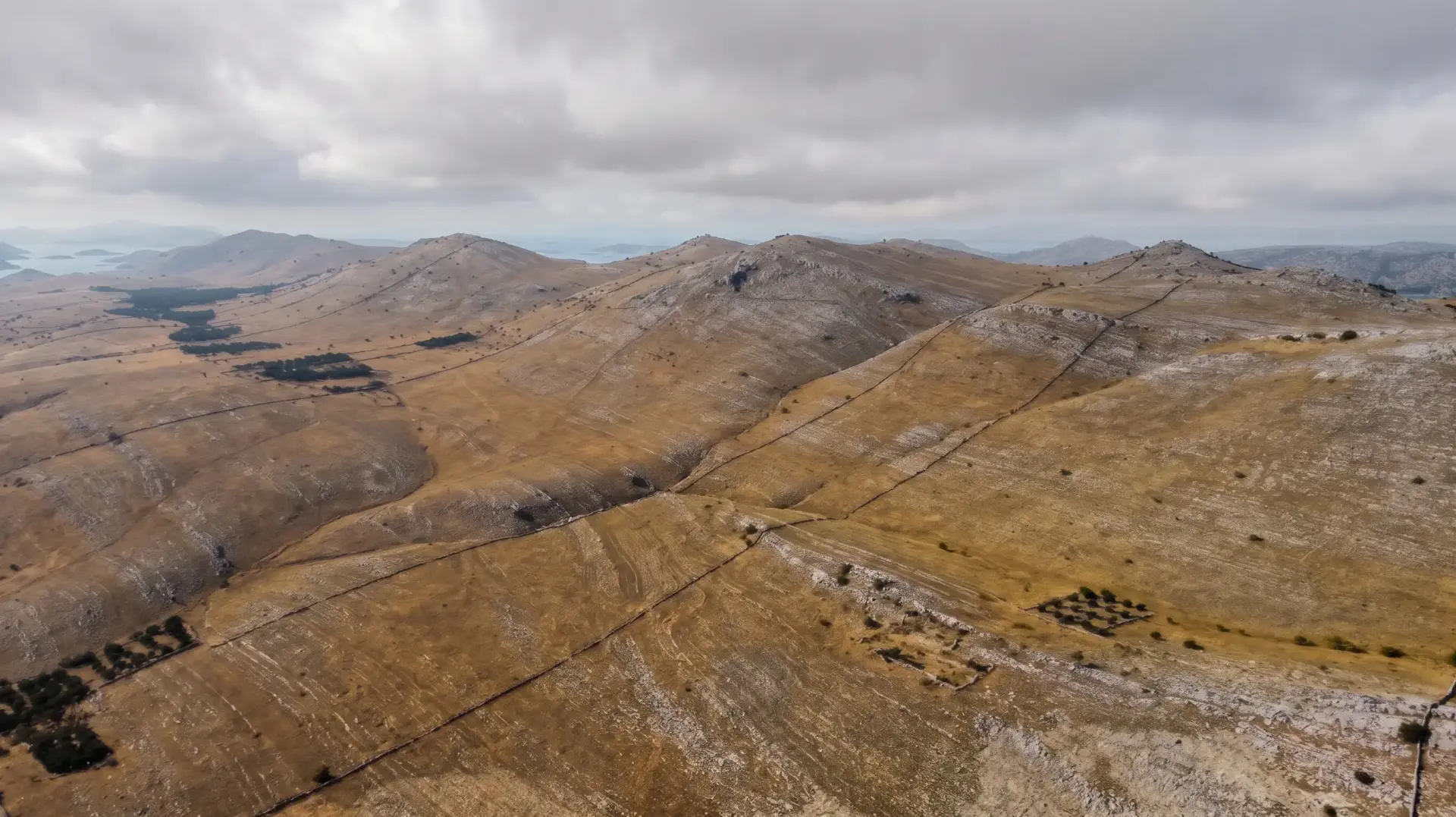
When the last charter yacht leaves the archipelago in late fall, the konobas close their shutters, and the barren limestone islands sink into winter silence, the Kornati Islands take on a different look. For boaters, this marks the beginning of a time of longing until spring—but for the local flocks of sheep, the most dangerous season of the year is just beginning. For during the deserted winter months, the golden jackals on the islands can roam and prowl almost undisturbed.
Across the Sea to a Paradise Without Enemies
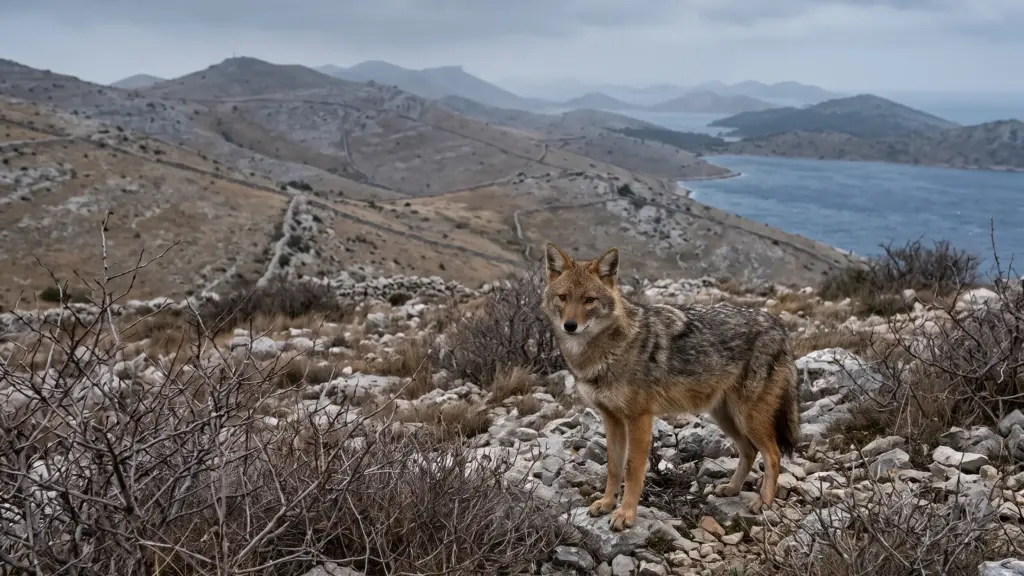
A few years ago, the first golden jackals (Canis aureus) appeared in Kornati National Park—a first in the archipelago’s history. They likely swam from Dugi Otok across the narrow straits near Katina to the main island of Kornat and quickly spread from there to other islands.
What the adaptable hunters found there was, from their perspective, a feast waiting to be enjoyed: On the Kornati Islands—whose land is largely privately owned by families from Murter—sheep have grazed completely freely for centuries, without fences, barns, or constant supervision by shepherds. Since there have never been any large predators on the islands, the flocks were defenseless against the newcomers—residents bitterly refer to it as a “self-service store” for the intruders.

Why Winter Exacerbates the Situation
Golden jackals are active year-round, highly intelligent, and extremely adaptable. They hunt in organized family groups, systematically scout out territories, and reproduce rapidly when food is plentiful—a litter can include up to nine pups. In late fall and winter in particular, young animals also disperse and explore new areas.
While in the summer at least the boat traffic, open restaurants, and the presence of property owners create a certain amount of commotion, the area belongs almost exclusively to nature between November and April. Without natural predators, the pressure on the remaining herds continues to grow unabated. Prey animals are often not even eaten in their entirety but are torn apart in the heat of the hunt—especially defenseless lambs.
Dramatic Decline in Sheep Populations
The toll of recent years has been devastating. Depending on the survey and estimate, the sheep population on the Kornati Islands has plummeted dramatically: Media reports indicate a decline from around 2,000 to about 500 animals, while local Kurnatari residents put the loss at as much as from an original total of around 6,000 to just about 600.
Behind these numbers lie lifework destroyed. Some farmers report total losses of entire age groups: A farmer on Kornat lost the majority of his flock within a few years, seeing his number drop from 200 to about 30 sheep; another was left with just three of his former 150 animals. Many owners have already given up.
More Than Just a Problem for Sheep Farmers
The invasion has long since ceased to threaten only traditional livestock farming; it now endangers the entire fragile ecosystem of the national park. Sheep have always been considered the natural “lawnmowers” of the Kornat karst. Without grazing, the characteristic dry grasslands and rocky pastures rapidly become overgrown—dense scrub and pine trees encroach on the centuries-old cultural landscape and also endanger the olive groves.
At the same time, these opportunistic predators do not spare other species: national park experts warn of a serious danger to biodiversity, as golden jackals also raid the nests of ground-nesting birds and do not even shy away from domestic cats in the bays.
Culling, Partial Successes, and the Search for Solutions
For years now, the National Park Administration, in cooperation with local hunters—including those from Tisno—has been carrying out targeted culls (sanitarni lov) as part of the wildlife protection program. In more than 168 operations over the course of three years, nearly 200 jackals were culled. However, because the population is recovering extremely quickly, the battle remains a tough one: It wasn’t until late September 2026 that the national park launched another large-scale culling operation and urged visitors and locals to exercise caution.
At least a few rays of hope show that consistent intervention is effective: In addition to islands like Piškera, Levrnaka, for example, is once again considered jackal-free at times, allowing the small flock of sheep there to slowly recover. But there is no simple, one-size-fits-all solution. The use of livestock guard dogs, such as Kangals, fails in the summer due to the large number of tourists who move freely between the bays and pastures.
Following the visit by Croatian Environment Minister Marija Vučković in the spring of 2025 and ongoing pleas for help from the island’s residents, the park administration is now—with the help of EU funding—relying on a combination of continued hunting, camera monitoring, and new protection strategies such as mobile electric fences. For the Kurnatari, one thing is clear: as much as they support species conservation, golden jackals were never native to these islands. If efforts to sustainably control the population—especially during the quiet winter months—fail, a symbol of the Kornati Islands—the freely grazing island sheep herd—could disappear for good within a few years.