Stay up to date – you can subscribe to our newsletter here

Imagine standing on a wooden walkway in front of a 22-meter-high, rugged cliff face. Absolute silence reigns all around you; only at your feet does crystal-clear water gush from the rock. But just a few days later, the same place is transformed beyond recognition: a deafening roar fills the gorge, and massive masses of water plunge over the cliff into the depths.
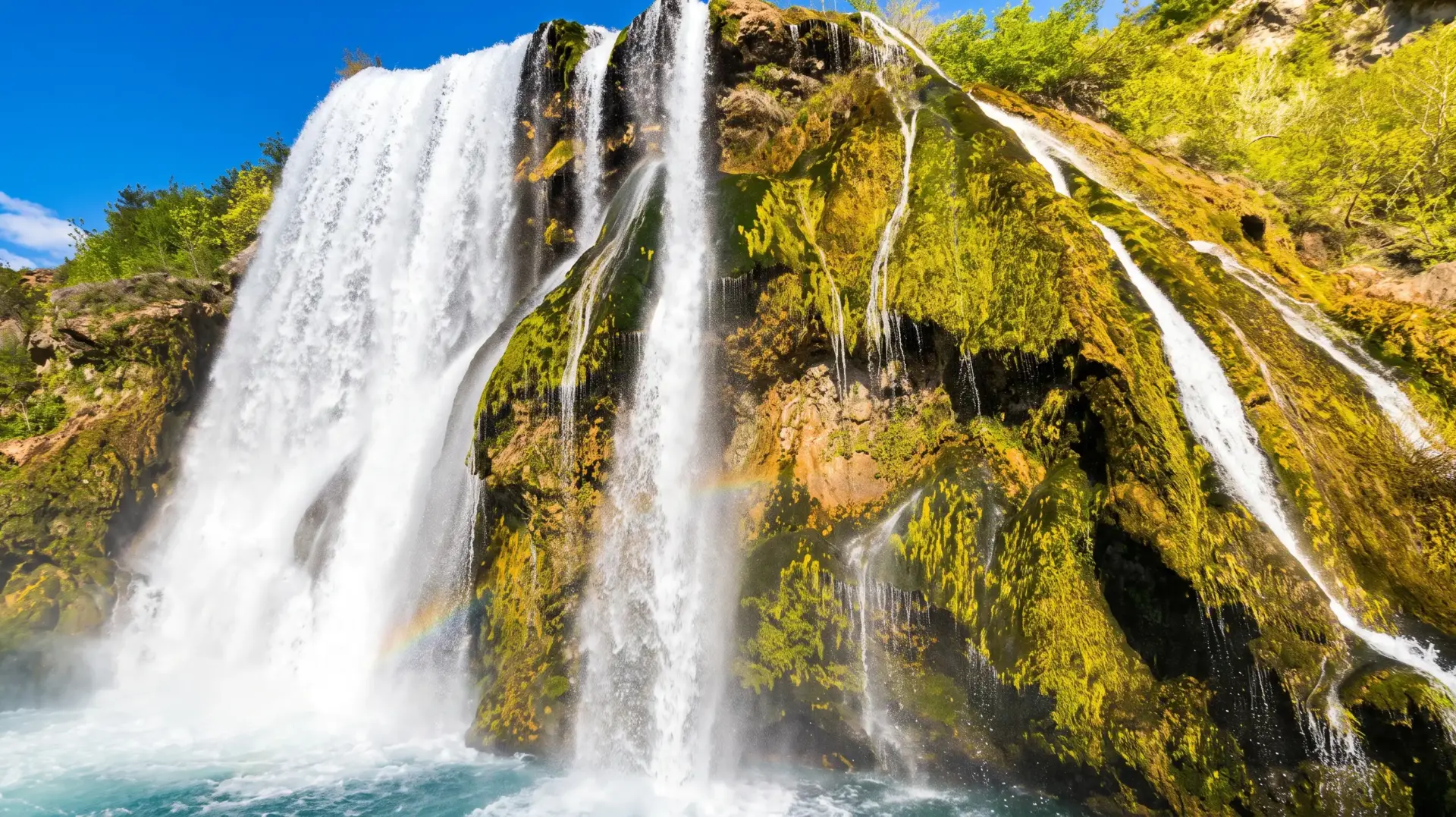
It was precisely this natural spectacle that occurred again in mid-November 2026. After six months of extreme drought, an autumn cyclone finally brought the long-awaited rain to the Dalmatian hinterland surrounding the Dinara Mountains. On Friday, November 13, the water once again carved its way through the riverbed filled with autumn leaves and rocks—and brought the Krčić Waterfall (also known as Veliki buk or Topoljski buk) near Knin roaring back to life.
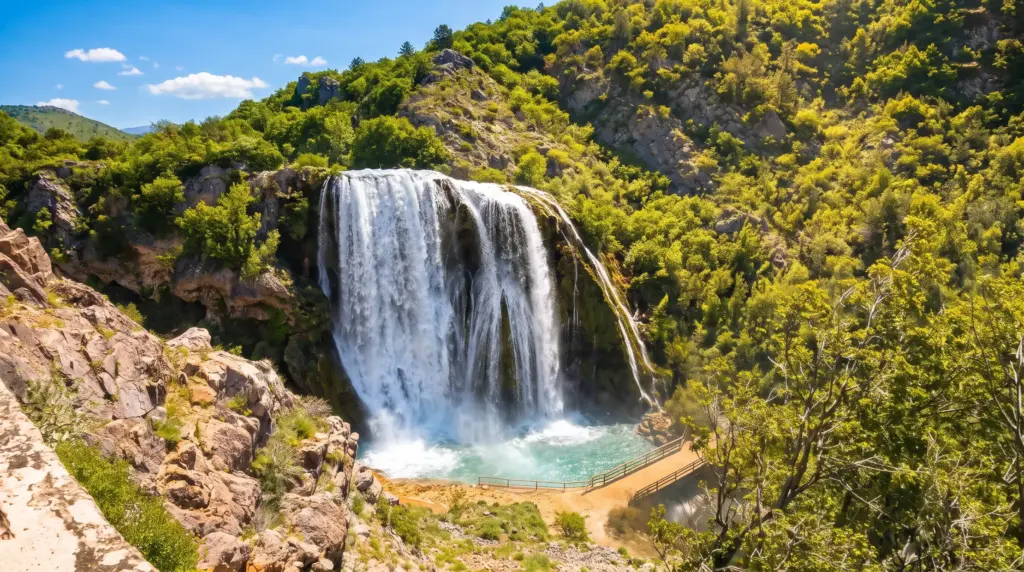
A rare phenomenon across Europe: Where a river dies and a new one is born
What makes the Krčić Waterfall a hydrological phenomenon—even by European standards—takes place right at the foot of the rock face.
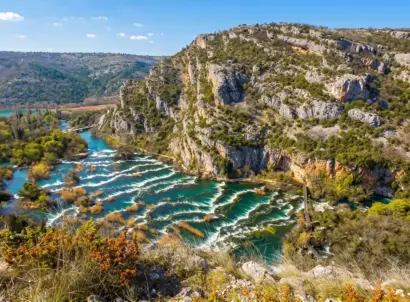
The Krčić River rises at the foot of Mount Dinara, west of Kijevo, and winds its way for about 10.5 kilometers through a picturesque canyon, passing over several natural tufa barriers. At Veliki Buk, its journey ends in a free fall over the 22-meter-high cliff—and right where the Krčić strikes the rock, one of Croatia’s most famous rivers—the 70-kilometer-long Krka—springs from a karst spring beneath the cliff.
In the geological past, the Krčić and Krka formed a single, continuous river system. However, long-term climatic and hydrological changes in the porous karst subsurface have altered this landscape:
- During the dry season: As soon as the rains subside in late spring, the water from the Krčić seeps into the karst soil. The waterfall dries up completely, revealing the bare rock face and the never-drying source of the Krka below.
- After heavy rains: As soon as the Dinara’s underground karst reservoirs are filled, the Krčić riverbed comes to life in no time. The waterfall then plunges directly into the Krka’s headwaters—a rare sight of two rivers merging at a single rock face.

The Changing Seasons: When Is the Best Time to Visit?
For the locals around Knin, waiting for the water to return in the fall has almost become a ritual. Anyone who catches the phenomenon at just the right moment can watch as the first wave of water, after months of drought, gurgles over the rocks and pushes the colorful autumn leaves along in its wake.
Depending on the season, the town reveals a completely different side of itself:
- Winter and early spring: The most spectacular time to visit. Thanks to the snowmelt and heavy rainfall, the waterfall appears as a roaring, white wall of water, whose spray even wets the surrounding walking trails.
- Spring: The best time for photographers. The contrast between the gray karst rock, the lush, sprouting greenery, and the turquoise-clear water is at its most intense now.
- Summer and early fall: The cliff face is dry, but the place loses none of its magic. At the foot of the cliff, you can watch in complete tranquility as the crystal-clear Krka emerges from deep within the rock to the surface.

Practical Tips for Your Trip to the Krčić Waterfall
While the well-known parts of Krka National Park—such as the famous Skradinski Buk —are crowded with thousands of visitors during peak season, the source of the Krka River at Krčić Waterfall remains a pleasantly quiet hidden gem with no admission fees and no crowds.
- Directions: The waterfall is located just about a 5-minute drive from Knin in the direction of the village of Kovačić and is clearly marked on Google Maps.
- Parking & Access: There is a signposted parking lot in the immediate vicinity. From there, you can reach the viewing platform in front of the waterfall in just a few minutes’ walk along a flat, well-maintained path.
- Equipment: No special hiking gear is necessary for this short walk. However, if the waterfall is flowing heavily, be sure to wear sturdy, non-slip shoes, as the paths can quickly become slippery due to the spray and wet leaves.
Anyone traveling through the Dalmatian hinterland should definitely plan this short detour to Knin—there are few places where you can experience the raw dynamism of the Dinaric Karst as directly and undisturbed as at the foot of Veliki Buk.