Stay up to date – you can subscribe to our newsletter here

Anyone who has strolled through Split’s Old Town in the evenings over the past few summers is familiar with the scene: rowdy crowds of tourists moving from bar to bar in large groups. These so-called “pub crawls” have often turned the historic center into an uncontrolled open-air nightclub. But that could soon come to an end, as a clear demand from Split has now reached the Croatian Parliament in Zagreb: Cities need more legal tools to defend themselves against these extreme excesses of mass tourism.
Protecting Historic Centers
In a recent parliamentary debate, the president of the Liberals (HSLS), Dario Hrebak, summed up the problem. In doing so, he is supporting an initiative by his party colleague and Split city council member, Hrvoje Bašić. Bašić’s initiative to amend the law has already been unanimously approved by the Split City Council.
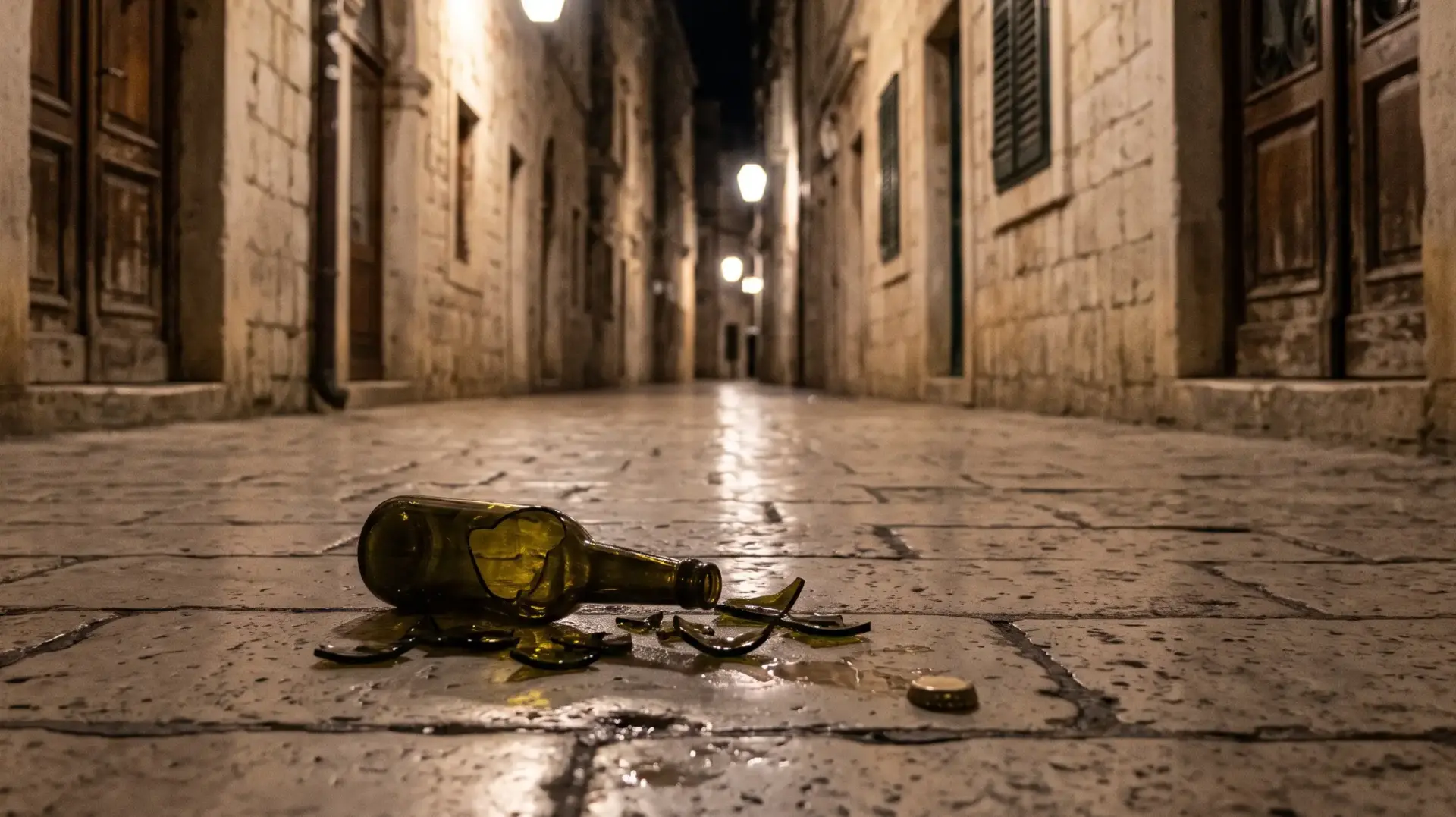
The politicians’ main message is clear: this particular form of tourism severely impairs the quality of life for the local population. Noise pollution, vandalism, and disturbances are the direct consequences. Historic city centers, such as the UNESCO-protected Diocletian’s Palace, must not be allowed to degenerate into places of uncontrolled revelry that make life unbearable for local residents.

What does the proposed amendment to the law specifically entail?
To give Dalmatian municipalities the necessary tools, the initiative proposes far-reaching amendments to the law on the provision of tourism services. The focus is on three key points:
- Introduction of local no-bar zones: Cities should be given the right to designate specific zones—particularly in historic and heritage-protected city centers—where bar crawls can be severely restricted or completely banned.
- A specialized tourism police force: There are calls for a new unit with expanded powers. This unit should not only take action against restaurants and bars that violate regulations, but also be able to directly and effectively sanction organizers of problematic tourist activities.
- Stricter penalties: Anyone who offers unregistered activities or knowingly and intentionally violates the new rules will face significantly higher fines. While punishment is not an end in itself, Hrebak said, it is absolutely necessary for the effective enforcement of the rules right before the public’s eyes.
Quality Over Quantity on the Adriatic Coast
This initiative aligns with what is essential for a positive future for the region: Sustainable tourism in Dalmatia can only work in the long run if it respects the local infrastructure and the local residents. Tourism must benefit the towns and their residents—and must not be to their detriment.
The call for decentralization of these decisions is the right step. Local authorities in Dalmatia know best where the limit of what is tolerable has been reached, and they need precisely these legal tools to protect public order and the legal economy. Let’s hope that this initiative from Split is now swiftly enacted into law in Zagreb. It would be an important milestone in permanently preserving the authentic way of life along our coast.