Stay up to date – you can subscribe to our newsletter here

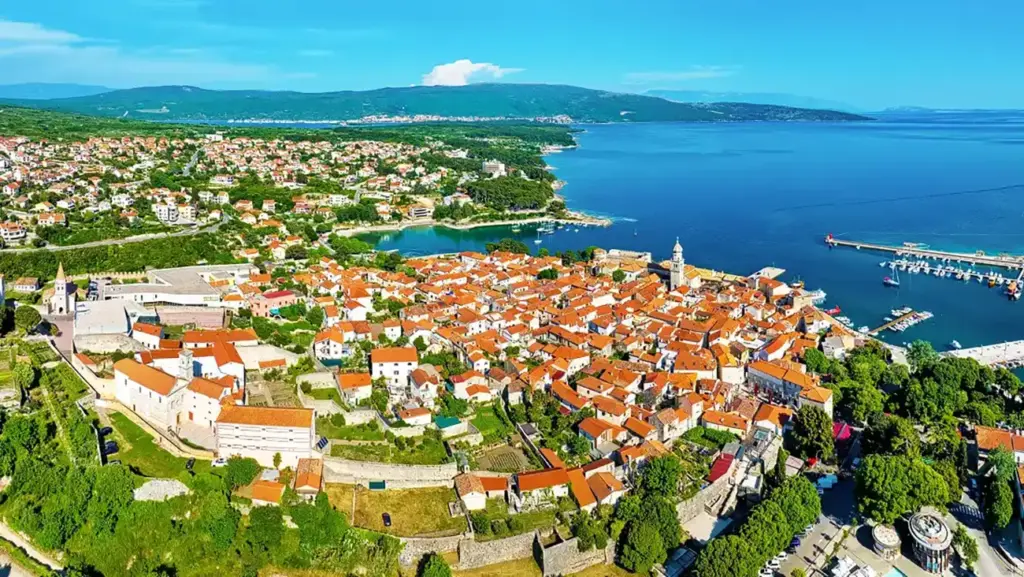
The “Golden Island” is considered the most popular vacation destination in Kvarner Bay—but in the height of summer, Krk is buckling under the weight of its own success. The new draft of the destination management plan (2026–2029) now puts it in black and white: 63 percent of locals do not want any further expansion of lodging capacity. The reason lies primarily in the roads—and in the water pipes.
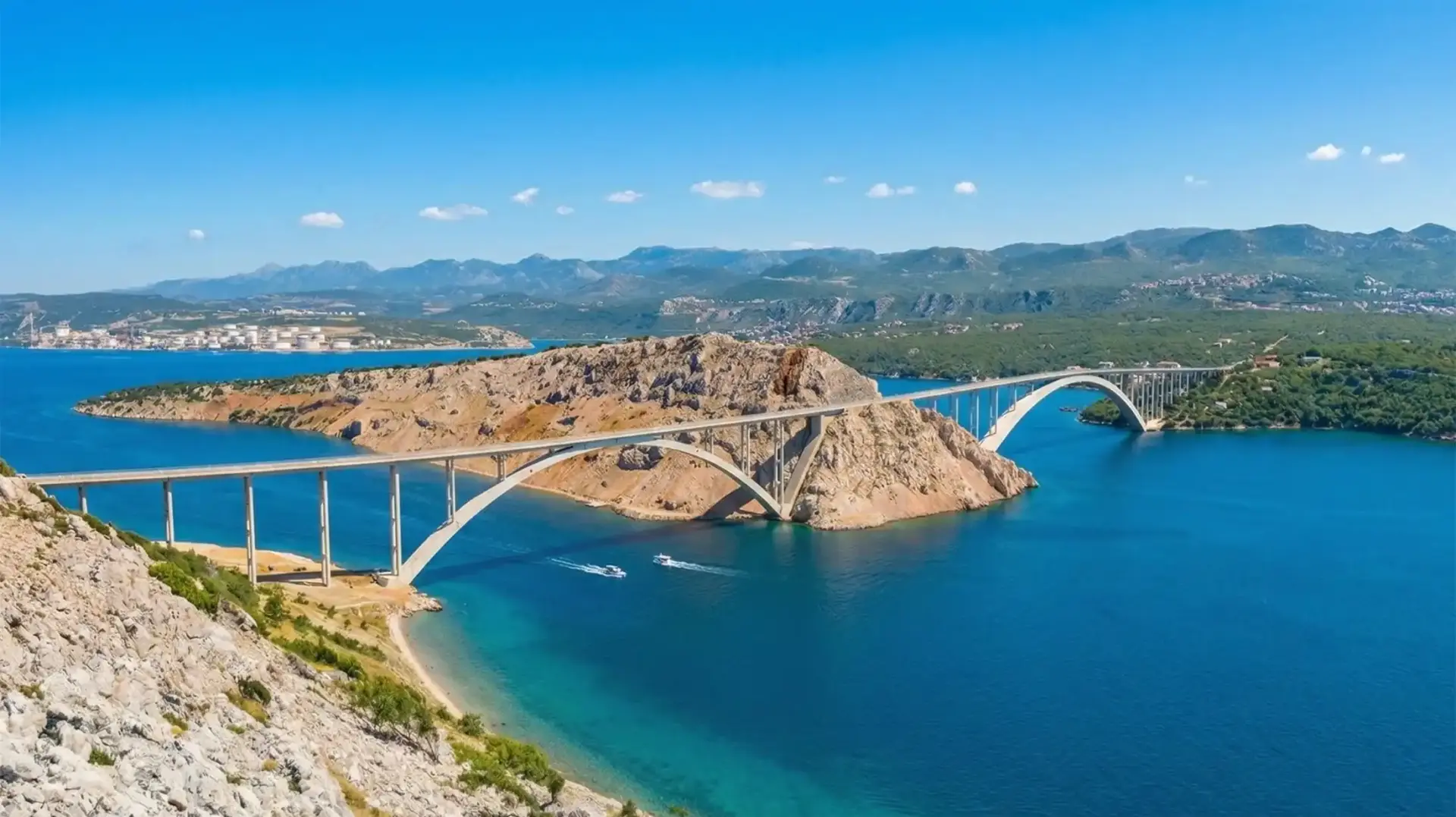
Anyone who drives across the Krk Bridge in July or August is familiar with this test of patience. What is an annoying start to the vacation for tourists is increasingly becoming an ordeal for the residents of the seven island communities. A recent survey conducted as part of the new development plan paints a clear picture of public sentiment: 59 percent of island residents rate summer traffic jams as a major problem, while another 22 percent view them as a minor problem. More than four-fifths of the population thus feel the impact of traffic congestion directly in their daily lives—exacerbated by a chronic shortage of parking spaces.
The raw numbers: the bridge, transit traffic, and rising accident rates
The island’s dilemma is easily explained: Krk alone accounts for 37 percent of all tourist arrivals in the entire Primorje-Gorski Kotar County. At the same time, the island is far more than just a vacation destination. It serves as a central transit hub for travelers who want to continue on to the islands of Cres, Lošinj, and Rab via the Valbiska ferry port.
Data from the Croatian highway authority, Hrvatske ceste, and the police show just how heavily congested this bottleneck is:
| Metric / Key Performance Indicator | 2024 | 2025 | 2026 |
| Krk Bridge (Average number of vehicles per day in July & August) | 27.155 | 26.453 | 26,477 |
| Omišalj Monitoring Station (Average Vehicles/Day) | – | – | 22,200 |
| City of Krk (average vehicles per day) | – | – | 13,102 |
| Punat (average vehicles per day) | – | – | 8,577 |
| Traffic Accidents (Krk Police District) | 376 | 456 | 469 (Jan.–Oct.) |
| Accidents resulting in injuries | 76 | 101 | 102 (Jan.–Oct.) |
Although the daily average on the bridge is slightly below the peak level recorded in 2024, the traffic burden on this single major route remains enormous. The worst traffic congestion is concentrated on the D102 main route (from the bridge to Baška) and the D104 toward Valbiska—particularly at the Šmrika interchange, the entrance to Malinska, and the D102/D104 intersection.
The trend in traffic safety is particularly alarming: In just the first ten months of 2026, the police recorded more accidents than in the entire previous year. The only silver lining in the statistics: The number of traffic fatalities dropped from five in 2025 to one fatality this year. Hrvatske ceste has now announced a safety analysis for twelve critical locations along the D102.

Immediate action before summer 2027—while megaprojects remain stalled
The seven island municipalities are pulling together on the issue of infrastructure and holding the government accountable. Krk’s mayor, Darijo Vasilić, makes it clear that responsibility for the D102 and D104 state highways lies with Hrvatske ceste —and urges swift relief rather than waiting for distant large-scale projects.
Short-term measures (start at the end of 2026, completion planned before summer 2027):
- Relieving traffic congestion at the Šmrika roundabout to provide a smoother, intersection-free approach to the Krk Bridge
- Redesign of the Omišalj and Maršić roundabouts on the D102 using the same principle
- Redesign of the future Šepići roundabout and improvements to problematic intersections (Nenadići, Vela Ravnica, Skrbčići–Pinezići)
Long-term major projects (without specific construction schedules or budgets):
- “Plava magistrala” (Blue Magistrale): The new eastern highway, approximately 23 kilometers long, is intended to connect Omišalj with the area north of Punat via Dobrinj and Vrbnik. The concept is in place, but the project is stalled due to changes in land-use planning and an environmental impact assessment that has been underway since April 2026. Omišalj’s mayor and member of parliament, Mirela Ahmetović, points to a lack of political will in Zagreb after her budget request was rejected in parliament.
- New Krk Bridge: Currently, only study and planning work is underway leading up to site approval.
- Draga Bašćanska & Jurandvor Bypass: Environmental approval has at least been granted for the approximately four-kilometer-long section; major projects and land acquisition issues are currently being addressed.
A comeback for historic ferry routes and better buses?
To free the island roads from private vehicle traffic, the focus is shifting more toward public transportation. To maintain the existing bus routes at all, all seven island municipalities have supported a new funding model: The state pays 75 percent of the subsidies, the county pays 15 percent, and the island municipalities pay 10 percent—according to Ahmetović, this represents a new burden on municipal budgets, but there was no alternative.
Mayor Vasilić is thinking well beyond simply increasing bus frequency between town centers, Valbiska, and Rijeka Airport. He is proposing a return to maritime transport: high-speed boat routes in the summer between Krk, the mainland, and neighboring islands could significantly relieve traffic on the roads. Also on the wish list is a serious review of reviving legendary ferry routes such as Šilo–Crikvenica or Baška–Senj, as well as increasing capacity on the Valbiska–Merag route.
It’s not just the roads that are congested: Water and wastewater systems are at their limits
Off the beaten path, an analysis by the municipal utility Ponikve reveals two additional bottlenecks that are slowing unchecked growth:
- Wastewater: While the coastal towns (Omišalj, Malinska–Njivice, Krk, Kornić–Punat, Baška, Čižići–Šilo, and Dobrinj) are connected to the sewer system, the interior of the island, as well as Šotovento, Vrbnik, and Stara Baška, still lack public sewage systems. Even existing networks reach their limits during heavy rains or storm surges.
- Drinking Water: Increasingly hot and dry summers are coinciding with 500 to 600 new water connections each year. To secure the water supply in the long term, Ponikve is planning a 65-million-euro project, according to Director Neven Hržić: The dam of the Ponikve Reservoir is to be raised by five meters. This would more than triple the reservoir’s storage capacity from two to seven million cubic meters.
A New Direction by 2029: Quality Over High-Season Crowds
For Petar Škarpa, director of the Krk Island Tourism Board, the message of the new plan is clear: further strong growth in July and August is no longer sustainable without corresponding infrastructure development. Instead of building new massive hotel complexes for two overcrowded summer months, Krk aims to specifically strengthen the early and late seasons, improve the quality of its offerings, and reduce local residents’ dissatisfaction with traffic congestion by at least 10 percent by 2029.
For vacationers and skippers in Croatia, the assessment sends a clear message: If you want to enjoy a relaxing vacation on Krk, you’re better off visiting in May, June, September, or October anyway—and you can look forward to seeing whether the promised renovations to the roundabouts will actually be completed before the summer of 2027.