Stay up to date – you can subscribe to our newsletter here

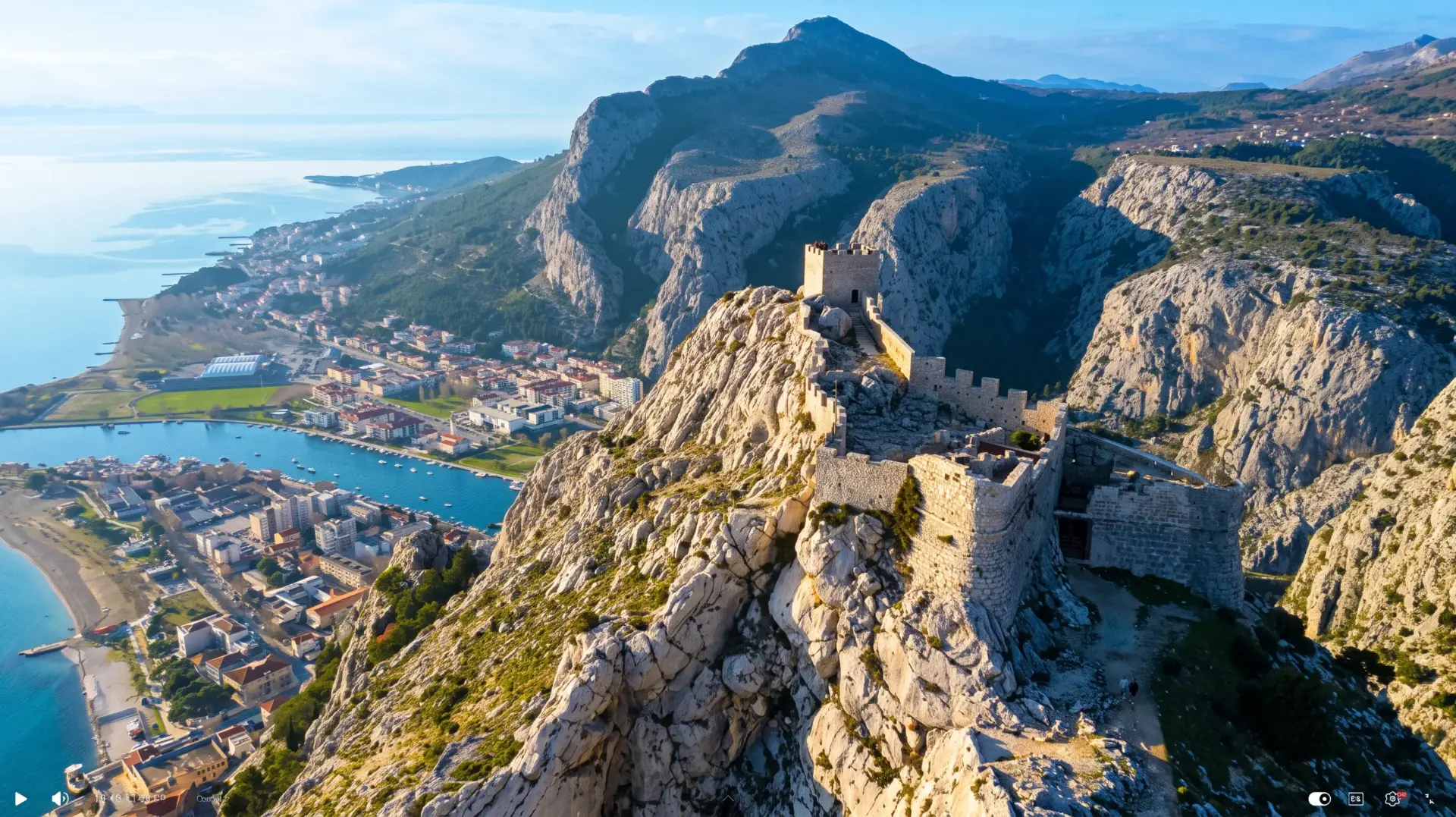
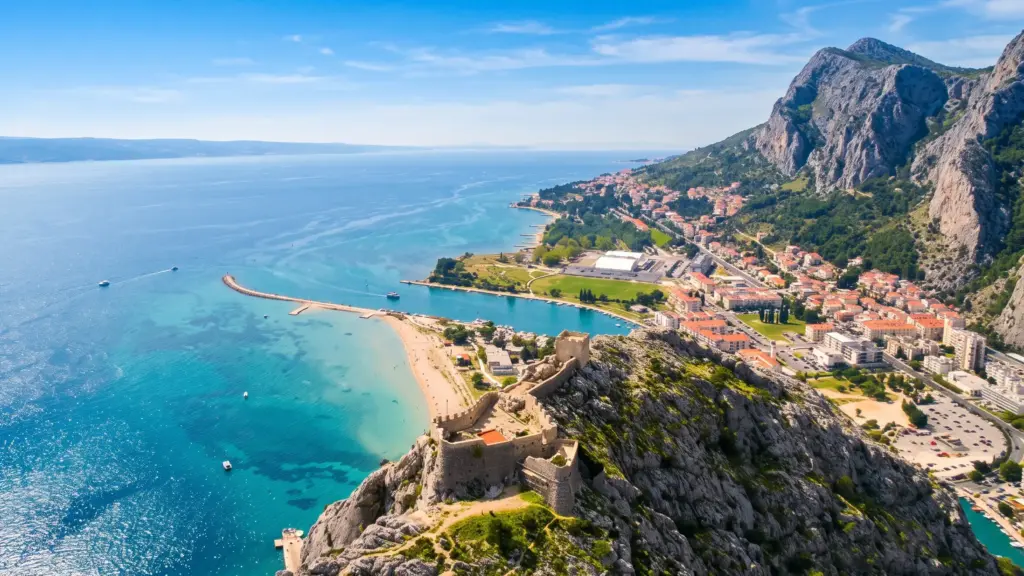
If you look up from the narrow streets of Omiš’s Old Town, you’ll immediately spot two historic landmarks carved into the rock. While the better-known Mirabella Fortress clings directly above the red rooftops, its significantly more imposing sister— Fortica, traditionally called Starigrad by the locals—towers high above on the rugged ridge of the Omiška Dinara.
At an altitude of just under 300 meters, the ancient ruins seem to have grown right out of the gray limestone. The climb up requires a bit of stamina, but it rewards you with one of the most spectacular 360-degree panoramas along the entire Croatian Adriatic coast—and with a soothing sense of tranquility far from the hustle and bustle of the coast.
An Impregnable Watchtower: History Between the Adriatic and the Mountains
Starigrad Fortress was built in the 15th century (first mentioned in historical sources as “castrum Stary” ) and further expanded in the 16th and 17th centuries under Venetian rule. Its purpose was as clear as it was vital for survival: it served the people of Omiš as a last, virtually impregnable refuge during attacks by Ottoman troops and, at the same time, as a strategic control point.
From this rocky ridge, one could survey the entire surrounding area—the shipping traffic in the Brač Channel between Split and Makarska, the deeply carved Cetina Gorge, and the mountainous hinterland of the historic peasant republic of Poljica. The complex is cleverly built on multiple levels: in case of emergency, the defenders retreated from one level to the next via steep stone staircases and secured gates. A well-preserved rainwater cistern ensured survival during sieges. It wasn’t until the end of the 17th century, when the Ottoman frontier shifted further inland, that Fortica lost its military significance.

Three Routes to the Summit: From Hiking Trails to Via Ferrata
Unlike the Mirabella Fortress, which you can reach in ten minutes on the way, the Fortica is a real little mountain adventure. Depending on your fitness level and preferences, three different routes lead to the top:
- The classic hiking trail from Omiš (approx. 45–60 minutes): The well-marked mountain trail (Staza 602) begins directly from the town center or from the parking lot in the Planovo area (on the road toward the Cetina Gorge, between the tunnels). Over a distance of about one kilometer, you’ll climb nearly 290 meters in elevation —initially through a shady, fragrant pine forest, then steeply and over rocky terrain across open karst landscape all the way to the fortress walls.
- The more relaxed route via Borak (about 20–25 minutes): If you want to avoid most of the elevation gain, drive up the narrow, winding road toward the small hamlet of Borak / Baučići above Omiš. From the parking areas there, a significantly shorter, easy-to-manage trail leads over to the ridge.
- For mountain enthusiasts—the Fortica Via Ferrata: Adventure seekers can climb up to the fortress directly along the steep rock face. However, the well-secured via ferrata (difficulty level B, about 45 minutes of climbing time) requires a full set of via ferrata gear, including a helmet, as well as sure-footedness and a head for heights.
The reward for the effort: a bird’s-eye view
As soon as you step through the stone gate into the fortress, a view unfolds that instantly makes you forget the grueling climb. Far below, Omiš, with its sandy beach and small port, looks like a toy town. Right next to it, the emerald-green Cetina River cuts through a dramatic rocky gorge before flowing into the sea.
If you turn around, your gaze sweeps over the vast karst mountains in the hinterland and far out across the Adriatic Sea to the islands of Brač, Hvar, and Šolta. If you’re not afraid of the narrow, steep climb to the top platform of the square main tower, you’ll literally be standing on the roof of Omiš—a dream spot for photographers, especially on clear days in spring or fall.
Practical tips for your trip
- Admission & Hours: The fortress is open to the public during the day. During the high season, a small admission fee is charged at the entrance (usually around 5 euros; it’s best to bring the exact amount in cash). Sometimes, cold drinks are sold at the small ticket booth—but you shouldn’t count on this outside of peak season.
- Footwear: Flip-flops or smooth city shoes have no place on this trail. Sturdy shoes with grippy soles are a must on the loose gravel and the smooth, worn limestone. Also, be sure to pack plenty of water and sunscreen, as there’s hardly any shade and no places to eat on the upper section or inside the fortress.
- Best Time to Visit & Safety: In spring and fall, temperatures are ideal for the hike. In the height of summer, it’s highly recommended to set out early in the morning, before the south-facing rock faces heat up. If you’re hiking up to catch the evening light, you should start your descent well before dark (or pack a headlamp)—the steep karst trail quickly becomes difficult to navigate in the twilight.
- Time Required & Combination: Starting from the center of Omiš, you should plan on spending about 2.5 to 3 hours in total. After the descent, you can cool off at the sandy beach Velika Plaža, stop for a bite to eat in the alleys of the old town, or—for those who still have energy left in their legs—take a short detour to the lower sister fortress Mirabella (Peovica).
Fortica Fortress isn’t the kind of place you’d stop at for a quick visit while passing through—and that’s exactly what makes it so appealing. Those who make the effort to climb up for just under an hour will experience Omiš at its wildest and most impressive—high above the hustle and bustle, surrounded by centuries-old stone, mountain air, and the vast blue of the Adriatic Sea.