Stay up to date – you can subscribe to our newsletter here

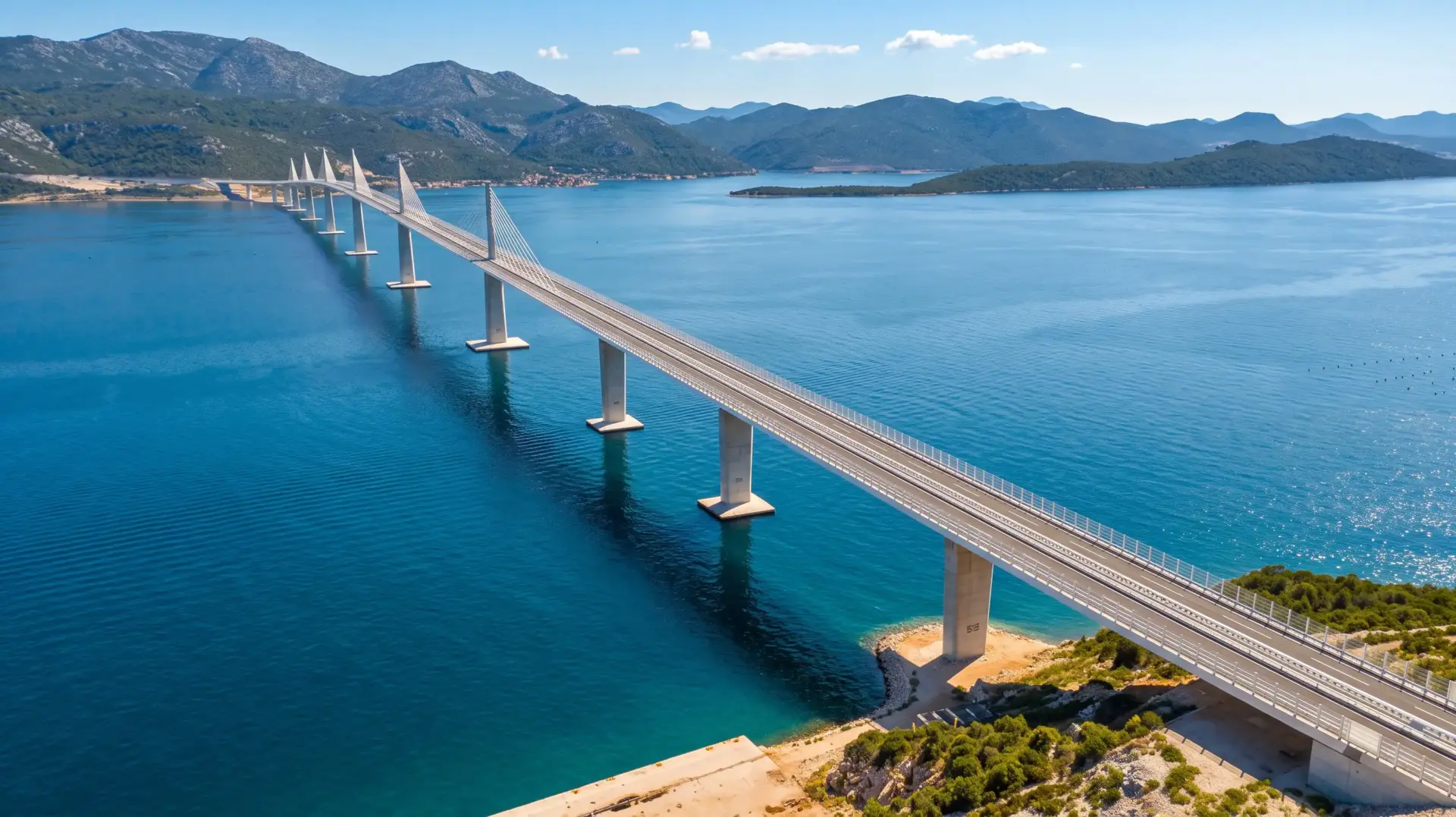
Hardly any other structure in recent Croatian history has been as celebrated as the Pelješac Bridge. Since July 2022, it has connected southern Dalmatia—including the area around Dubrovnik—directly with the rest of the country, bypassing the need to travel through the Bosnian-Herzegovinian coastal corridor. Yet, a good four years after its opening, the luster of this once-in-a-century project is literally crumbling.
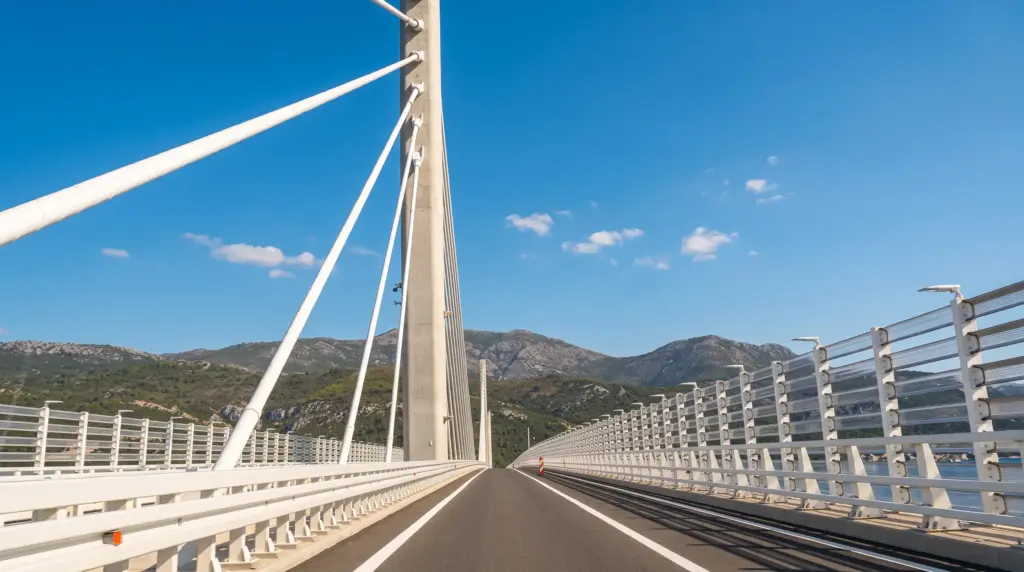
A network of surface cracks has formed on all six concrete piers of the bridge, and moisture is already seeping in in some places. And instead of starting this fall as originally announced, the extensive renovation is being significantly delayed: According to reports in the Croatian daily newspaper Jutarnji list, work is not scheduled to begin until 2027 and could extend into the summer of 2028.
Precision Work Between Concrete and Salt Water
At first glance, surface cracks sound like a cosmetic flaw. However, a look at the measurement data shows why the Croatian road authority, Hrvatske ceste, is insisting on a permanent technical solution:
| Key Figure | Current Status |
| Affected components | All 6 concrete pylons (pillars) |
| Measured crack depth | 3.5 to 6 centimeters |
| Thickness of the protective concrete layer | 3.5 to 7 centimeters |
| Original schedule | Start: October 2026; End: before summer 2027 |
| New schedule | Start in 2027, expected completion in the summer of 2028 |
The numbers bring the real problem into sharp focus: Where a crack runs six centimeters deep and the concrete cover is only three and a half to seven centimeters thick in places, the steel reinforcement is barely protected at all. Over the Adriatic Sea, this is no small matter. Salty sea air and moisture penetration are the natural enemies of any reinforced concrete structure—once corrosion takes hold, surface damage quickly turns into a long-term structural problem.

A structural engineer sounds the alarm—and points to the construction work
What makes this particularly explosive is that the criticism isn’t coming solely from the political opposition or the media. As early as the summer of 2026, Marjan Pipenbaher, the Slovenian structural engineer behind the bridge, spoke out publicly. In an interview with the Index portal, he unequivocally pointed out errors made during construction that now need to be corrected.
As is well known, the construction was carried out by the Chinese state-owned enterprise China Road and Bridge Corporation (CRBC) —which was praised at the time for its speed and cost-effectiveness. Now, the project is facing the consequences of that very approach: just because something is built quickly doesn’t automatically mean it’s equipped to withstand decades in a harsh marine climate.
Carbon fiber instead of cosmetic fixes—and who’s footing the bill?
Simply patching up the cracks isn’t enough. According to the planned renovation concept, the work must be carried out in several challenging stages:
- Removal of the damaged surface concrete on the pylons.
- Applying a new protective layer reinforced with carbon fibers.
- Sealing with an additional protective coating to protect against salt and moisture.
The good news for Croatian taxpayers and EU funding agencies: The Pelješac Bridge is still in the middle of its ten-year warranty period. According to Hrvatske ceste, the China Road and Bridge Corporation must bear the full cost of the repairs itself. The question that remains, however, is whether the delay—which has now lasted for months—is due solely to technical planning or also to protracted negotiations between the client and the construction company regarding the scope of work and responsibility.
Do vacationers and commuters need to adjust their plans now?
According to the authorities, there is no cause for panic. Hrvatske ceste expressly emphasizes that neither the stability of the bridge nor traffic safety is at risk. The renovation is to be carried out in phases while the bridge remains open to traffic; a complete closure is not planned. However, starting in 2027, travelers should expect occasional lane narrowings —which is likely to test their patience, especially during the peak summer months on the route to Dubrovnik.
The fact that, of all things, the flagship project of modern Croatian infrastructure requires a major renovation lasting several years after just four years still leaves a bitter aftertaste. The bridge is holding up, traffic is flowing, and the warranty is in effect—but until the summer of 2028, every scaffold on the six pylons will serve as a reminder that the true cost of a megaproject often only becomes apparent years after the ribbon-cutting ceremony.