Stay up to date – you can subscribe to our newsletter here

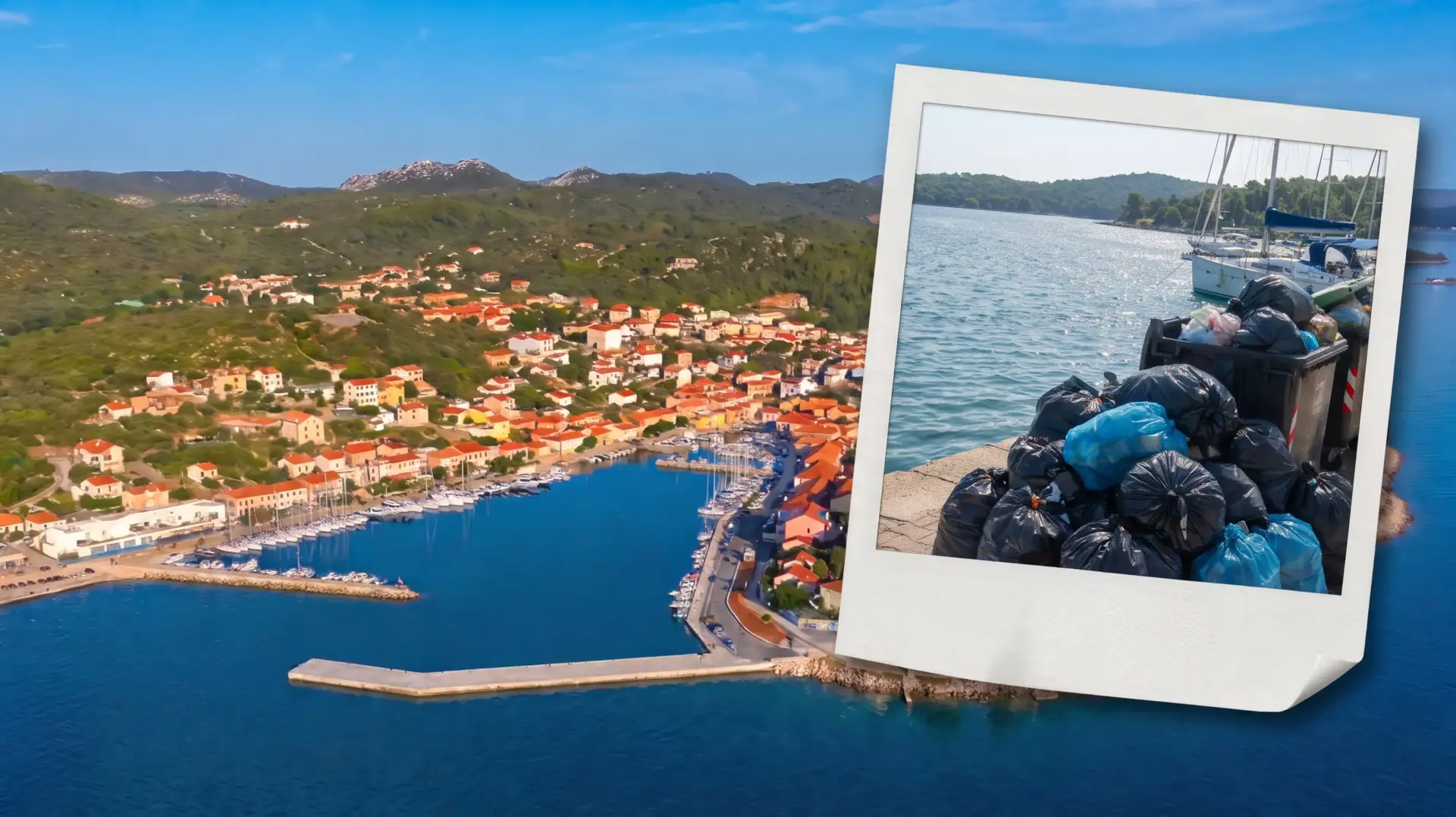
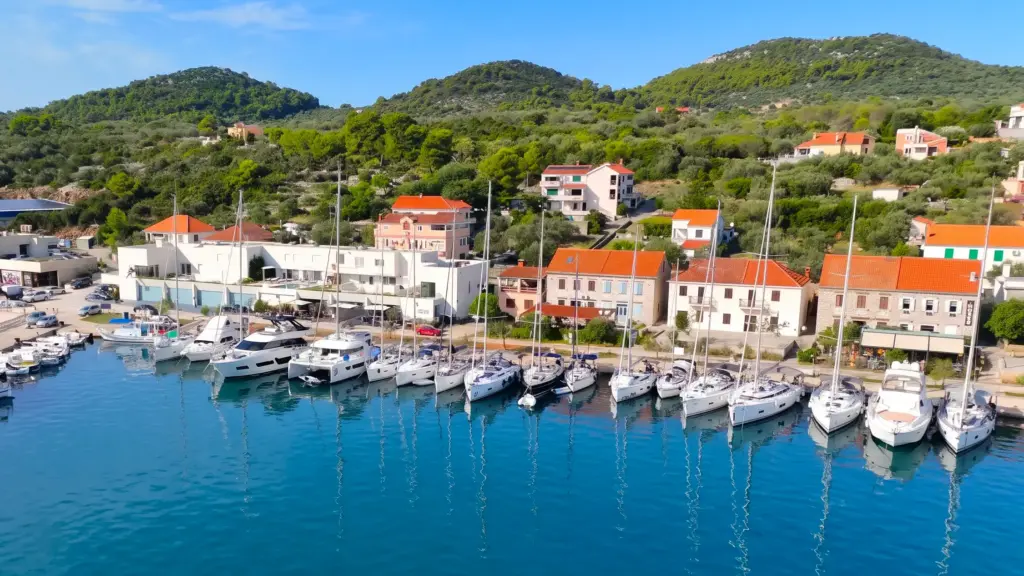
Anyone who sails into the harbor basin of Sali on Dugi Otok in the late afternoon in July or August is familiar with the scene: Yachts are moored side by side in front of the colorful stone houses, and just a few meters behind the Riva, black trash bags pile up next to the containers until late in the evening. The latest Croatian municipal waste report for the year 2025 now provides a figure that is sure to raise eyebrows: The municipality of Sali has a recycling rate of just 0.74 percent, placing it at the very bottom of the rankings in the entire Zadar County.
On average , 20.34 percent of municipal waste is collected separately in the Zadar County; the Croatian national average is 33.3 percent. There is no single reason to explain why this popular island village at the gateway to the Kornati Islands, of all places, ranks so far at the bottom of the list. On the ground, an extreme imbalance between residents and boaters, the unique practices in the sailing area, and chronically overwhelmed island logistics all collide.
A Small Village as a Nautical Bottleneck
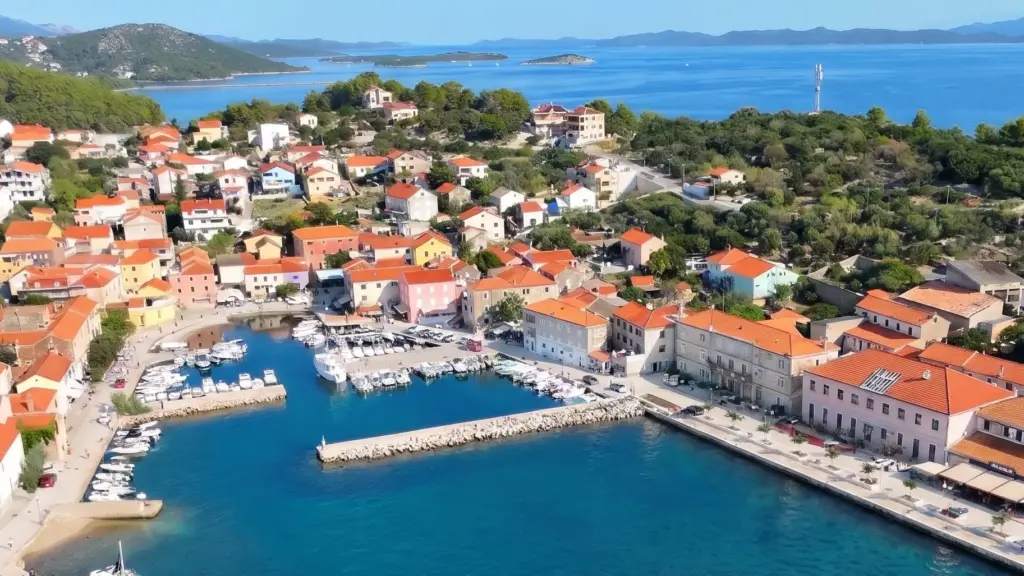
To understand the scale of the problem, it’s worth taking a look at the proportions involved. According to the 2021 census, the village of Sali has just 726 residents. The entire municipality (Općina Sali) —which comprises twelve settlements on Dugi Otok as well as Zverinac, Lavdara, and 25 smaller islands—has a total of 1,746 permanent residents.
These just under 1,750 people are confronted each year with enormous influxes of visitors arriving by land and sea:
- Luka Sali: The municipal harbor offers about 90 moorings and accommodates 55 to 70 yachts at a time in the evenings during peak season. With an average of five to six people per crew, 330 to 420 sailors dock there each night —more than half the town’s population.
- Telašćica Nature Park: This protected area, which also belongs to the municipality, has up to 247 buoys and welcomes more than 100,000 visitors per year, with up to 2,000 guests daily on peak days.
- Other Ports and Land-Based Tourism: In addition, there are approximately 100 moorings and just as many buoys around Marina Veli Rat and Pantera Bay, as well as about 26,400 land-based arrivals with approximately 182,000 overnight stays per year.
Over the course of the entire year, the municipality of Sali welcomes more than 150,000 visitors from both land and sea for every 1,746 residents—a ratio of roughly 1 to 85 to 1 to 100. On a peak summer day in August, there are three to four times as many visitors as locals living on and spending money on the island; in the port town of Sali, this ratio is even more lopsided due to passing boats and day-trippers.

The Kornati traffic jam effect on the Riva
However, the sheer number of visitors is only half the story. Just as significant is the unique dynamics of litter accumulation in the Kornati region:
- Several days’ worth of accumulated trash: Sali is the main supply hub before and after visiting the Kornati Islands and Telašćica Nature Park. Many crews first anchor for two to three days in secluded bays without regular waste disposal facilities. When they subsequently moor in Sali to take on water, electricity, and provisions, they don’t just unload a day’s worth of waste—they unload the accumulated trash from 48 to 72 hours all at once. A fully occupied charter boat can thus quickly bring 20 to 30 kilograms ashore. With 65 yachts, an estimated 1.5 to 1.8 metric tons of boat waste is generated on a single summer evening—significantly more than the total daily waste produced by all 726 residents of Sali.
- The reality in the galley: On a 40- to 48-foot yacht, there’s usually just one small bucket under the sink. In 35-degree summer heat, hardly any vacation crew sorts trash into paper, plastic, glass, and organic waste for days on end. Everything goes into a large black trash bag and, in the evening, into the nearest dumpster on the pier.
- Flat-Rate Waste Disposal and Incorrect Disposal: The waste disposal fee is included in the rental price, but there are no checks or incentives for sorting waste. If recycling bins are left unattended next to general waste containers, a single bag of food scraps thrown in incorrectly is enough to render an entire load unusable. The waste management company then has no choice but to classify it as mixed municipal waste.
Why Boaters Aren’t the Only Ones to Blame
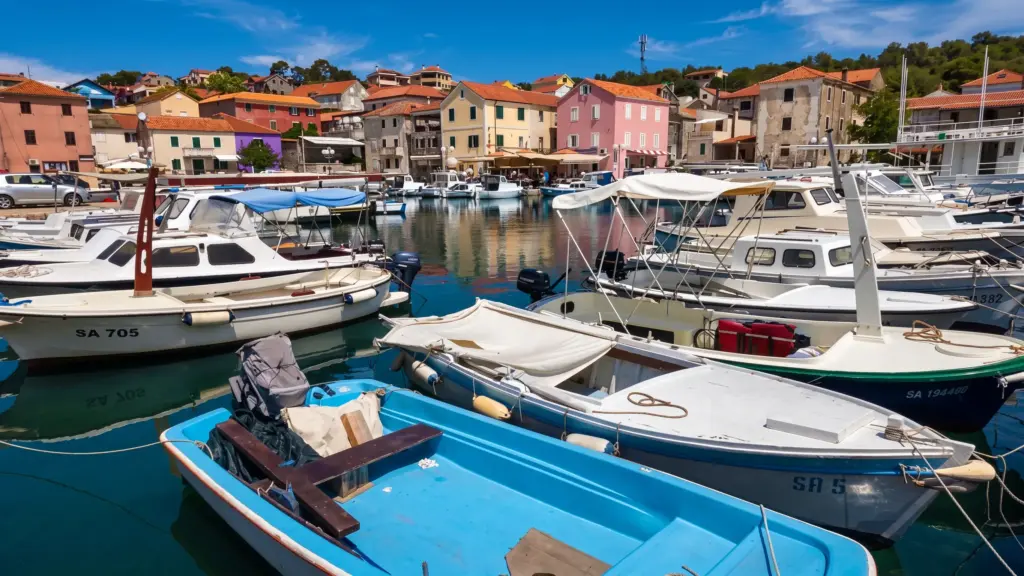
As obvious as the role of the summer fleet may be—boat tourism is not a sufficient excuse on its own for a quota of 0.74 percent. A look at the same statistics shows: Biograd na Moru is also one of the largest charter hubs in the Adriatic, yet it achieves a separation rate of 30.51 percent, similar to the heavily tourist-oriented municipalities of Vir (31.71 percent) and Pag (28.94 percent).
In Sali, massive structural barriers at the municipal level compound the problem:
- An Overburdened Small Business: With just 19 employees, the municipal utility company Mulić d.o.o. handles port operations, all waste collection on the island, street lighting, and the maintenance of public spaces all at the same time.
- Expensive ferry logistics: Every kilogram of trash on Dugi Otok must be transported by truck via the car ferry from Brbinj to Zadar on the mainland. Separated recyclables mean additional collection trips and high ferry costs—a major financial burden for a small island operation.
- 25 kilometers to the recycling center: Although the municipality has a waste collection center for sorted materials, it is located in Brbinj —about 25 kilometers from Sali—and is open only during the day, five days a week. This is not practical for everyday use, either for skippers or for residents without a car.
Even if all boat waste were excluded from the statistics, one uncomfortable fact remains: A figure of less than one percent means that, in reality, virtually no waste is sorted in local residents’ private households, vacation homes, and restaurants either.
What the Mountain of Waste Means for the Future
For a long time, the low recycling rates in small island communities were primarily a statistical blemish. With the new Biljane Donje Regional Waste Management Center (CGO), the situation is changing fundamentally. The facility near Zadar, which cost approximately 90 million euros to build, is designed to handle 75,000 metric tons of residual waste per year —yet in 2025, the catchment area already generated 89,399 metric tons, a full 19 percent above the limit.
Every additional metric ton of unsorted municipal solid waste now drives up the facility’s operating costs and, consequently, the waste disposal fees for municipalities and residents. For Sali, this creates a twofold need for action: On the one hand, the municipality needs recycling stations suitable for everyday use in the villages instead of a single remote facility in Brbinj, as well as staffed, clearly labeled sorting stations right on the port promenade. On the other hand, skippers and charter crews also have a responsibility. Anyone who wants to enjoy the unspoiled archipelago between Dugi Otok and the Kornati should no longer dump their unsorted onboard trash in black bags on the pier—otherwise, not only will the reputation of this popular port suffer, but the next port bill will also become noticeably more expensive.