Stay up to date – you can subscribe to our newsletter here

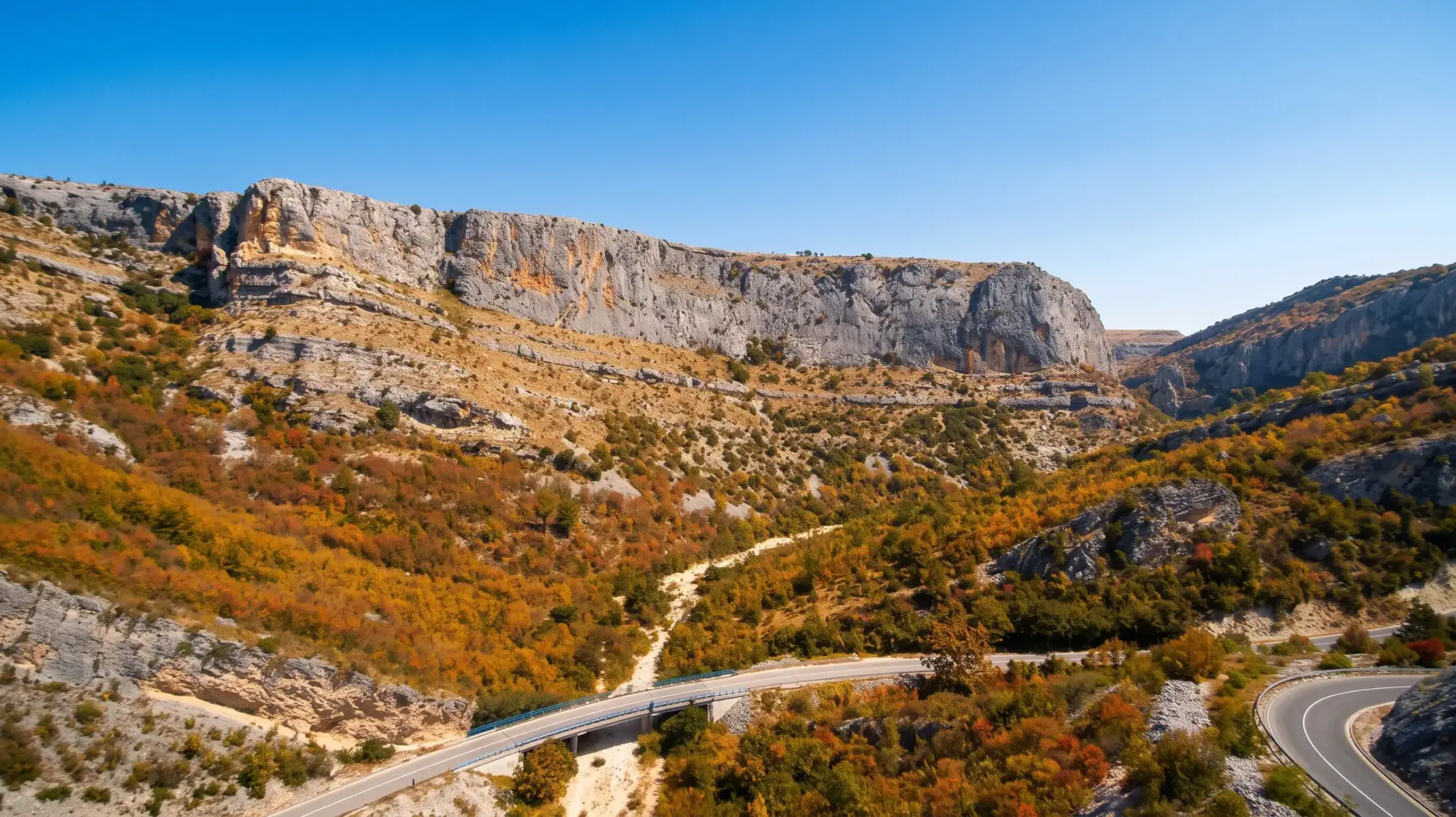
When people think of rivers in Dalmatia, the famous waterfalls of Krka national park usually spring immediately to mind. But just a few kilometers further inland, the region’s largest tributary flows through a landscape that is rougher, more pristine, and surprisingly varied: the Čikola. Over a stretch of just 46 kilometers, the river transitions from gentle meadows to a karst gorge up to 170 meters deep—and in some places even disappears completely in midsummer.
From the karst cave to the green valley: The source of the Čikola
The story of the Čikola begins at the foot of the Svilaja Mountains near the small villages of Mirlović Polje and Čavoglave. At an elevation of 279 meters, the water emerges from a karst cave and feeds two small spring-fed lakes. The name itself reveals what will later define the river: it comes from Turkish and roughly means “water between the cliffs.”
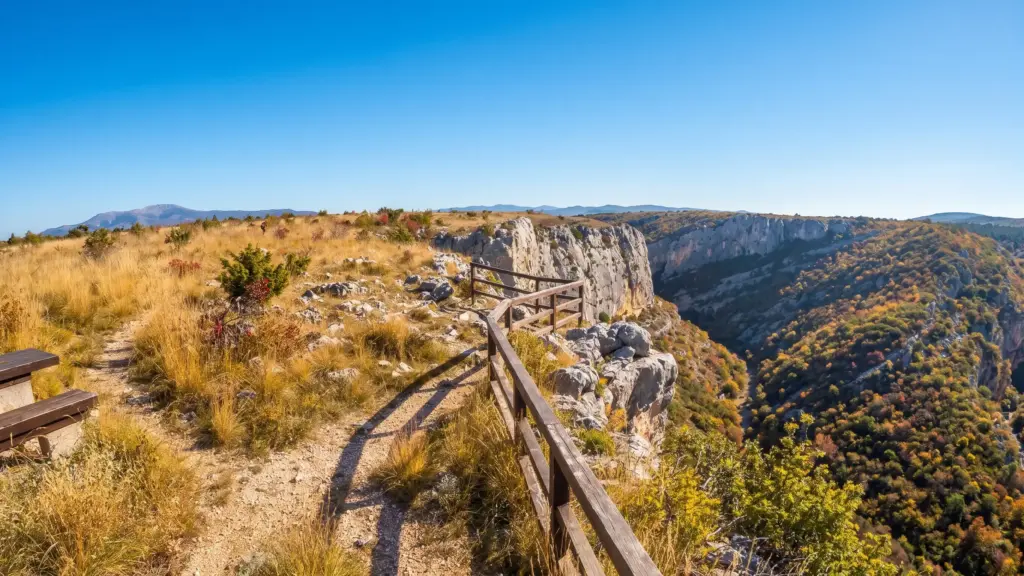
On the first few kilometers, however, there’s little sign of dramatic cliffs. The Čikola meanders leisurely through the fertile Petrovo Polje —a vast, peaceful valley that strongly evokes the rural heart of Dalmatia.

100 Days Without Water: The Dramatic Gorge from Drniš
As soon as the river reaches the small town of Drniš, its character changes abruptly. The Čikola squeezes its way into a 13-kilometer-long gorge up to 170 meters deep, which stretches to the border of Krka national park and has been protected as a significant landscape since the 1960s.
What makes this canyon special is its extreme seasonal transformation:
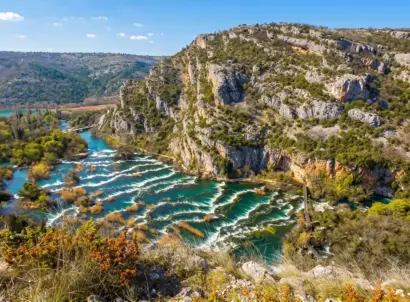
- Fall, winter, and spring: After heavy rains and the snowmelt, the Čikola transforms into a raging wild river. The water plunges over rocks, rapids, and small waterfalls, making the narrow gorge nearly impassable.
- Midsummer and the dry season: On an average of 100 days a year, the riverbed in the canyon is almost completely dry. This is due to the summer heat and the porous karst rock, into which the water seeps.
It is precisely this dry season that reveals an extraordinary natural spectacle: where torrents of water still rage in the spring, in the summer you can hike right across the smooth, polished limestone bed—all the way down to the bridge to Miljevci and on toward the Torak Source. Deeply eroded whirlpools (divovski lonci) and smooth karst depressions (kamenice)—carved into the rock by the current over millennia—are revealed along the way.
Torak Spring Lake, Travertine Barriers, and Rare Endemic Species
Just before the Čikola enters Krka National Park and flows into the Krka River—about 300 meters downstream from the Miljevci Bridge—a true natural wonder awaits: the Torak karst spring. The nearly circular spring lake measures about 130 meters in diameter, reaches depths of up to 50 meters, and glows in shades ranging from intense emerald green to deep blue, depending on the sun’s position. At the confluence itself, the Kalički Busen —a travertine barrier approximately 700 meters long and 10 meters wide—separates the watercourses of the Čikola and the Krka.
Despite the rugged, barren-looking rock faces, the ecosystem is surprisingly rich in species:
- 298 plant species inhabit the various climate zones ranging from the sunny plateau to the shady riverbed.
- 22 mammal species, including numerous bats, use the caves and crevices of the canyon as a refuge.
- 4 species of amphibians, as well as various birds of prey and rock-dwelling birds, are native to the canyon and its surroundings.
- 4 fish species, including two strictly protected Croatian endemics: the Dalmatian minnow (Phoxinellus dalmaticus) and the Turski klen (Telestes turskyi), which are perfectly adapted to the changing karst waters.
Traces of History Above the Abyss
Along the canyon, it is not only water and wind that have left their mark, but also centuries of turbulent history. Right at the entrance to the canyon near Drniš stands a lovingly restored, historic medieval stone mill, a reminder of the area’s former use of water power.
High above the valley, two impressive fortresses also stand guard:
- Gradina Fortress: Situated about 350 meters above Drniš, it offers a sweeping panoramic view of the town, Petrovo Polje, and the beginning of the gorge.
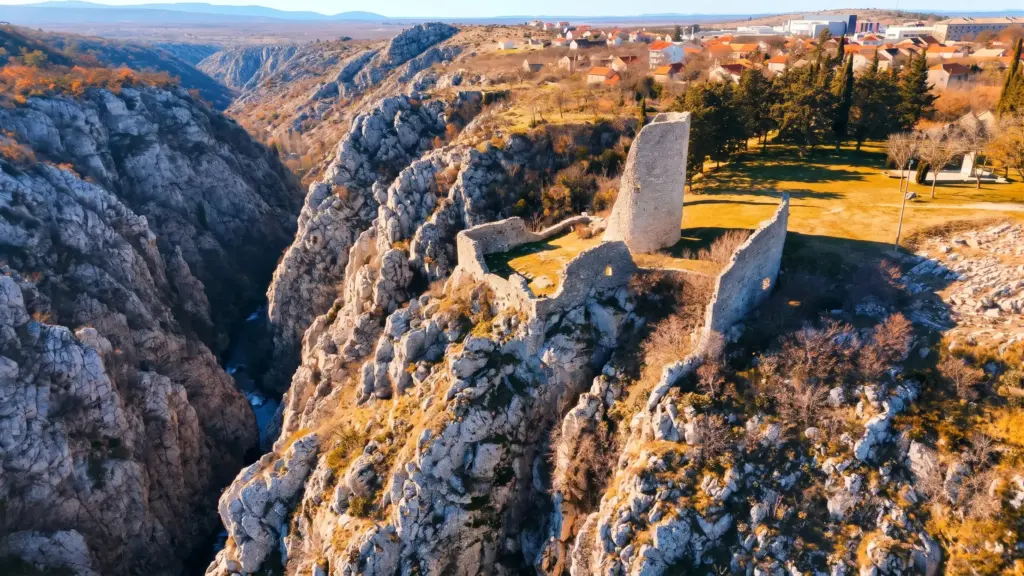
- Ključica Fortress: The largest and best-preserved medieval fortification in the Drniš region is spectacularly perched on a steep rocky outcrop directly above the Čikola River. Originally built by the noble Nelipić family, it is now protected as a cultural monument and ranks among the most photogenic ruins in the Dalmatian hinterland.
A Hotspot for Outdoor Enthusiasts: Climbing, Ziplining, and Via Ferrata
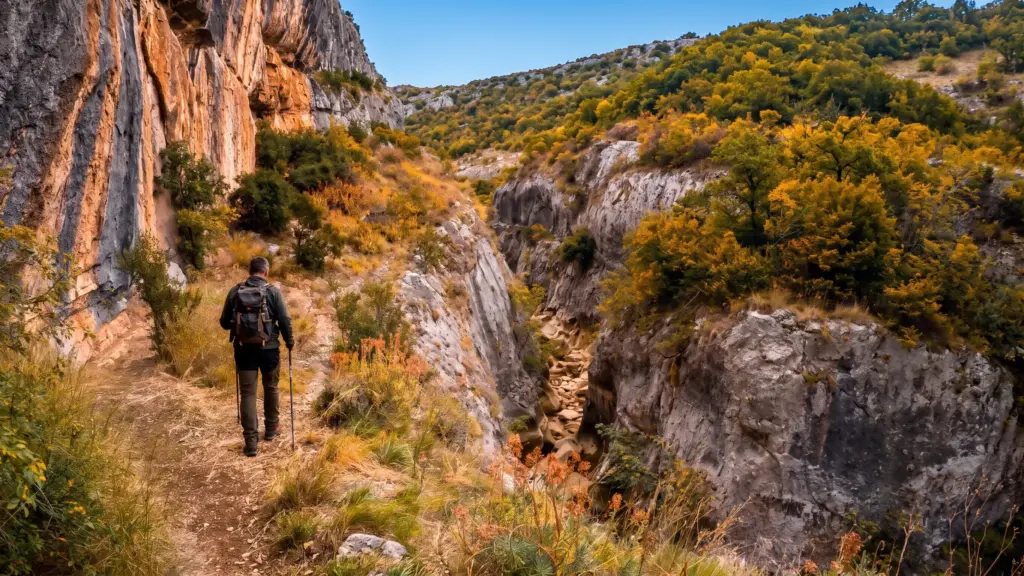
If you want to actively explore Dalmatia away from the crowded beaches, the area around the Čikola River offers one of Croatia’s most diverse outdoor regions:
| Activity | Highlights & Key Facts | Who is it suitable for? |
| Čikola Zipline | Three zipline sections totaling 1,400 meters in length high above the canyon | Adrenaline junkies and families (depending on age and weight requirements) |
| Via Ferrata | A trail approximately 2 kilometers long along the right bank, following the road toward Miljevci | Sure-footed hikers with via ferrata gear |
| Sport climbing | About 350 routes of varying difficulty levels—one of Croatia’s largest climbing areas | From beginners to experienced rock climbers |
| Hiking | Panoramic trails along the edge of the gorge; guided tours through the dry riverbed in midsummer | Nature lovers and photographers |
Best Time to Visit
The best time to visit Čikola depends entirely on what you’re hoping to see. In the spring (April through June), the river and waterfalls are full of water, the hillsides are in bloom, and the temperatures are ideal for climbing and hiking. In midsummer (July and August), the contrast between the parched, moon-like riverbed and the deep-blue water surrounding Lake Torak is mesmerizing. In early fall (September through October), you’ll enjoy mild temperatures, warm light on the limestone cliffs, and significantly fewer crowds than in the neighboring national park.
The Čikola is not a river for a quick photo stop while passing through. It rewards anyone who ventures into the Dalmatian hinterland—with rugged gorges, forgotten fortresses, and a natural landscape that constantly reinvents itself with the changing seasons.