Stay up to date – you can subscribe to our newsletter here

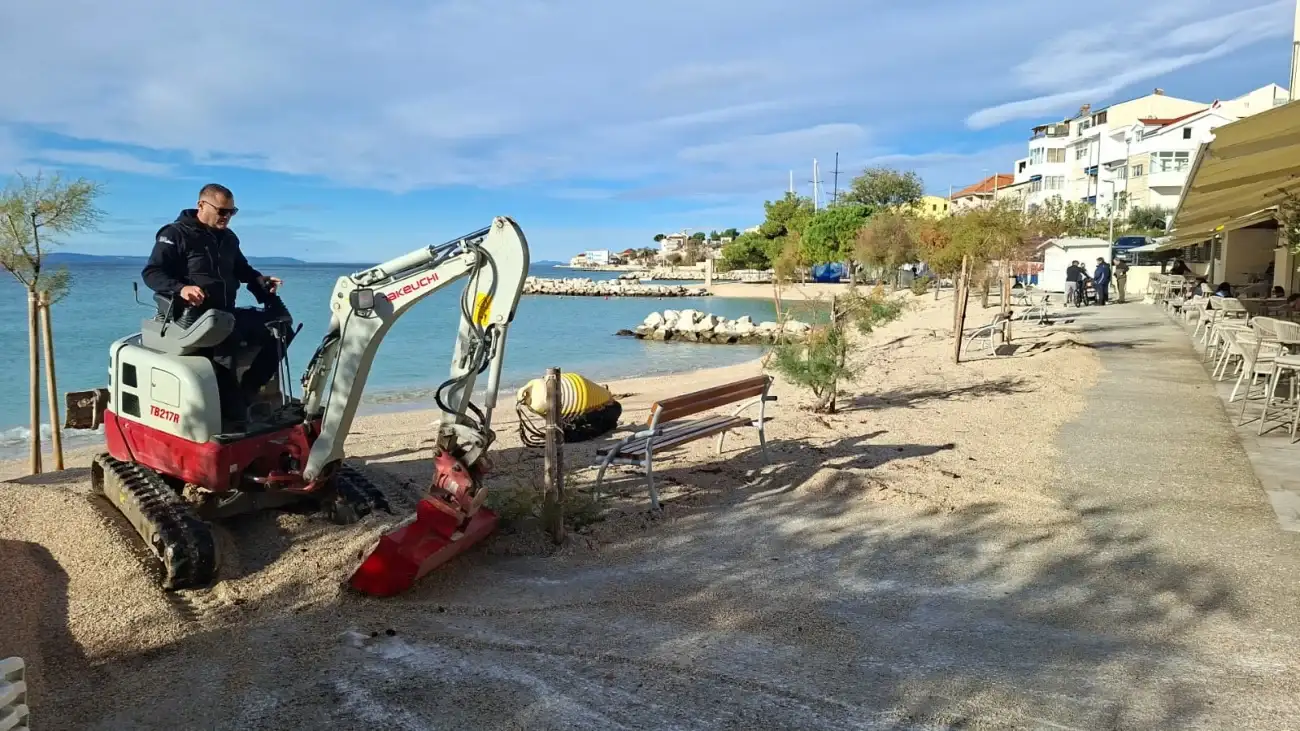
When the Adriatic Sea unleashes its fury in late fall, hardly a stone is left standing along the coast. Following the violent storm on Sunday evening, the town of Dugi Rat, located between Split and Omiš, continues to grapple with the aftermath—in some places, heavy construction equipment had to be brought in.
Anyone who drives along the popular coastal road between Split and Omiš in the summer knows the laid-back side of this region: fine pebble and sandy beaches, bustling waterfront promenades, and restaurants right on the water. By the end of November, this same stretch of coastline reveals its rugged side.
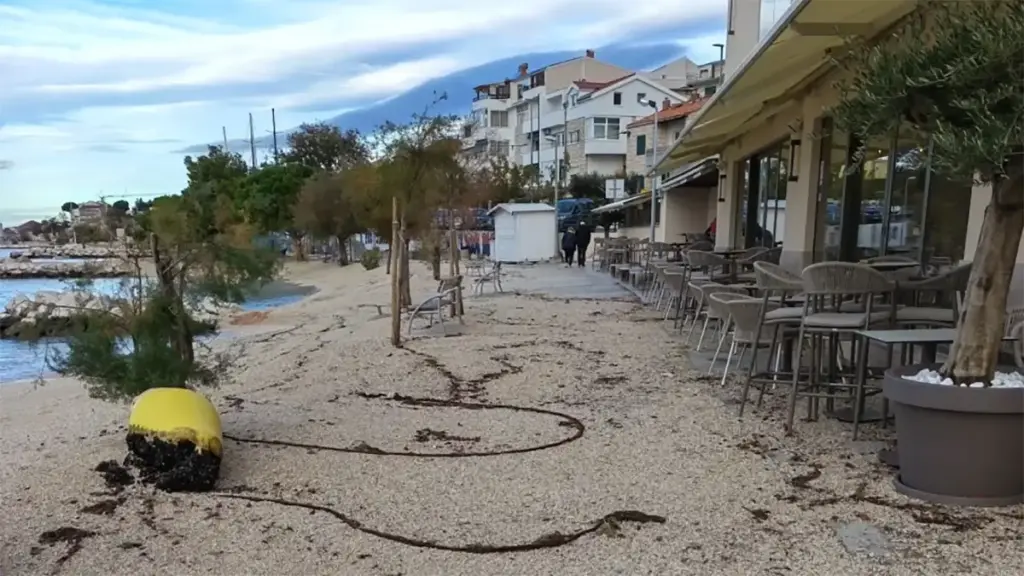
A severe storm that swept across parts of Dalmatia on Sunday evening, November 22, whipped up high waves that crashed onto the shore. The powerful surf swept up huge amounts of gravel, sand, flotsam, and seaweed, depositing them meters far onto the pedestrian promenades. In several places, the sea even pushed the beach debris right up to the doorsteps of restaurants and other establishments directly on the shore.
Heavy Machinery Instead of Shovels and Brooms
The full extent of the damage was revealed in photos released by the municipality of Dugi Rat on Tuesday, November 24. Where strollers and vacationers would normally be strolling, there were thick layers of washed-up gravel and seaweed.
After an initial assessment by municipal inspectors and employees of the town’s public works department, it quickly became clear that these volumes could not be handled by manual labor alone. The municipality therefore hired an outside contractor to clear the area mechanically. Excavators and cleanup vehicles have been in operation ever since to clear the promenades and haul away the debris.

The Quiet, Year-Round Work Behind the Summer Beaches
The incident in Dugi Rat brings into focus an issue that many vacationers in Croatia hardly notice in the height of summer: a Dalmatian pebble beach doesn’t stay in shape on its own.
Especially along exposed stretches of coastline, such as between Split and Omiš—where pebble and sandy coves alternate and the infrastructure extends right up to the water’s edge—fall and winter storms regularly reshape the shoreline. While the waves hurl tons of gravel far up onto the promenade at one beach, in other places they simply carry the beach material back out into the open sea.
For the communities along the Adriatic Sea, this means a costly and weather-dependent ongoing task—long before the first visitors arrive in the spring. In Dugi Rat, residents are now hoping for a period of calmer weather so that the ongoing cleanup efforts can be completed quickly and the newly restored sections of the shoreline remain stable.