Stay up to date – you can subscribe to our newsletter here
Beneath the calm waters off Kaštel Sućurac lies no ordinary ship graveyard. At the Trstenik site, archaeologists have been gradually uncovering a Roman port dating back some 2,000 years—built using clever recycling techniques, Spanish oil amphorae, and three sacrificed ships.
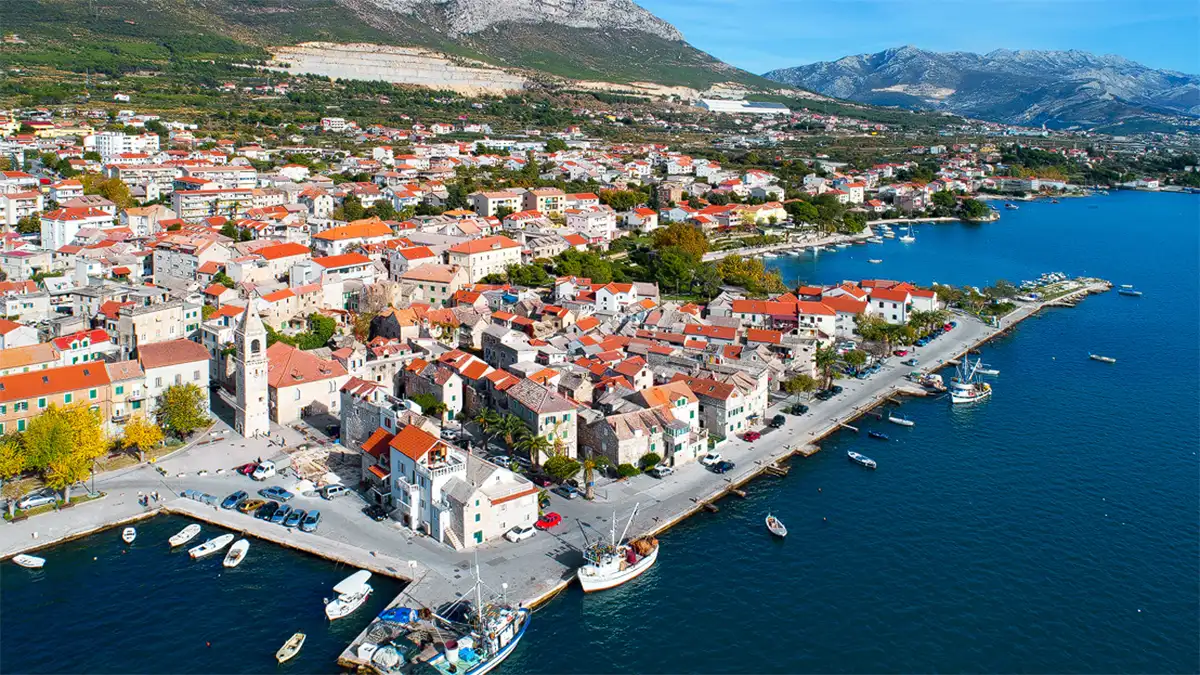
Anyone walking along Kaštela Bay between Split and Trogir today looks out over clear, shallow coastal waters. Yet just a few meters below the surface lies one of the most remarkable underwater archaeological sites in the eastern Adriatic. Between the 1st century B.C. and the 3rd century A.D., economic life thrived here in the immediate vicinity of Salona, then the capital of the Roman province of Dalmatia.
Recent findings from the latest research campaign conducted by the Kaštela City Museum, the University of Zadar, and the ARS NAUTICA Institute for Maritime Heritage now reveal new details about the Romans’ sophisticated engineering—and at the same time provide exciting evidence that this coast was already inhabited millennia before Rome.
Three Ships as a Foundation: Ancient Upcycling in Harbor Construction
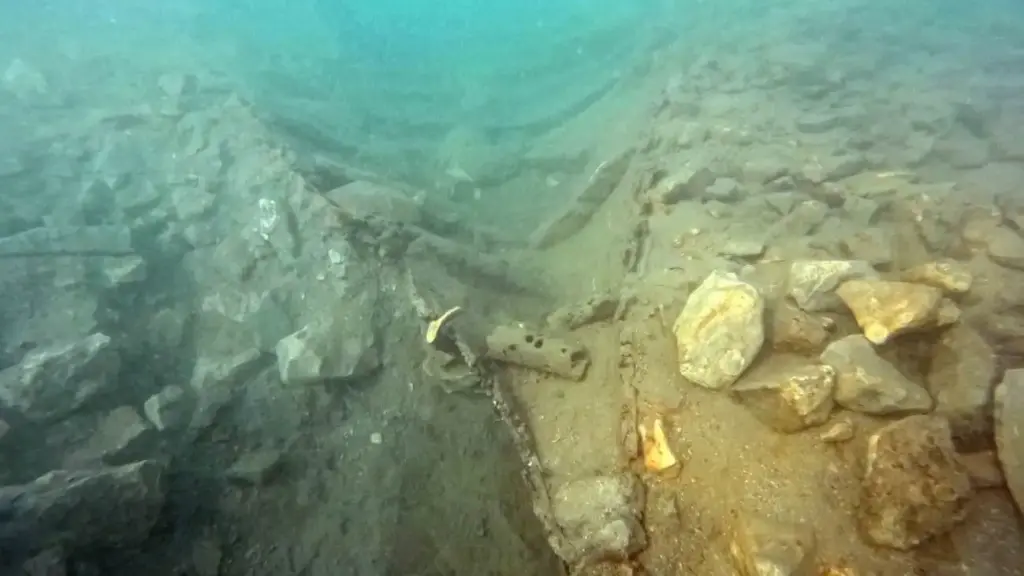
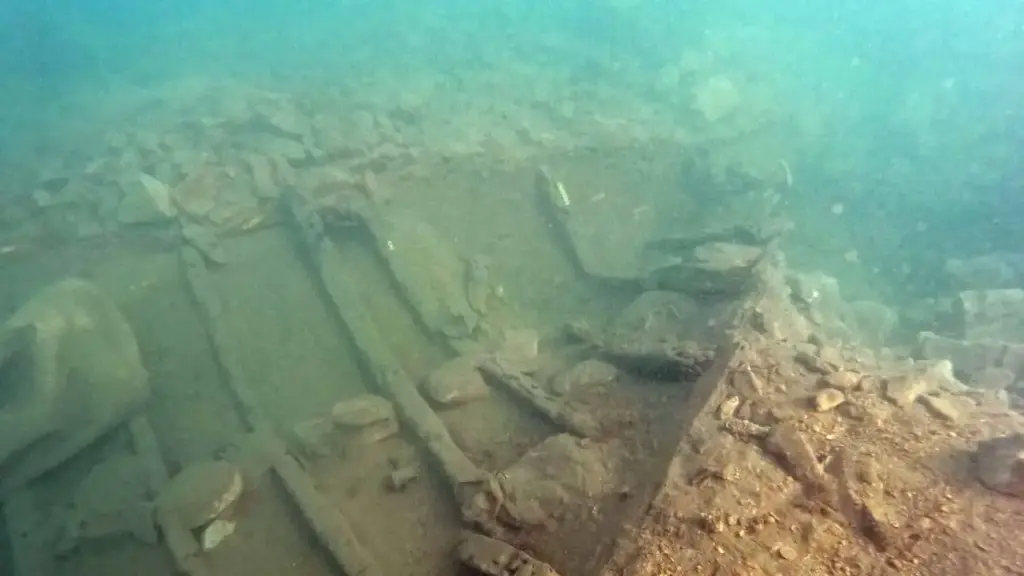
Shipwrecks usually tell stories of storms, reefs, or human error. In Trstenik, it was different. The three Roman ships discovered there did not sink as a result of an accident: The Romans deliberately filled their discarded hulls with heavy stones and sank them along the wooden quay wall.
In this way, former merchant ships were transformed into sturdy structural elements that protected the port from waves and currents. What was a pragmatic repurposing for the Roman harbor builders turned out to be a stroke of luck for modern archaeology: beneath the protective layer of marine sediment, the ancient wood remained exceptionally well-preserved for nearly two millennia.
According to the research led by underwater archaeologist Dr. Irena Radić Rossi, the three vessels differ significantly in size and construction, thus providing a rare cross-section of ancient shipping in the bay:
| Ship | Year of discovery | Estimated Length | Significance for research |
| Trstenik 1 | 2006 | approx. 14 meters | The largest of the three wrecks; key evidence of larger coastal freighters |
| Trstenik 2 | 2020 | approx. 5 meters | A significantly smaller workboat or dinghy for shallow coastal waters |
| Trstenik 3 | 2020 | approx. 10 meters | Focus of the current study on the bow, keel, and construction |

Olive oil from southern Spain—and a mysterious “aquarium”
Trstenik was far more than just a local landing site. This is evidenced by countless finds of Dressel Type 20 amphorae. These distinctive, round-bellied ceramic vessels were used in the Roman Empire almost exclusively for transporting olive oil from Hispania—primarily from what is now southern Spain. Their abundance demonstrates just how closely ancient Dalmatia was integrated into the Mediterranean long-distance trade network.
Just as they did with ships, the Romans took a practical approach to empty transport vessels. Instead of discarding the heavy clay jugs, they used them as fill and stabilizing material in the riverbank reinforcement. In a previously excavated section , researchers documented a complex structure consisting of 40 amphorae, which were precisely framed by 91 wooden posts and planks.
Another discovery from 2002 continues to pose a fascinating mystery to scientists to this day: a large, bulbous ceramic jar—a so-called perforated dolium (prošupljeni dolij). Holes had been drilled into the vessel’s wall at a later date. This extremely rare phenomenon has so far been observed primarily along the Dalmatian coast. Archaeologists suspect that the containers, which were stored in water, served as a kind of ancient live tank to keep fish, eels, or shellfish fresh until they were sold.
Traces from the Bronze Age: Was the port much older than previously thought?
Until recently, Trstenik was considered a classical Roman site. However, excavations in deeper sediment layers now push the site’s history far back into prehistory. After isolated prehistoric shards had already been discovered in 2015, the 2024 excavation campaign once again unearthed Bronze Age ceramic vessels about 20 meters away.
The new hypothesis: Long before Roman merchant ships docked here, a Bronze Age coastal settlement may have already existed on what was once a small peninsula on the Trstenik Stream.
This is still a working hypothesis that must be verified through further excavations. If it is confirmed, human use of this stretch of coastline dates back much further into the past than previously assumed.
What Happened During the Current Excavation Season
Despite harsh weather conditions, the team led by Dr. Irena Radić Rossi, together with Neven Lete, Vedran Dorušić, Vedran Katavić, Ivan Šuta, and other experts, continued their work in the water. Financial support was provided by the Croatian Ministry of Culture and Media, the Split-Dalmatia County, and the town of Kaštela.
The latest campaign focused on three areas:
- Wooden Structures: Detailed documentation of an east-west-oriented structure consisting of planks and posts, as well as test excavations of the adjacent northern area.
- Shipbuilding details: Further excavations at the bow of Trstenik 3 to better understand the shape of the keel and ancient joinery techniques.
- Underwater Heritage Preservation: Conservation of the site where the Hispanic amphorae were found. Since the existing protective net has deteriorated over the years, it is scheduled to be replaced with a new one in 2027.
Experience Ancient Shipwrecks—No Diving Certification Required
The fragile wooden shipwrecks and amphorae remain hidden beneath protective layers of sand and nets on the seabed—and for good reason. However, anyone who still wants to explore the sunken world of Trstenik up close doesn’t need to put on a wetsuit.
In the permanent exhibition of the Kaštela City Museum at Vitturi Castle (Kaštel Lukšić), visitors can experience the ancient port in a hands-on and interactive way. As part of the European ARCHAEODIGIT project, a tactile 3D model of an ancient ship was created that, with the help of touch sensors and digital explanations, makes Roman shipbuilding literally tangible. Interactive maps and audiovisual stations round out this glimpse into the past—and demonstrate how modern technology preserves a 2,000-year-old maritime heritage without endangering it.