Stay up to date – you can subscribe to our newsletter here
The Austrian Falkensteiner Michaeler Tourism Group (FMTG) has announced a massive investment package for Croatia. But in addition to big plans for Krk and Split, CEO Otmar Michaeler is sending a clear message to the industry: Rising prices alone are no longer enough.
Croatia remains one of Europe’s most popular vacation destinations—but behind the impressive booking figures, a debate has been simmering for some time, one that has long since reached vacationers as well. One of the most experienced players on the Adriatic is now capitalizing on this very trend. The Falkensteiner Michaeler Tourism Group, which has been active in Croatia for 26 years, presented its strategy for the next two to five years in Zagreb. The company plans to invest at least 200 million euros in expanding its Croatian portfolio, which includes not only hotels and campgrounds but also luxury apartments and villas.
What is remarkable here is not only the sheer amount, but also the tone set by FMTG CEO Otmar Michaeler. It is a clear commitment to the location—combined with an honest assessment of the current situation.
The price-quality gap as the greatest risk
Anyone who has taken a vacation on the Croatian coast in recent years is familiar with the discussion: accommodation, dining, and recreational activities have become noticeably more expensive. The fact that prices are rising is, at first glance, nothing unusual in a booming vacation region—it only becomes problematic when the on-site experience doesn’t keep pace.
Michaeler has publicly warned against precisely this development:
“We’ve always seen great potential in Croatia, as tourism there is clearly making progress. However, there is a lack of investment in quality, which is growing more slowly than prices.”
For Falkensteiner, this assessment is not a reason to back down, but rather the driving force behind the new initiative. The logic behind it is clear: Anyone who wants to remain competitive in the high-end market must consistently modernize their infrastructure, service, and amenities.

30 Million Euros for Krk: Camping Taken to a New Level
The group’s currently largest single project on the island of Krk demonstrates what this quality initiative looks like in practice. Approximately 30 million euros are being invested in the comprehensive renovation of the Pila campground in Punat.
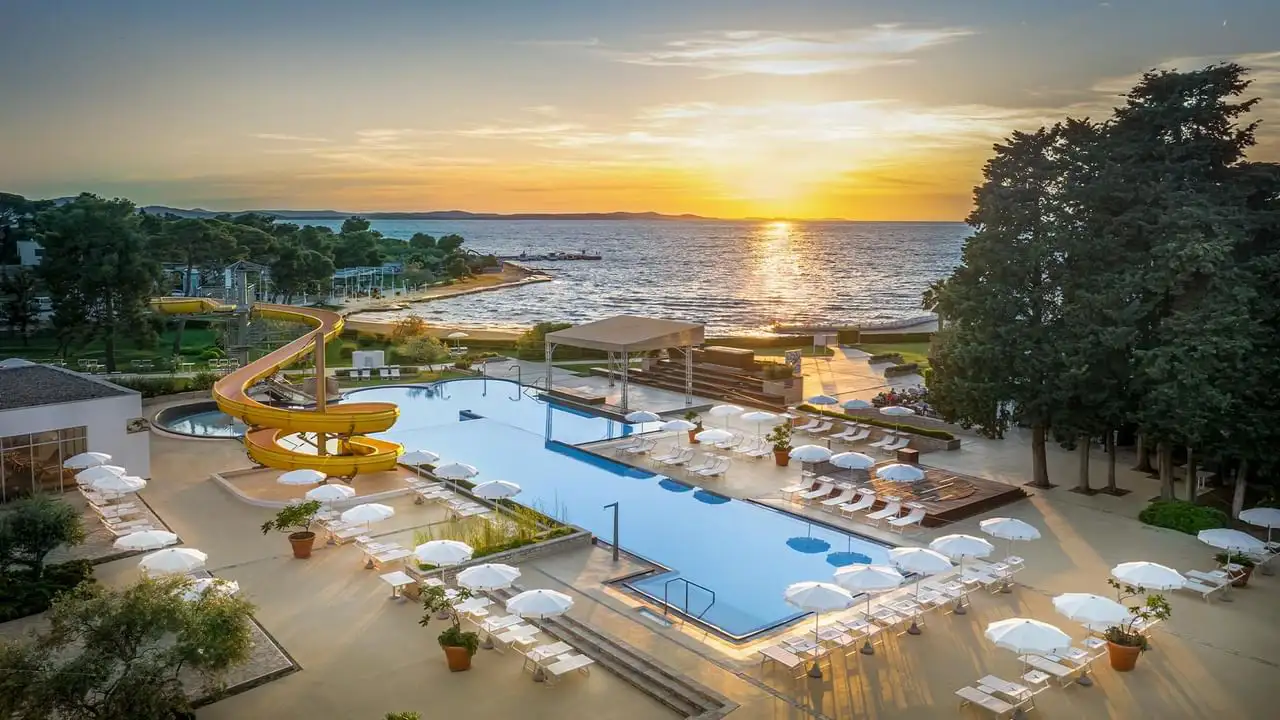
Instead of focusing on traditional, basic camping tourism, the company is pursuing a modern, high-quality overall concept featuring swimming pools, contemporary mobile homes, and a wide range of additional amenities. The timeline has already been set: The first guests are expected to arrive in May 2027.
The project symbolizes the transformation of an entire industry. Along the Adriatic coast, premium camping has long since evolved from a budget alternative into a distinct lifestyle segment—attracting affluent target groups who want to combine the experience of nature with hotel-style comfort.
Why Split Is Now Taking Center Stage
So far, the group’s activities have focused primarily on Zadar, Petrčane, and the island of Krk, where development is ongoing. For the next phase of expansion, however, the group is looking further south along the coast—with one clear favorite: Split.
There are entirely pragmatic reasons why the Dalmatian metropolis, of all places, is so attractive. Compared to destinations even further south, such as Dubrovnik, Split stands out for its geographic proximity to the most important source markets and significantly better transportation connections. For visitors from Central Europe, this means a noticeably easier and faster journey—a decisive factor, especially when it comes to shorter stays outside the peak season.
Breaking Free from the Summer Trap: The Goal Is Year-Round Tourism
One of the most persistent weaknesses of Adriatic tourism remains its heavy reliance on the summer months. This problem is particularly evident in the northern Adriatic: attracting enough visitors to islands like Krk after October remains a real challenge.
Nevertheless, the FMTG has declared extending the season a strategic priority—with an ambitious goal that also takes into account the tight labor market in the tourism sector:
“Our goal is to work at all of our locations—both in Croatia and abroad—at least 11, if not all 12, months of the year, which means we offer jobs year-round.”
This point, in particular, is likely to be decisive for the industry’s future. After all, true service quality doesn’t happen overnight—and certainly not with a constantly changing staff of seasonal workers. Businesses that can retain employees year-round create precisely the continuity and professionalism that discerning guests expect today.
Key figures at a glance
| Key Metric / Focus | Details on the FMTG Initiative |
| Investment Volume | At least 200 million euros (timeframe: 2 to 5 years) |
| Local market experience | Active in Croatia for 26 years |
| Current Flagship Project | Pila Campground in Punat (Krk) – approx. 30 million euros, opening in May 2027 |
| Existing core locations | Zadar, Petrčane, and the island of Krk |
| New Destination | Split (advantage due to market proximity and transportation links) |
| Strategic Goal | 11 to 12 months of operation per year and year-round jobs |
Falkensteiner’s 200-million-euro announcement is thus far more than just a typical expansion announcement. It outlines the path that Croatian tourism must take if the success of recent years is not to be a flash in the pan: away from quick summer business with rising prices, toward first-class infrastructure, reliable year-round jobs, and offerings that are worth their price in every season.