Stay up to date – you can subscribe to our newsletter here

First, the concrete piers at ACI Marina Žut—which are over 40 years old—collapse, then, right in the middle of peak season, the concession for the adjacent buoy field in Podražanj Bay expires—and nearly four months later, the Šibenik-Knin County acts as if a completely new anchorage is being invented there. The chronicle of a Dalmatian administrative farce.
Anyone who opened the local newspapers in Dalmatia on November 26, 2026, might have rubbed their eyes in disbelief for a moment. On the island of Žut in the municipality of Murter-Kornati, the Dalmacija Danas website reported that a “new project to develop an anchorage in Podražanj Bay” was in the works. Two days earlier, on November 24, the Šibenik-Knin County had authorized the semi-state-owned marina operator ACI to apply for the necessary site permit—an “important administrative step.”
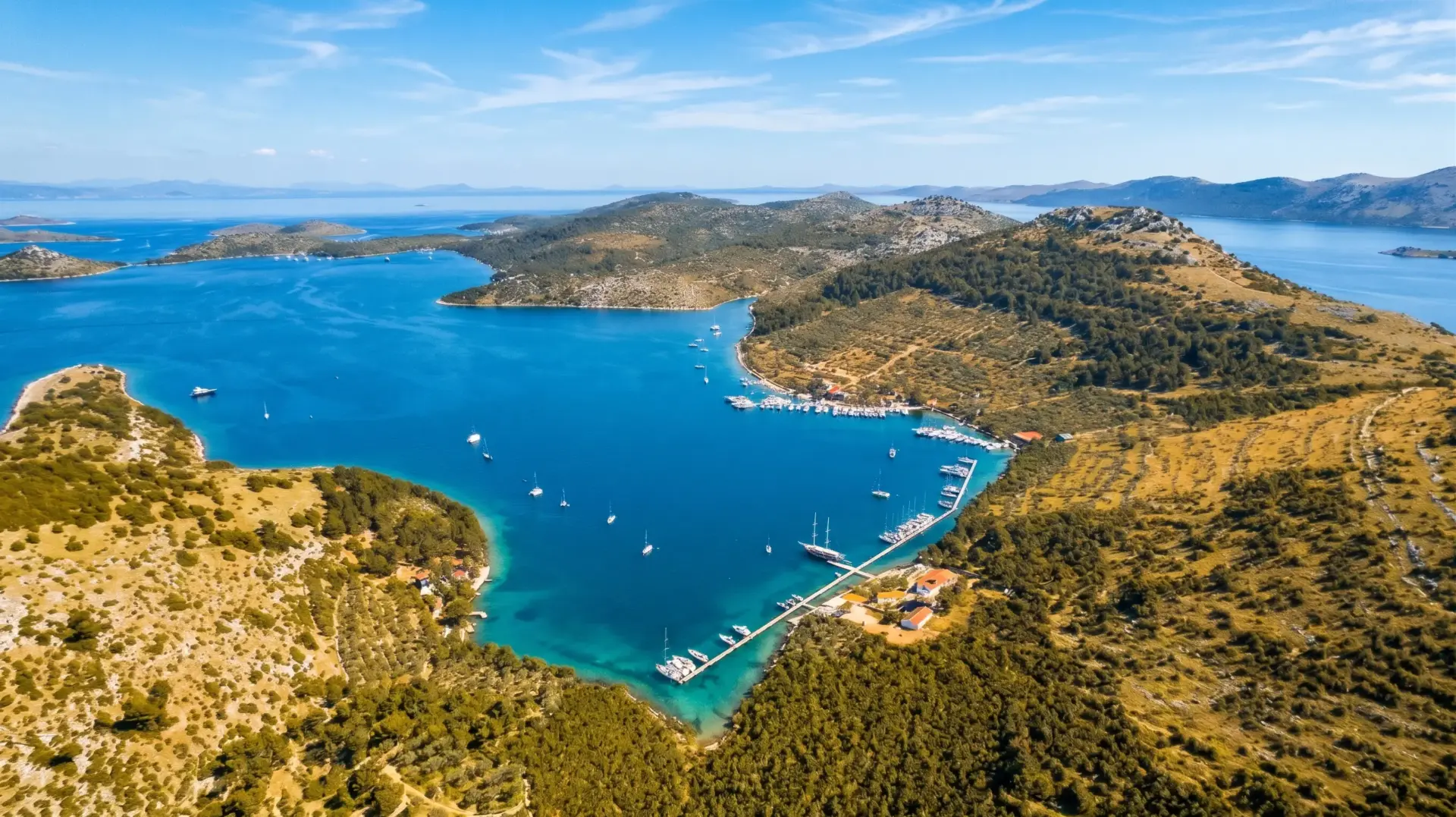
To skippers in the Adriatic, this news sounds like real-life satire. After all, Podražanj Bay at the inner end of Luka Žut is not some untouched, uncharted territory that is now being opened up to nautical tourism for the first time. ACI has been operating a regular, licensed buoy field right there since July 12, 2011, with 15 moorings for yachts up to twelve meters in length—right next to its own marina. The fact that the site approval process must suddenly start over in late fall 2026 marks the culmination—for now—of a summer in which just about everything that could go wrong on Žut did go wrong.
First the concrete crumbles, then the permit disappears
The backstory reads like a case study in neglected maintenance and bureaucratic timing. As recently as April 1, 2026, the ACI board routinely approved a new waste management plan for the “ACI sidrište Podražanj”—specifically covering the three-year period from 2026 to 2029. There was no mention in it of an impending end to operations.
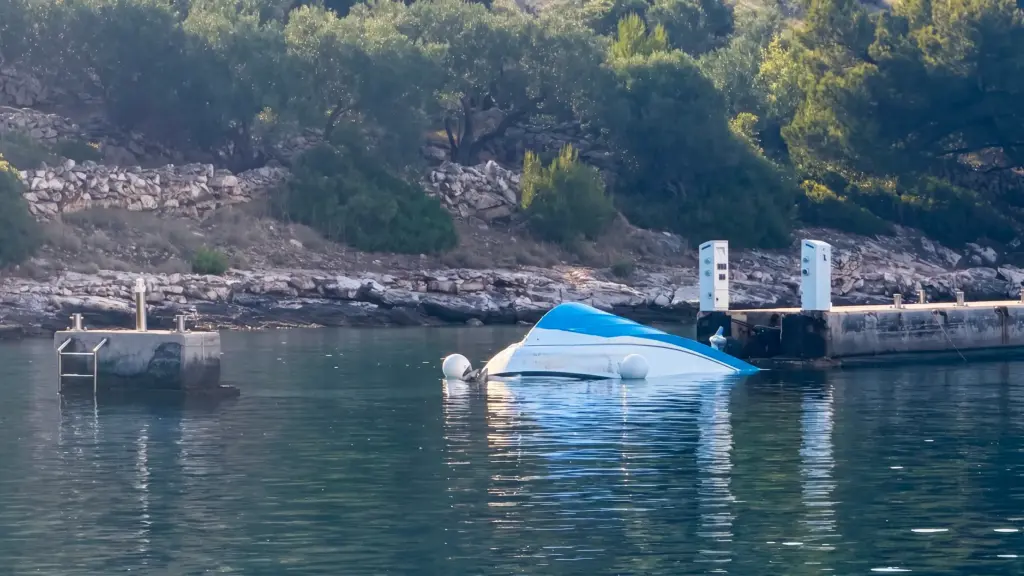
Just under twelve weeks later, the first major incident occurred. On June 22, 2026—amid calm midsummer weather and a light maestral wind — a section of the concrete pier at ACI Marina Žut, which dated back to the early 1980s, collapsed, dragging a moored motorboat down with it. (We reported) The very next day, the Šibenik Harbor Authority (Lučka kapetanija) arrived and completely closed off all remaining concrete piers of the 441-meter-long facility: mooring and access were prohibited. The marina restaurant also remained closed.
On June 25, ACI reassured its customers with an official statement: Although the piers would remain closed until further notice, the anchorages in the licensed buoy field would remain available as usual. Overnight, the buoys in Podražanj had become the last remaining lifeline for the entire station on Žut.
Just 37 days later, that, too, came to an end. On August 1, 2026—at the height of the Croatian peak season, of all times—the 15-year concession for the buoy field in Podražanj Bay simply expired. A timely new call for bids or a seamless transition plan? Not a chance.
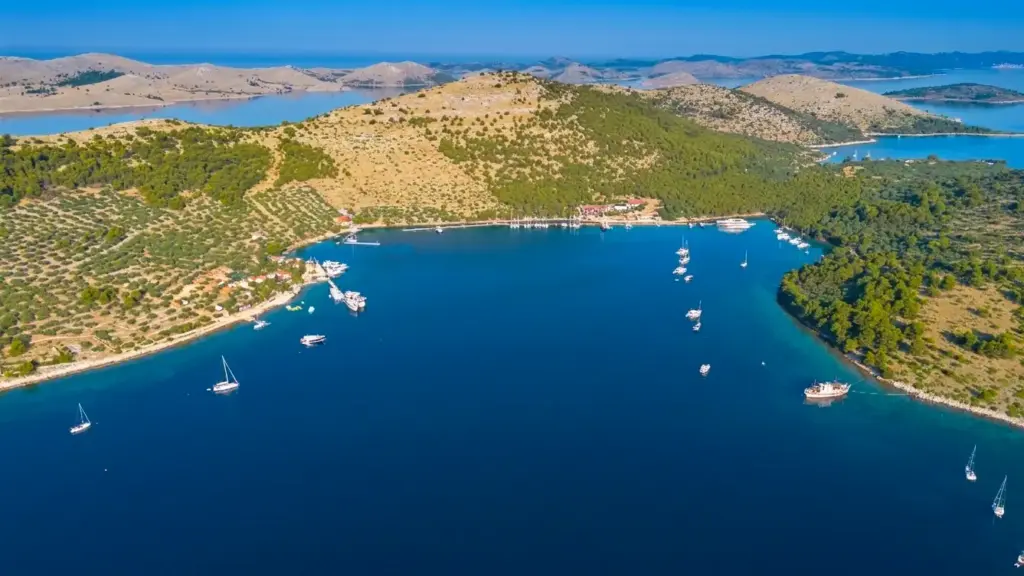

The chronology of the debacle
| Date | Event at Luka Žut / Podražanj Bay |
| July 12, 2011 | ACI receives the concession for the Podražanj buoy field (15 buoys, open seasonally from April through October). |
| April 1, 2026 | ACI adopts a waste management plan for Podražanj covering the period 2026–2029. |
| June 22, 2026 | Partial collapse of a concrete pier at ACI Marina Žut; a motorboat sinks. |
| June 23–25, 2026 | The Šibenik Port Authority is completely closing all marina docks; ACI is officially directing guests to the buoy field. |
| August 1, 2026 | In the middle of peak season, ACI’s concession for the Podražanj buoy field expires. |
| October 1, 2026 | The Croatian government extends the concessions for all 22 ACI marinas (including Žut) through 2058—the buoy field is excluded. |
| November 24, 2026 | The Šibenik-Knin County authorizes ACI to apply for a new location permit for Podražanj—without a concession and without a timeline. |
Down 66 Percent at Žut – Record Profit for the Group
The financial fallout from the double disaster at Žut is reflected in the Group’s 2026 nine-month report. Between January and September 2026, ACI Marina Žut’s sales revenue plummeted from 517,000 euros in the previous year to a meager 174,000 euros—a drop of 343,000 euros, or 66.3 percent.
At the corporate level, the fiasco had little impact: Thanks to price increases and strong annual berth revenue, ACI increased its total revenue by 2.4 percent to 33.3 million euros during the same period, while net income climbed by 24.2 percent to 3.8 million euros. And just a few weeks after the disastrous summer, a major political vote of confidence came from Zagreb: On October 1, 2026, the Croatian government extended the concessions for all 22 ACI marinas—including the one on Žut—until the end of 2058. (as we reported)
In return, ACI announced a 140-million-euro investment program and agreed to significantly higher concession fees of 1.50 euros per square meter plus four percent of annual revenue.
The bureaucratic icing on the cake: Planning at your own risk
So while Zagreb sealed the big deal through 2058, the buoy field directly in front of the closed piers fell under the jurisdiction of the Šibenik-Knin County—and thus into the clutches of the regional administration. The decision dated November 24, 2026, which has now been published, takes the absurdity to the extreme:
- Starting from scratch: Nearly four months after the old license expired, ACI may now, on behalf of and for the account of the county, apply for a site permit (lokacijska dozvola) for the “future” buoy field.
- Complete lack of transparency: The document does not specify the planned number of buoys, the investment amount, or a specific date for the actual concession tender.
- The three-percent clause: ACI must pre-finance the documentation. If the company receives the location permit but loses to a competitor in the subsequent public tender, the new concessionaire must reimburse ACI for the actual costs—though capped at a maximum of three percent of the estimated investment value. If, on the other hand, ACI decides not to submit its own bid after all the preliminary work, the operator will be left to bear all the costs.
The irony of this arrangement: The same state-controlled marina company that was just awarded the Croatian coastline through 2058 is now, due to a lack of timely succession planning, acting as a planning consultant for the county —for a buoy field that it has already been operating for 15 years.
The broader context: A patchwork quilt at Luka Žut
The absurdity surrounding Podražanj doesn’t affect just any remote bay, but one of the most strategically important stopovers for cruises around Kornati national park. Since the island of Žut lies just outside the national park boundaries, countless charter and private crews deliberately divert to the expansive Luka Žut.
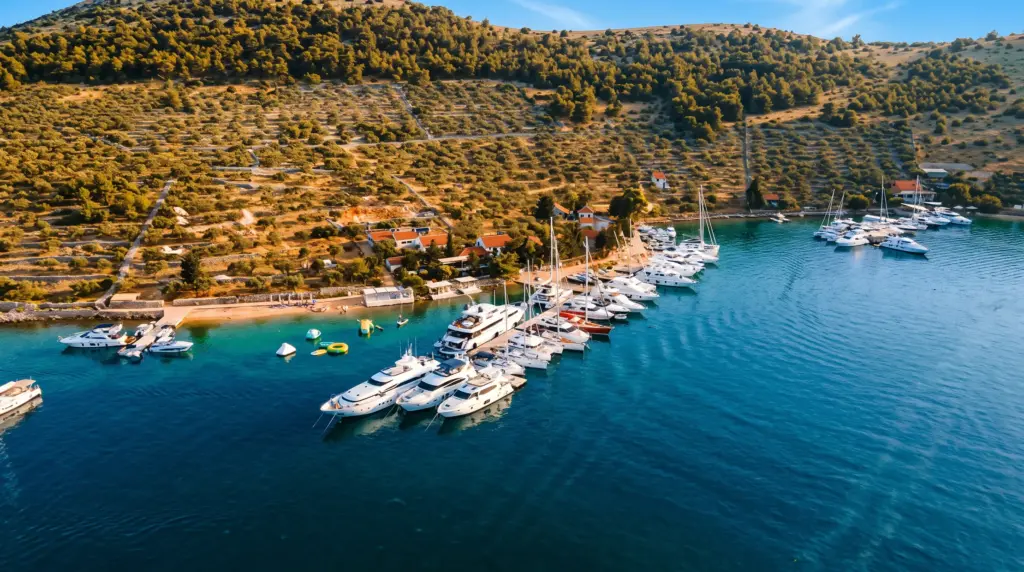
For years, the bay’s numerous inlets have been marked by a confusing patchwork of licensed anchorages, private docks, and buoys belonging to local konobas. The question of who is actually operating moorings legally on the maritime commons (pomorsko dobro) and who is not is a recurring topic of discussion among Croatian media and authorities around Žut. The fact that, of all operators, the largest officially licensed operator in the area first lost its docks due to the risk of collapse and then let its buoy license expire in the middle of summer fits seamlessly into this picture.
What Awaits Skippers in the 2027 Season
Two major uncertainties loom over Luka Žut for the upcoming 2027 sailing season. First, there is still no binding timeline for the renovation of the destroyed ACI docks, as concrete construction work cannot begin until the new contract addenda, project documents, and permits are finalized. Second, the bureaucratic process for the buoy field in Podražanj has only just begun with the application for a site permit—the actual awarding of the concession and subsequent installation have yet to take place.
Anyone planning a cruise to the Kornati Islands in 2027 should therefore not count on Žut having functional marina docks or ACI buoys deployed in a timely manner, and should, as a precaution, have an alternative cove noted in their logbook. In Dalmatia, the wheels of the maritime administration simply turn more slowly than the ravages of time on reinforced concrete.