Stay up to date – you can subscribe to our newsletter here

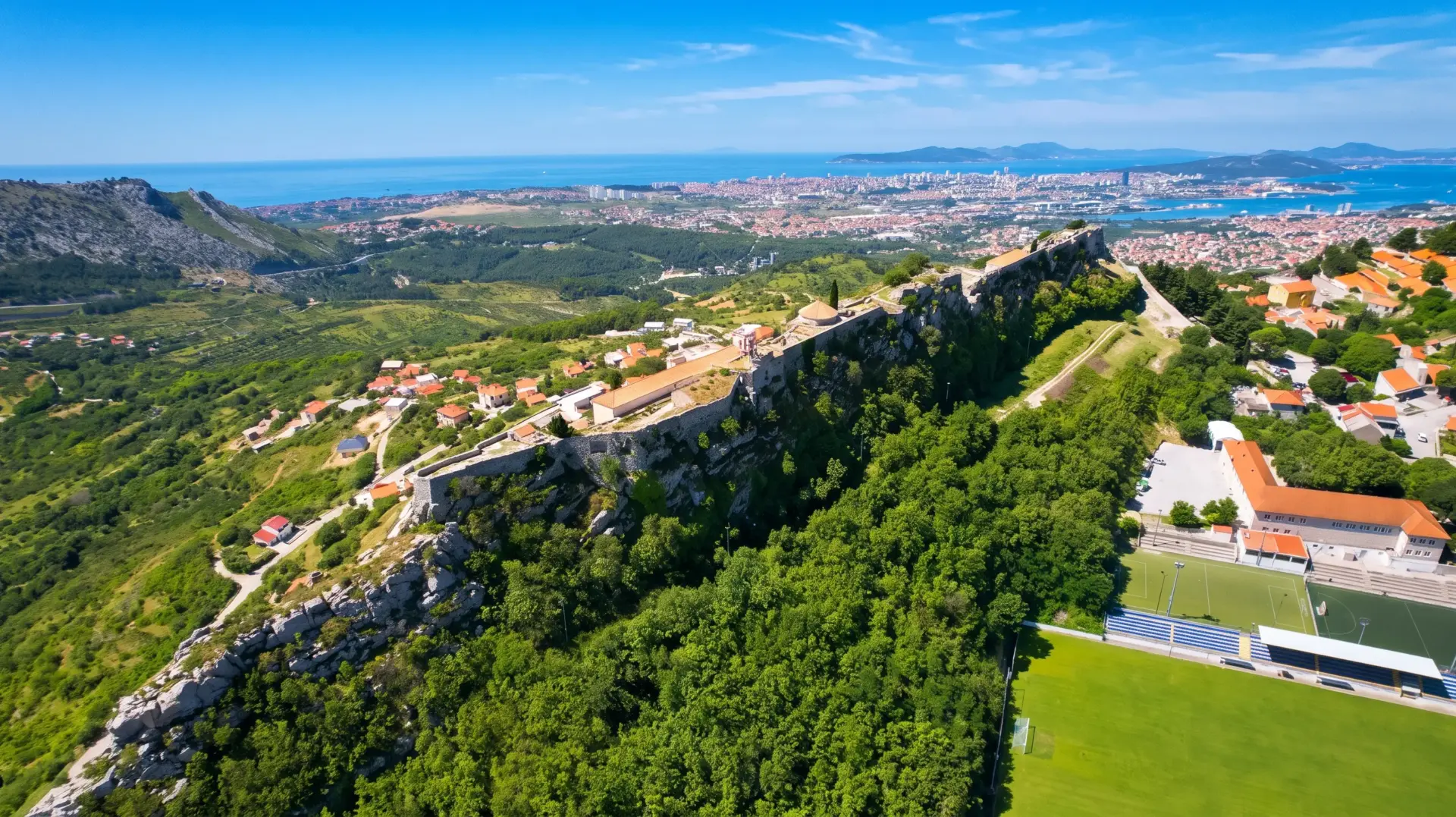
Just about a twenty-minute drive northeast of Split’s bustling city center, the landscape changes abruptly. The urban hustle and bustle gives way to rugged limestone cliffs, fragrant scrub, and steep slopes. And right there, as if carved from the rock itself, it sits enthroned on a narrow ridge between the Mosor and Kozjak mountain ranges: Klis Fortress.
When people think of Dalmatia, they usually picture turquoise-blue bays and Diocletian’s Palace. But a short detour up into the mountains is well worth it—not just for history buffs and TV series fans, but for anyone who wants to experience one of the most impressive panoramic views of the Croatian coast.
The “Key to Dalmatia”: Over 2,000 Years of History
Even the name Klis (derived from the Greek word kleis, meaning “key”) reveals why this place has been so fiercely contested for millennia. The fortress guarded the only strategically important mountain pass between the Dalmatian hinterland and the Adriatic coast. Whoever controlled Klis controlled access to Split.
The oldest traces of the complex date back to the Illyrians. In the Middle Ages, the castle served at times as the seat of Croatian kings from the Trpimirović dynasty. However, it gained its legendary reputation in the 16th century: Under the leadership of Captain Petar Kružić, the Uskoks —feared freedom fighters—withstood attacks by the Ottoman Empire here for decades before the fortress finally fell in 1537 and was recaptured by the Venetians more than a hundred years later.
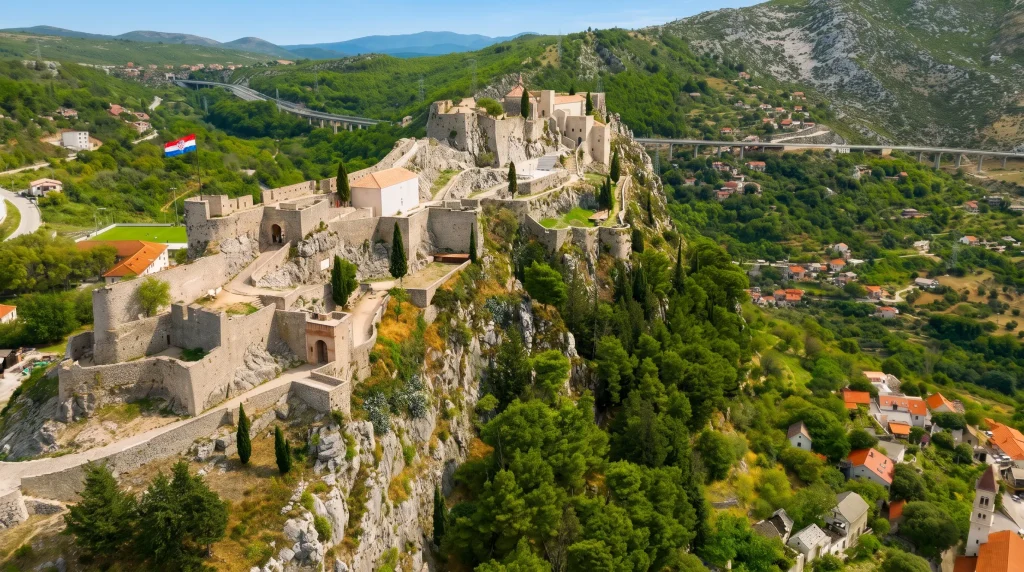
Today, you can experience this eventful past firsthand as you stroll through the three defensive rings:
- The Church of St. Veit (Crkva sv. Vida): Originally built as a mosque during Ottoman rule, it was later converted into a Catholic church by the Venetians—a fascinating architectural testament to two worlds.
- The Historic Armory: In the former armory, suits of armor, swords, and uniforms tell the story of the Uskoks’ harsh daily life.
- Winding battlements and towers: Unlike in some heavily commercialized castles, in Klis you can explore almost every nook and cranny on your own, climb over thick defensive walls, and peer through old embrasures.

In the Footsteps of Daenerys: Klis as a Film Set
The fortress has gained international fame, at least since the fourth season of *Game of Thrones *. For the hit series, Klis was transformed into the mighty slave city of Meereen, where Daenerys Targaryen continued her campaign.
When you stand on the top level and watch the wind make the Croatian flag flutter above the weathered limestone walls, it takes little imagination to picture dragons soaring above the battlements. Inside the complex, there’s even a small exhibition space with stills and props from the film shoot—subtle enough not to overshadow the castle’s historic character, but a real highlight for fans.
A view that leaves you speechless
The biggest draw of the climb—aside from its history—is the panoramic view. From the upper bastions, an almost unobstructed view opens up down to ancient Solin, the white skyline of Split, and the vast Kaštela bay. On clear spring days, the view extends far across the deep-blue Adriatic Sea to the offshore islands of Brač, Šolta, and Hvar. Especially when the air is particularly clear after a light breeze, the combination of rugged karst mountains, fresh greenery, and the glistening sea looks like something out of a painting.
Practical Tips for Your Visit
To ensure your trip to Klis goes smoothly and is relaxing, a little preparation goes a long way:
- Getting There: By rental car, you can reach Klis from Split via the expressway in about 15 to 20 minutes; there is parking available directly below the entrance. Alternatively, a public bus runs regularly from downtown Split directly to the village of Klis.
- Best time to visit: It’s especially pleasant in the spring and fall. In the height of summer, you should come either early in the morning or in the late afternoon—that’s when the heat on the exposed rocky ridge is more bearable, and the low-angle sunlight bathes the light-colored masonry in a warm golden glow.
- Footwear & Gear: It’s best to leave your flip-flops at the beach. The old stone paths and steps inside the fortress are uneven and, in some places, worn smooth—sturdy sneakers or lightweight hiking shoes are ideal. Also, be sure to bring water and sunscreen, as there’s hardly any shade on the walls.
- Time Required & Combination Tips: Plan on spending about 1.5 to 2 hours exploring. This visit pairs perfectly with a trip to the nearby Roman ruins of Salona in Solin or a detour to the nearby Stella Croatica ethno-culinary park, where local specialties such as olive oil and fig pastries are produced. If you’re hungry when you leave the castle, you should also know that Klis is famous throughout Dalmatia for its traditional konobas, where classic spit-roasted lamb (janjetina s ražnja) is served.
The Klis Fortress offers something rare: it’s just a stone’s throw from one of Croatia’s liveliest coastal towns, yet it feels like a journey back to a completely different era. Surrounded by centuries-old stone, fresh mountain air, and sweeping views of the sea, it’s the perfect place to escape the hustle and bustle of the coast for a few hours—and to experience Dalmatia from what is arguably its most impressive vantage point.