Stay up to date – you can subscribe to our newsletter here

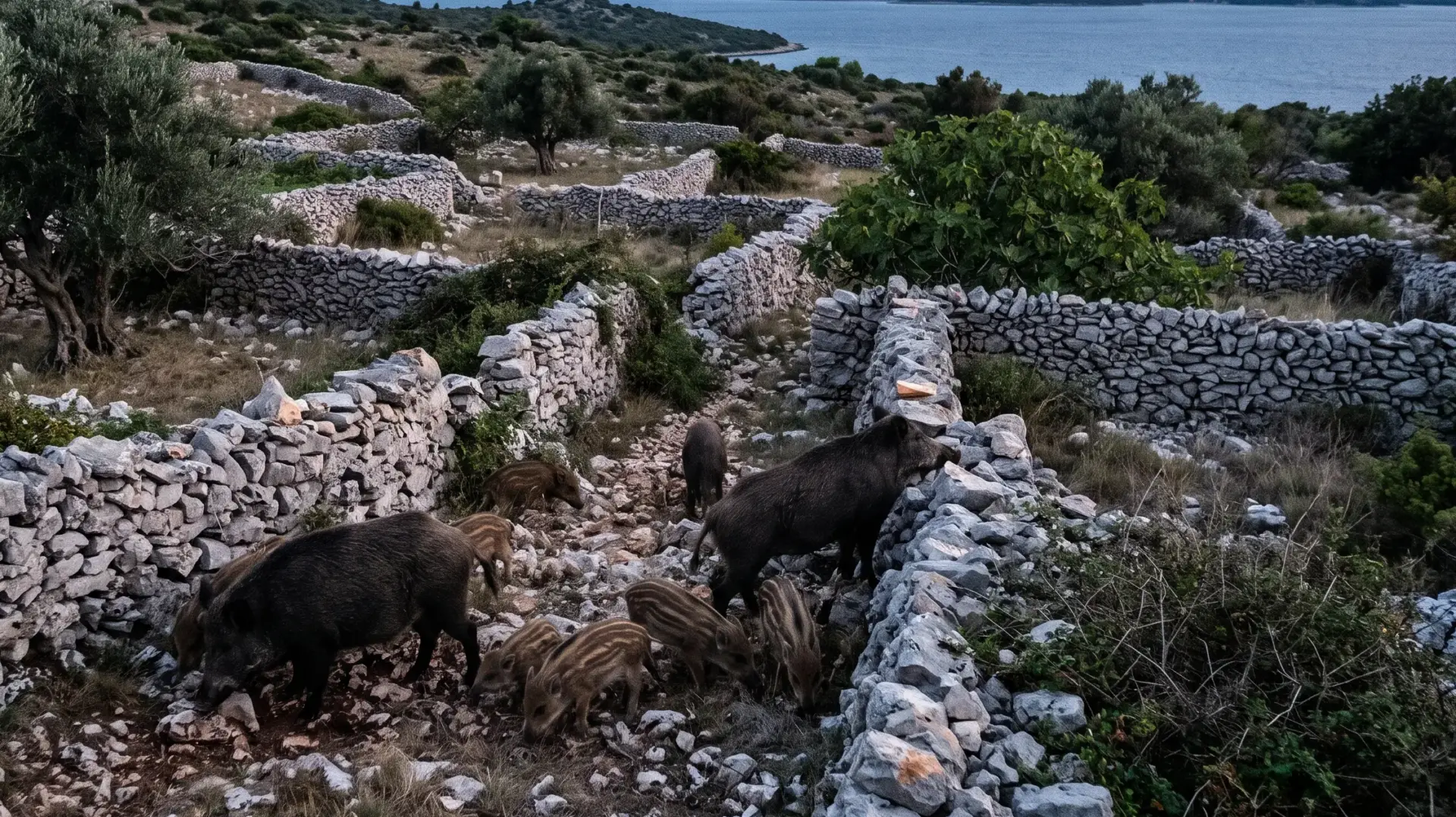
A recent discovery of parasites in Northern Dalmatia is setting off alarm bells: As reported by the news portal Infovodice reports, the Vodice Veterinary Clinic (Veterinarska ambulanta Vodice) issued an urgent warning to hunters and the public on November 23, 2026, after the pathogen responsible for the dangerous disease trichinosis (Trichinella spiralis) was detected in a hunted wild boar. Although this specific case originated in the Tribunj area, the veterinarians’ appeal is considered a clear warning signal for all of Dalmatia.
During a routine laboratory examination using simulated digestion, the parasites were discovered in meat samples from a wild boar taken from the hunting grounds of the Kamenjarka Tribunj Hunting Club. The affected meat is being disposed of safely in accordance with legal regulations, so this animal no longer poses a direct danger.
Why This Case Affects All of Dalmatia
Wild boars do not stop at municipal or hunting district boundaries—they travel long distances through the Dalmatian hinterland (Zagora) and along the coastal regions, and even swim to reach numerous Adriatic islands. Furthermore, this incident comes right in the middle of the peak of the Dalmatian hunting season as well as the traditional home slaughtering practices in late fall and winter. From the Zadar region through Šibenik-Knin to Central Dalmatia around Split and further south, homemade raw sausages (kobasice), pancetta, and pršut are currently being produced everywhere. Anyone who skips the required meat inspection risks serious health consequences.

Hidden danger: Neither smoking nor freezing provides reliable protection
Trichinosis (medical term: trichinellosis) is a dangerous zoonosis transmitted from animals to humans. Infection occurs almost exclusively through the consumption of raw or undercooked meat from infected domestic or wild pigs. The disease is not transmitted from person to person.
What makes this particularly insidious is that infected animals appear healthy on the outside, and the meat neither smells unusual nor looks altered—the microscopic larvae are invisible to the naked eye.
Traditionally produced, cured, or air-dried specialties such as sausages and pršut pose a significant risk if they are made from meat that has not been inspected by a veterinarian. The Vodice Veterinary Clinic explicitly states that common preservation methods do not reliably kill parasites:
- Drying and air-drying do not render the larvae harmless.
- Smoking does not protect against infection.
- Salting and curing do not reliably kill Trichinella larvae.
- Freezing is also not considered a safe method—especially for game meat—since certain Trichinella species found in wild animals are cold-resistant, and standard household freezers do not guarantee reliable elimination.
Effects of Consumption: How Trichinosis Progresses in the Body
When live Trichinella larvae enter the human digestive tract via infected meat, stomach acid and digestive enzymes break down their protective capsules. In the small intestine, the parasites mature into adult nematodes within a few days. According to the Robert Koch Institute (RKI), the females begin releasing new larvae as early as four to seven days after infection—each female releases approximately 500 to 1,500 larvae over a period of usually two to four weeks. These larvae penetrate the intestinal wall, spread throughout the body via the blood and lymphatic systems, and preferentially encyst in well-perfused muscles (such as the diaphragm, masticatory, eye, neck, or skeletal muscles).
According to the RKI, the incubation period is usually between 5 and 14 days, and in isolated cases can be as long as 45 days. The severity of the disease depends largely on the number of larvae ingested. While very mild infections may be mild or go unnoticed, more severe infections typically follow a two-phase course:
| Stage of the Disease | Time Period & Processes in the Body | Typical Symptoms |
| 1. Intestinal Phase (enteral phase) | A few days to about 2–3 weeks after ingestion; colonization of the intestinal mucosa by adult worms | Abdominal pain, cramps, watery diarrhea, nausea, vomiting, general feeling of illness |
| 2. Muscle phase (Migration phase) | From the 2nd to the 4th week; migration of the larvae via the bloodstream into the muscle tissue | High fever, chills, severe muscle and joint pain, characteristic swelling of the face and eyelids (eyelid edema), headache, and difficulty swallowing, chewing, and breathing |
Dangerous Complications in Severe Cases
If large numbers of larvae migrate into the body, the resulting inflammatory reactions can affect vital organs. According to the RKI, possible serious complications include:
- Inflammation of the heart muscle (myocarditis) with heart rhythm disturbances, potentially leading to circulatory failure
- Pneumonia (bronchopneumonia) and severe shortness of breath
- Damage to the central nervous system (e.g., encephalitis, seizures, neurological deficits, or impaired consciousness)
- Blood poisoning (sepsis)
In severe, untreated cases, trichinosis can be fatal or lead to long-term muscle problems.
Why Prompt Medical Attention Is Crucial
Treatment depends on the timing of the diagnosis: Prescription anti-parasitic drugs (anthelmintics such as mebendazole or albendazole) are most effective in the early stages against worms in the intestines and newly released larvae. Once the larvae have become firmly encapsulated in muscle tissue, the RKI states that the effectiveness of these medications against the encapsulated stages is no longer clearly established—in severe cases, anti-inflammatory glucocorticoids are then used under the supervision of a specialist.
Important if you suspect you may have been exposed: Anyone who suspects they may have consumed uninspected raw or undercooked pork or wild boar meat should seek medical advice promptly and specifically mention this consumption —even if no symptoms have appeared yet, as prophylactic medication may be an option within the first few days after exposure. If warning signs such as chest pain, shortness of breath, severe difficulty swallowing, rapid heartbeat, or neurological deficits occur, emergency medical assistance (European emergency number 112) must be called immediately.
Practical Protection for All of Dalmatia: What Matters Now
For vacationers, residents, and locals, here’s what you need to know: Meat and sausage products from regular grocery stores, registered butcher shops, and regular restaurants are subject to strict EU control regulations throughout Croatia. However, caution is advised whenever meat from private home slaughter, private hunts, or unlabeled gifts from acquaintances ends up on the table.
- Have all wild and domestic pigs tested: Veterinarians are urging all hunters, as well as private individuals who slaughter animals at home, to have the meat examined by a veterinarian without exception before consumption or further processing.
- Submitting the Correct Sample: To ensure reliable testing using simulated digestion, at least 50 to 100 grams of suitable muscle tissue—particularly from the diaphragm—must be sent to the appropriate veterinary laboratory.
- Do not taste or give away any uninspected dried meat: Especially during the Dalmatian pršut and sausage season, veterinarians strongly warn against tasting dried meat products or giving them to family, neighbors, and guests without a veterinary inspection report.
- Cook thoroughly: In the kitchen, only sufficient heat—in addition to official testing—provides protection. According to the RKI and the Austrian Agency for Health and Food Safety (AGES), Trichinella larvae are only reliably killed when the meat is heated to over 70 to 71 °C at its core for at least one minute —no pink meat should be visible inside, and the juices that run out must be clear.
The fact that the recent case in the Tribunj area was detected in time before processing demonstrates how effective veterinary inspections are when hunters consistently submit samples. Anyone throughout Dalmatia who ensures that pršut, kobasice, and game dishes come from certified sources and who thoroughly cooks fresh pork or wild boar meat can reliably protect themselves and their guests from this invisible danger.