Stay up to date – you can subscribe to our newsletter here

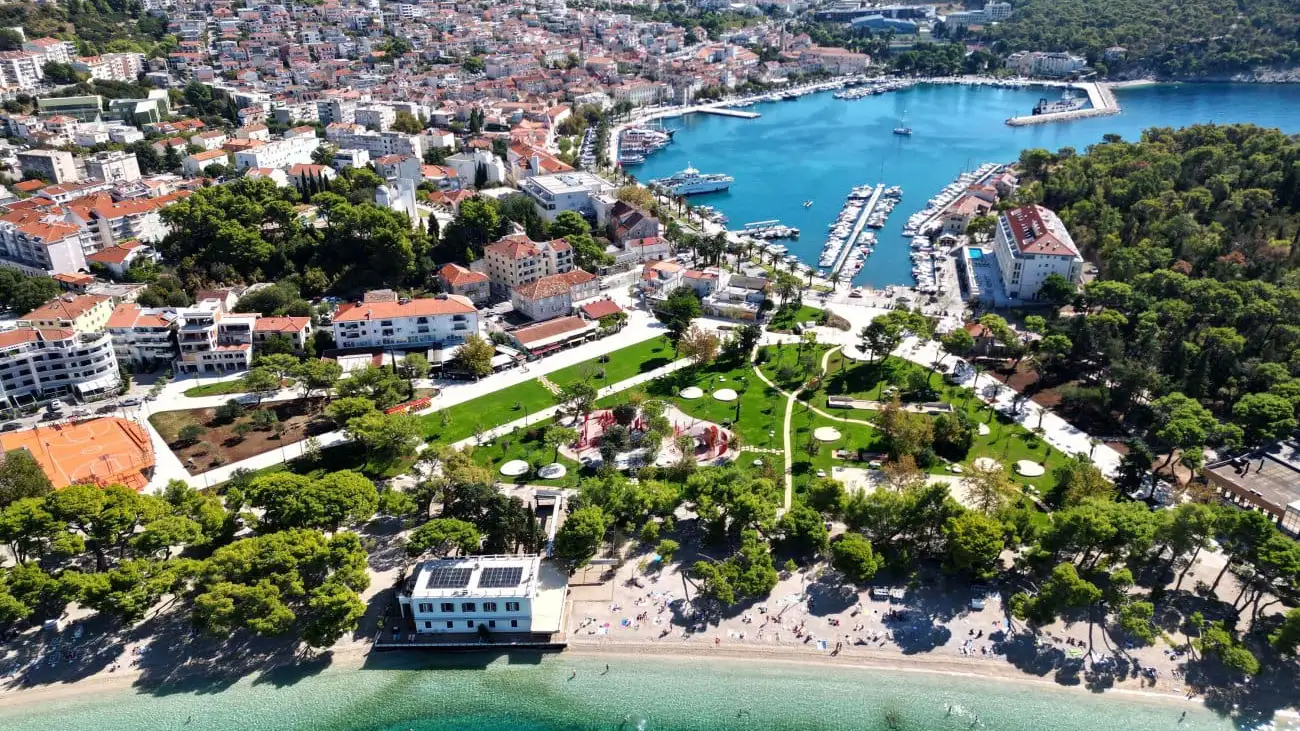
Where makeshift barracks, kiosks, and sealed concrete surfaces had dominated the landscape for decades, a sprawling park now stretches right along the Adriatic Sea: Construction on the new Peškera Park in Makarska was completed in November 2026. Launched in February 2025, this major project is one of the most extensive urban development initiatives in the city’s recent history—and, thanks to substantial EU funding, it also eases the strain on the municipal budget.
From Commercial Sprawl to a Green Oasis by the Sea
For decades, the area along the Peškera was almost entirely subordinated to the commercial interests of private individuals. With the demolition of dilapidated stalls, shacks, and kiosks, as well as the removal of old concrete surfaces and infrastructure, the city initiated a fundamental transformation.
The result is a modern city park in which more than 80 percent of the area is covered with greenery. Amid newly planted trees and Mediterranean ornamental plants—which are maintained over the long term by a newly installed irrigation system—the park now offers:
- Sports and recreational facilities, including a new basketball court
- Children’s playgrounds for local families and visitors
- An open-air stage for cultural events
- Quiet recreational areas that can be used year-round
“Peškera is a space that we have given back to the citizens, and they will use it all year round, not just in the summer.” — Zoran Paunović, Mayor of Makarska

Underground infrastructure and nearly 2.2 million euros in EU funding
The fact that the project was technically challenging is evident not only on the surface. In parallel with the landscaping work, key parts of the municipal infrastructure were modernized: The public sewer system was renovated, new utility lines were laid, and existing pressure pipes from the water treatment plant were protected to permanently prevent accidents and pollution of the coastal zone.
Financially, this was a remarkable achievement for the city. The total costs, in the high single-digit millions, were divided between the city of Makarska and the local water utility, Vodovod, according to their respective responsibilities. In addition, Makarska secured nearly 2.2 million euros in non-repayable grants from the EU’s Competitiveness and Cohesion Program 2021–2027 (funding stream for green urban infrastructure). This means the EU is covering just under one-third of the city’s share—funds that would otherwise have had to be financed entirely from the city’s regular budget.
Final Hurdles Before the Official Opening
The site is still surrounded by a construction fence, as the official handover process is currently underway. Any defects identified during this process must be corrected by the contractor. An annoying side note: Most of the damage is not due to construction defects, but rather to unauthorized entry onto the construction site and vandalism, which is why the city is now implementing additional security measures.
The late-fall weather is also slowing down the final touches a bit. Several consecutive dry days are needed for the final layer of the basketball court. As soon as the weather allows for this final step and the handover is complete, the protective fence will be removed, and Makarska will announce the date for the official opening.
With the new Peškera, Makarska is sending a clear signal of change along the Dalmatian coast: moving away from marketing focused solely on the high season and toward high-quality public spaces that offer real added value to both locals and visitors year-round.
Peškera Park at a Glance
Location: Peškera Park is centrally located directly on the Makarska coastline and serves as a pedestrian link between Makarska Riva, the Old Town, the main beach, and the Sveti Petar Peninsula. Running along the park are the Šetalište dr. Jure Radića promenade toward the port/Riva and the Šetalište dr. Franje Tuđmana promenade toward the city beach.
Accessibility & Parking: The park is easily accessible on foot in just a few minutes from the waterfront promenade (Riva) and the historic center. If you’re arriving by car, use the city’s paid parking zones (payment via parking meter or text message) or central parking lots such as Sinokoša and Živkin dvor. During the off-season (October 1 through May 31), parking in municipal areas is free on Sundays and holidays. Tip for the peak season: Digital display boards throughout the city show available parking spaces; if you park a little outside the city center, you can also take the municipal minibus shuttle, Điro, into the center.
Tips for the immediate area:
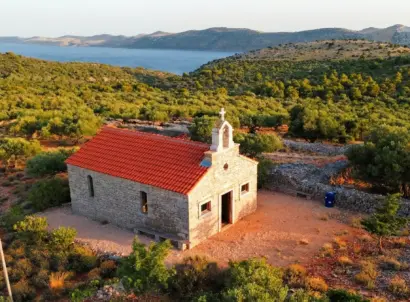
Sveti Petar Peninsula: Right next to the city, the wooded forest park with the small Sv. Petar Chapel invites you to take a shaded stroll between the city harbor and the main beach.
Gradska plaža (City Beach): West of the park lies the main beach, which is about two kilometers long and features fine gravel, natural shade under pine trees, and numerous cafés, restaurants, and recreational activities.
Riva & Old Town: To the east, the harbor promenade begins right there, offering views of the Biokovo Mountains—the perfect spot for a coffee after visiting the park.