Stay up to date – you can subscribe to our newsletter here

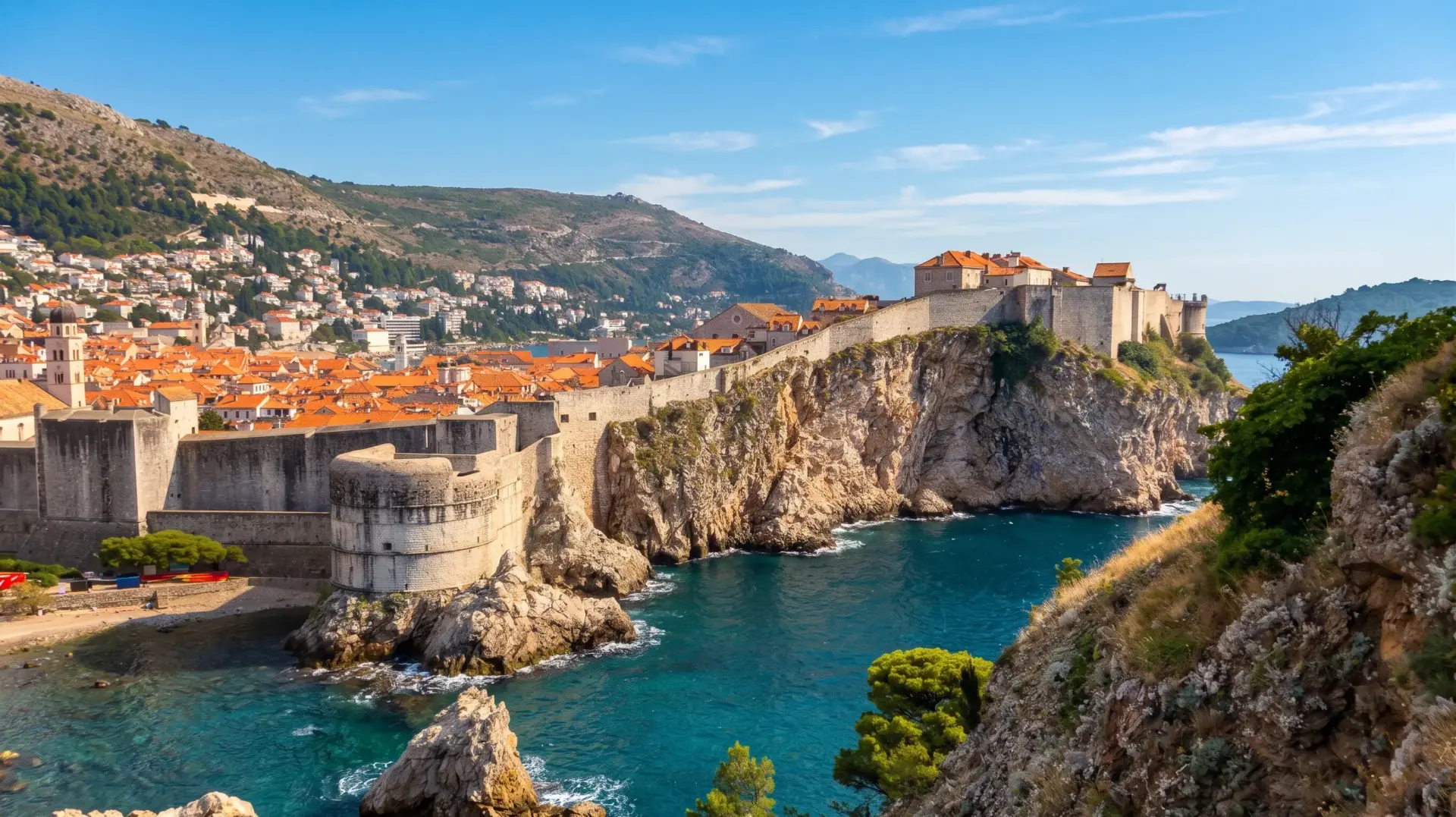
A traffic ticket for 1,505 euros that supposedly didn’t arrive in the mailbox until a year and a half after the vacation—hardly any other issue is driving travelers to Croatia more up the wall right now than the special traffic zone around Dubrovnik’s Old Town. On social media, two worlds collide: entirely understandable questions about proportionality and bureaucracy on the one hand, and sweeping insults directed at an entire country on the other. Now, a native of Dubrovnik with over 20 years of experience in tourism has drawn precisely this line.
The Case: When Justified Anger Turns Personal
The latest debate was sparked in the large public Facebook group “Croatia Travel Tips – Zagreb / Split / Dubrovnik / Zadar / Trogir / Rovinj”. The bone of contention was a report about a fine of 1,505 euros for driving without authorization in the traffic-calmed zone around the Old Town—which was issued about a year and a half after the trip.
It goes without saying that such a sum is shocking. But what began as a discussion about delivery times, transparency, and the amount of the penalty quickly turned into blanket anger in the comments: Croatians were broadly labeled “criminals,” the country was accused of deliberately ripping off tourists, and several users defiantly declared that Croatia would “never see their money again.”

Where the criticism is justified: The rental car trap in numbers
If you separate emotions from facts, it quickly becomes clear why the special traffic zone system in Dubrovnik does indeed leave room for criticism. The zone was introduced on June 2, 2025, to relieve the historic city center of massive traffic pressure. However, there is a huge gap in the list of fines between private and company vehicles:
| Affected Parties / Vehicle Category | Official Base Penalty | Actual Cost Risk |
| Private individuals | €260 | Applies in cases of direct owner liability for one’s own personal vehicle |
| Legal entities (companies) | €1,320 | Additional sanctions against those responsible are possible |
| Rental car drivers | Often over €1,600 | The penalty is imposed on the car rental company (legal entity), plus processing and additional fees |
This is precisely where the problem lies: Anyone traveling by rental car on vacation can quickly end up in the significantly higher rate category for legal entities due to the rental company’s status as the registered owner. The European Consumer Center (EVZ) in Germany expressly warns that the claims—including the rental companies’ processing fees—can exceed 1,600 euros. On top of that, the letters often don’t arrive until months after the violation—by which time hardly any vacationer can remember the exact traffic situation, making it considerably more difficult to file an appeal.
In the specific Facebook case, it was not possible to independently determine whether a rental car was used, the exact breakdown of the 1,505-euro amount, or when the notice was actually issued. However, these very details are crucial for assessing proportionality and potential appeals.
From a purely transportation policy perspective, the regulation has, incidentally, achieved its goal: Between April and September, Dubrovnik recorded approximately 191,000 fewer vehicle entries than during the same period the previous year. As of November 1, 2026, access is once again free during the off-season—though this does not affect any ongoing fine proceedings.
Where the Hysteria Begins: A Local Draws the Line
A native of Dubrovnik who has worked in tourism for more than two decades finally weighed in on the heated Facebook debate. His detailed post in English met with widespread approval—precisely because he didn’t downplay the system’s weaknesses.
He openly expressed understanding for the shock caused by a 1,505-euro fine and noted that both the amount of the fine and the long delivery time are certainly open to question—he would ask the same questions if he were in the recipients’ shoes. At the same time, he put a clear stop to the blanket attacks:
“There is a big difference between feeling frustrated about a fine and insulting an entire country and its people.”
In particular, he objectively debunked two common reactions from the comments section:
- The Myth of Missing Signage: He clearly refuted the claim that the signs are posted only in Croatian—backed by official information from the city of Dubrovnik. At the entrances, there are large traffic signs in English, electronic display boards, and traffic lights; and a public parking garage is located right nearby. Traffic-calmed zones in the Old Town have long been the European standard, as seen in Florence, Rome, Bologna, or Ljubljana. His pointed question to the critics: “Is someone supposed to personally stop every approaching vehicle and explain the traffic rules to every driver?”
- The “vacation money” killer argument: Many angry commenters calculated how many thousands of euros they had spent in Croatia. For the Dubrovnik resident, this is a weak argument: “We appreciate every visitor, but the fact that you spend money somewhere doesn’t exempt you from complying with local regulations.” Hospitality and fairness, he said, aren’t a one-way street—they’re based on mutual respect.
Four Tips to Keep Dubrovnik from Becoming a Money Pit
If you’re driving to the city during peak season, you can save yourself a lot of hassle and money:
- Consistently avoid entering the Old Town: Park your vehicle in a public parking garage outside the Old Town or take a bus, taxi, or shuttle directly.
- Read road signs instead of your GPS: Navigation systems still regularly direct visitors to access zones that are temporarily closed—electronic signs and traffic lights take precedence.
- Check your rental car contract: Even before booking, it’s worth reading the fine print to see what processing fees the rental company charges for traffic violations.
- Don’t blindly pay high fines: If you receive a four-digit fine in the mail months later, you should carefully check the breakdown, delivery date, and owner liability—if in doubt, the European Consumer Center can help.
The answer to the question in the headline ultimately turns out to be nuanced: A fine system that doesn’t require rental car drivers to pay four-figure sums until many months later deserves harsh, objective criticism. However, anyone who uses this as a basis for sweeping attacks against Croatia and its people is going way overboard. The man from Dubrovnik himself summed up what a mature approach to the issue might look like in a single sentence: “I made a mistake, the consequences were costly, and I wish the system were fairer.”