Stay up to date – you can subscribe to our newsletter here
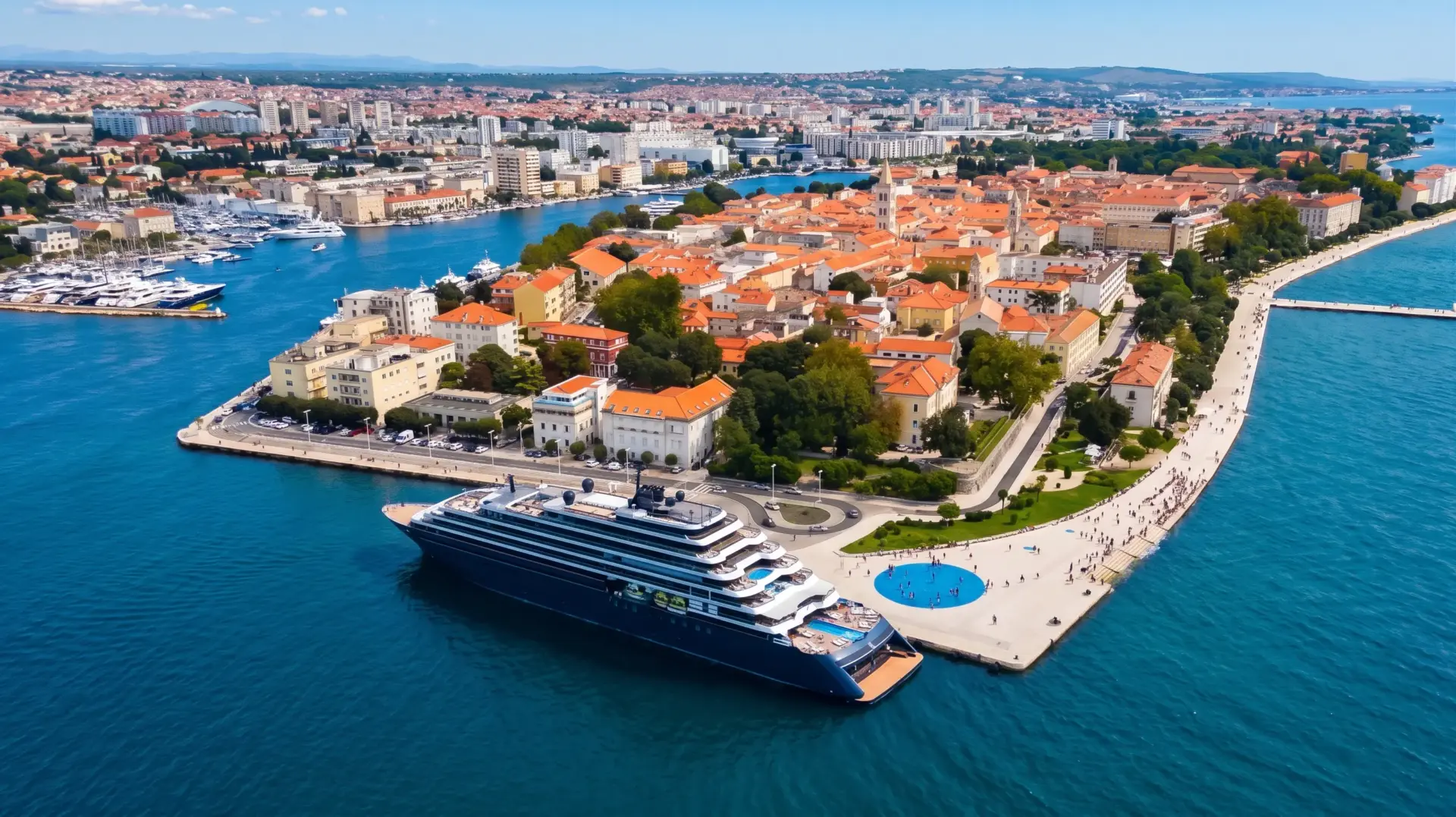
With its historic peninsula and the famous “Greeting to the Sun,” Zadar is one of the absolute highlights of the Croatian coast. But its appeal also attracts floating giants. To better regulate cruise tourism in the sensitive historic center, the Zadar City Council has now approved the berthing fees (tourism tax) for the year 2028.
In doing so, the city is making full use of the maximum limits set by law—though with an important geographical restriction.
The 2028 rates in detail
The adopted ordinance will take effect on January 1, 2028. The fees are based on the maximum passenger capacity of international cruise ships and are tiered as follows:
| Passenger Capacity | Tourism tax per port call |
| 50 to 200 passengers | €265.45 |
| 201 to 500 passengers | €663.61 |
| 501 to 1,000 passengers | €1,327.23 |
| 1,001 to 2,000 passengers | €2,654.46 |
| 2,001 to 3,000 passengers | €3,981.68 |
| Over 3,000 passengers | 5,308.91 |

An Important Detail: The Old Town vs. the Gaženica Industrial Port
A crucial detail that is often overlooked in public discussion: These fees apply exclusively to the passenger port on the peninsula (Poluotok) —that is, to those ships that dock or anchor directly in the city’s historic center.
This specific municipal tax does not apply to cruise ships that dock at the large Gaženica ferry and cruise port, located just outside the city. The city administration’s goal is clear: Anyone who wants to offer their passengers a premium view of the Forum and the Sea Organ directly from the deck must pay the highest price for it.
Is that enough? The debate over the “floating skyscrapers”
Even though the city is already charging the maximum amounts permitted by law, some local politicians feel this doesn’t go far enough. In a heated debate in the city council, Councilman Zorislav Šušak demanded that ships docking right next to the historic old town be required to pay even more.
He compared the massive ocean liners to “five-story high-rises” and criticized the illogicality of the fact that, on balance, docking at the less attractive Gaženica could end up costing shipping companies more than the premium mooring in the heart of the city. His demand to the city administration: By 2029, a new model should be examined in collaboration with the port authority to further increase the fees for moorings along the Old Town promenade.
For nautical tourists and coastal enthusiasts, the developments in Zadar remain an important indicator. They show that Croatian coastal cities are increasingly trying to use pricing to manage mass tourism on the water in order to protect their historic architecture and the local way of life.