Stay up to date – you can subscribe to our newsletter here

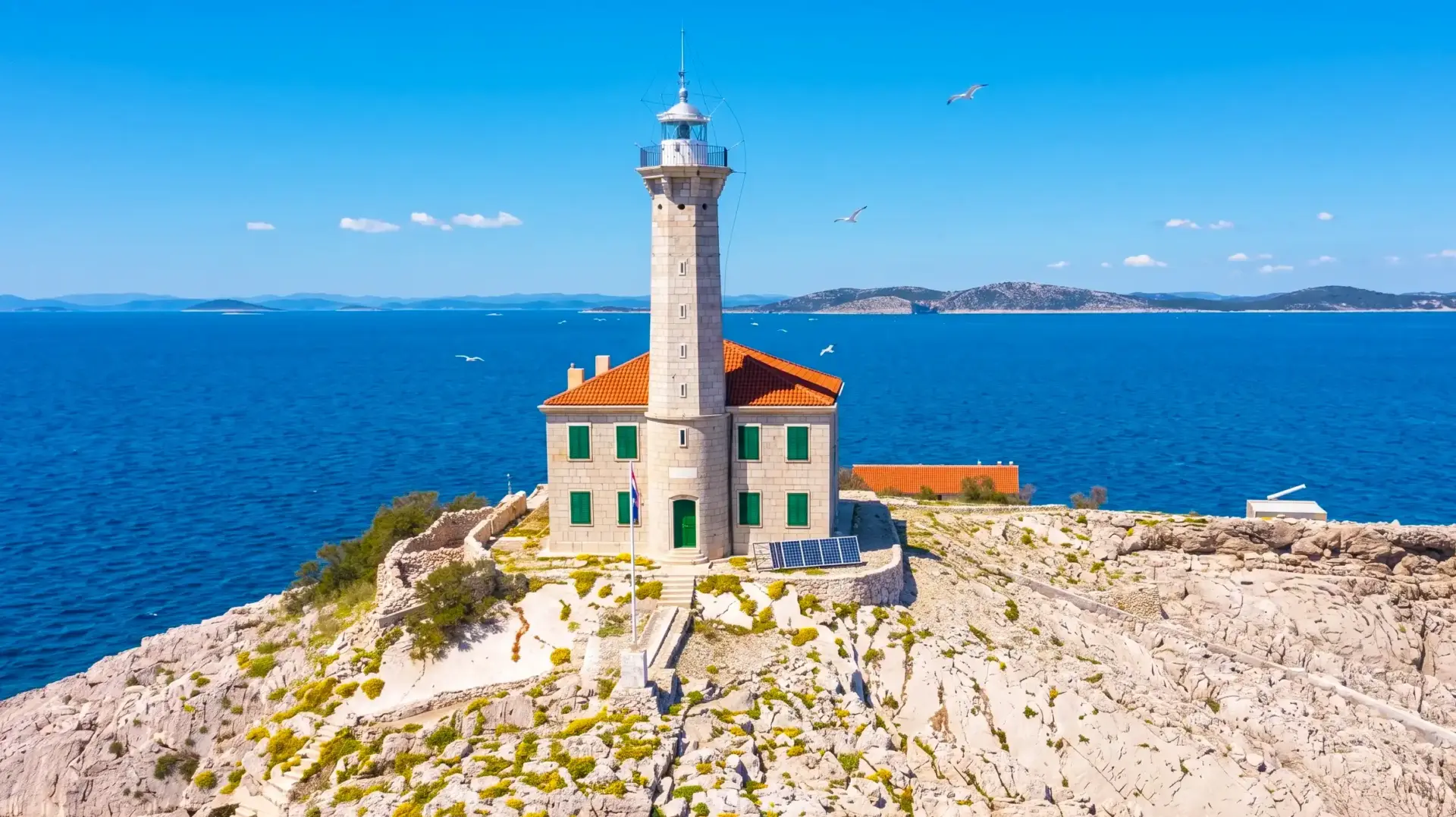
Five kilometers southwest of the island of Žirje, where the protected waters of the Šibenik Archipelago end and the open Adriatic begins, a bare limestone cliff rises from the deep-blue sea: Blitvenica. For over a century and a half, the islet served primarily as a lifesaving landmark for sailors during stormy Jugo winds or lashing Bora winds. But while the 21-meter-high stone tower on the cliff is visible from afar, Blitvenica’s true treasure lies hidden dozens of meters below the water’s surface—a highly sensitive underwater ecosystem that is now at the center of a new, multi-million nature conservation project.
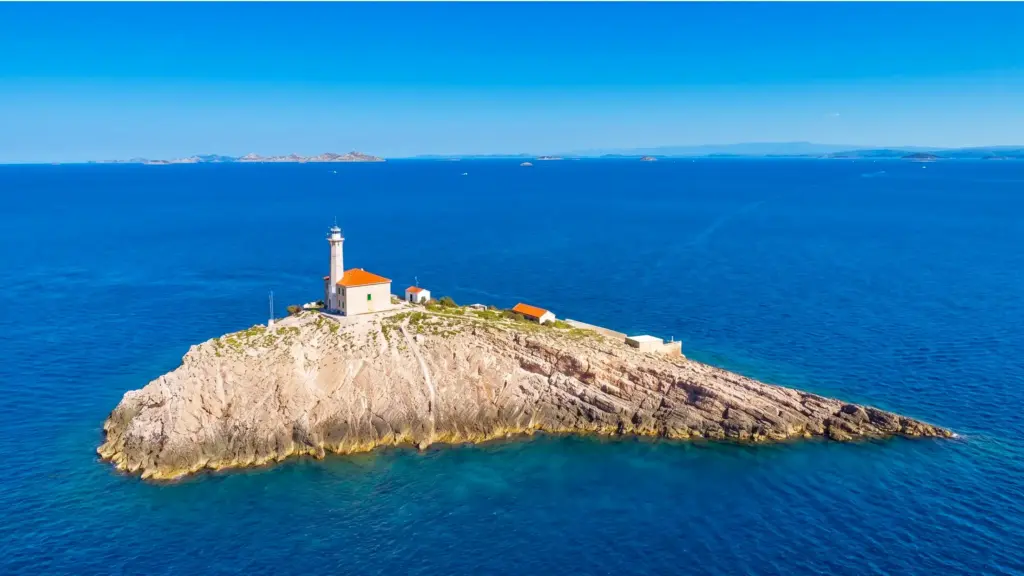
A Lonely Sentinel from the Austro-Hungarian Monarchy
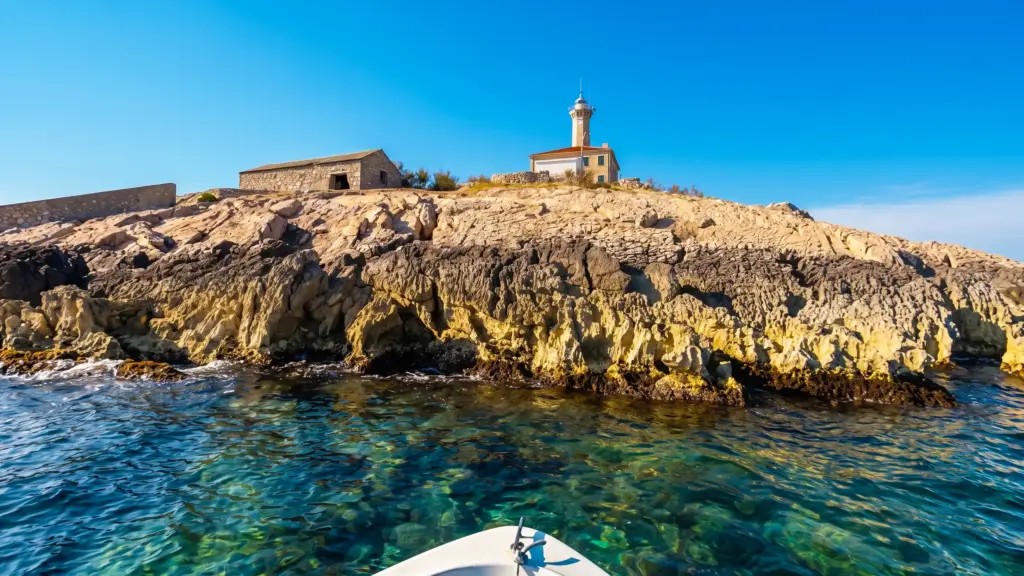
Anyone approaching Blitvenica by boat immediately senses how exposed this outpost is. As early as 1872, during the Austro-Hungarian Empire, the striking lighthouse was built on the rugged cliff. To this day, the massive structure defies the meter-high waves of the open sea:
- Range: The main beam extends 24 nautical miles into the central Adriatic Sea, guiding ships safely toward Šibenik and Zadar.
- A Living Tradition: Unlike many fully automated stations, Blitvenica (operated by the state-owned company Plovput) is still staffed by a permanent team of lighthouse keepers.
- Geographical feature: The island lies directly on the edge of the deep Jabuka Basin. It is precisely this exposed location at the transition to the deep sea that makes the seafloor around the rock so biologically extraordinary.

Steep cliffs, underwater forests, and glowing gorgonians
Below the waterline, the rock at Blitvenica does not slope gently but plunges into great depths in dramatic, nearly vertical cliffs. Strong ocean currents create a natural upwelling here, which continuously supplies the underwater slopes with cold, oxygen- and nutrient-rich deep-water currents.
In the shallower, light-filled zones, dense forests of brown algae of the genera Cystoseira and Sargassum, as well as sheltered seagrass beds (Posidonia oceanica), sway gently. These underwater forests serve as nurseries for countless young fish. Among the algae fronds, sea hares (Aplysia) graze—large, soft-bodied sea slugs whose upper tentacles resemble rabbit ears and which, when faced with danger, scare off predators with a dense, purple cloud of ink.
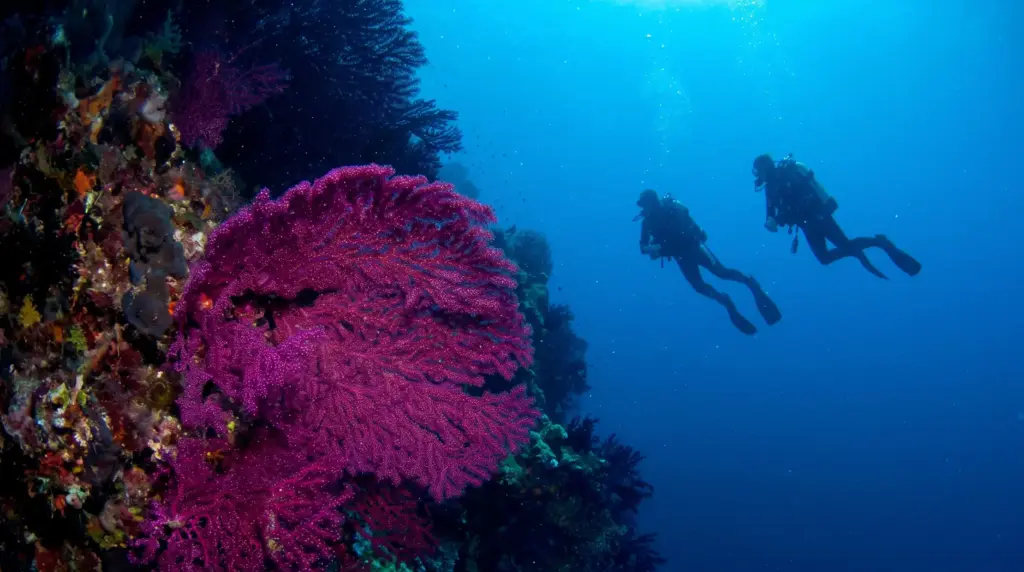
As you follow the steep walls deeper into the twilight, the scenery changes completely: Here, vast gardens of yellow and red gorgonians (Eunicella cavolini and Paramuricea clavata) stretch out before you. These branched gorgonians grow like delicate fans into the current to filter plankton from the water, forming complex three-dimensional habitats for rare marine organisms over the course of decades. Because of this extraordinary biodiversity, the marine area around Blitvenica is designated under code HR3000092 as part of the European Natura 2000 network of protected areas.
In the Footsteps of the Coral Divers of Zlarin
The people of the region knew long before the advent of modern marine biology that the waters around Blitvenica were a treasure trove. As documented in the Maritime Encyclopedia of the Miroslav Krleža Lexicographic Institute, the famous coral divers of the island of Zlarin —where coral fishing has been a documented tradition since the 15th century—regularly headed for the reefs of Blitvenica to search for the coveted precious coral.
Even for traditional fishing, the waters around the rocky island were considered a legendary fishing ground for hake, sea bass, sole, and tuna. A look at historical statistics reveals the scale of the catch in those days: In 1951 alone, an impressive 75 metric tons of shrimp were landed around Blitvenica—a historic peak that today serves above all to illustrate just how drastically stocks in the Adriatic Sea have changed since then.
Climate Change in the Depths: When Fan Corals Die
Not even its remote location in the open sea protects Blitvenica from the consequences of global ocean warming. As diver and author Ivana Grgić documented in reports for *Jutarnji list* and the trade journal *Otvoreno more* this fall, rising water temperatures are leaving clear traces on the steep walls:
- Retreat to greater depths: At depths of less than 40 meters, numerous gorgonian colonies are already severely damaged or completely dead. Today, intact, thriving fan coral forests survive primarily in the colder water layers below this threshold.
- Slow Regeneration: Because gorgonians grow extremely slowly, it takes decades for dead colonies to recover—and with them, the shelter for dozens of other species that depend on the coral structure disappears.
- Invasive species: In addition, the introduced green alga Caulerpa cylindracea is spreading, overgrowing the rocky substrate and displacing native communities.
New Conservation Initiative Through 2029
To counteract this gradual loss, the public nature conservation agency of the Šibenik-Knin County launched a broad-based conservation program on January 1, 2026. With a budget of over two million euros and a duration through the end of June 2029, the project covers a total of 29 Natura 2000 sites in the region—26 of which are marine sites.
For Blitvenica, the project entails several concrete steps:
- Active marine cleanup and relief: Lost fishing gear (so-called “ghost nets”) that becomes entangled in the reefs and tears off coral are specifically recovered; in addition, ecological mooring buoys are installed so that anchors no longer churn up the sensitive seabed.
- Scientific Monitoring: Biologists systematically monitor the health of the coral reefs, brown algae forests, and seagrass beds.
- Expert Assessment for a Higher Protection Status: For the first time, a well-founded scientific expert assessment is being developed to determine whether Blitvenica should be designated in the future as an official marine protected area in a higher legal protection category.
While the light from the old stone tower reliably sweeps across the waves night after night, the next three years will determine, beneath the surface, how well Blitvenica’s hidden coral gardens can be preserved for future generations.