Stay up to date – you can subscribe to our newsletter here

For years, the plaster on the old barracks walls right by the sea had been crumbling—but now things are finally moving forward on one of Northern Dalmatia’s most exciting island projects. The University of Zadar has issued a call for bids for the construction of “Campus Molat.” Lecture halls, 28 units of accommodation, a sports field, and a marine research facility are to be built on a site covering just over 2,200 square meters.
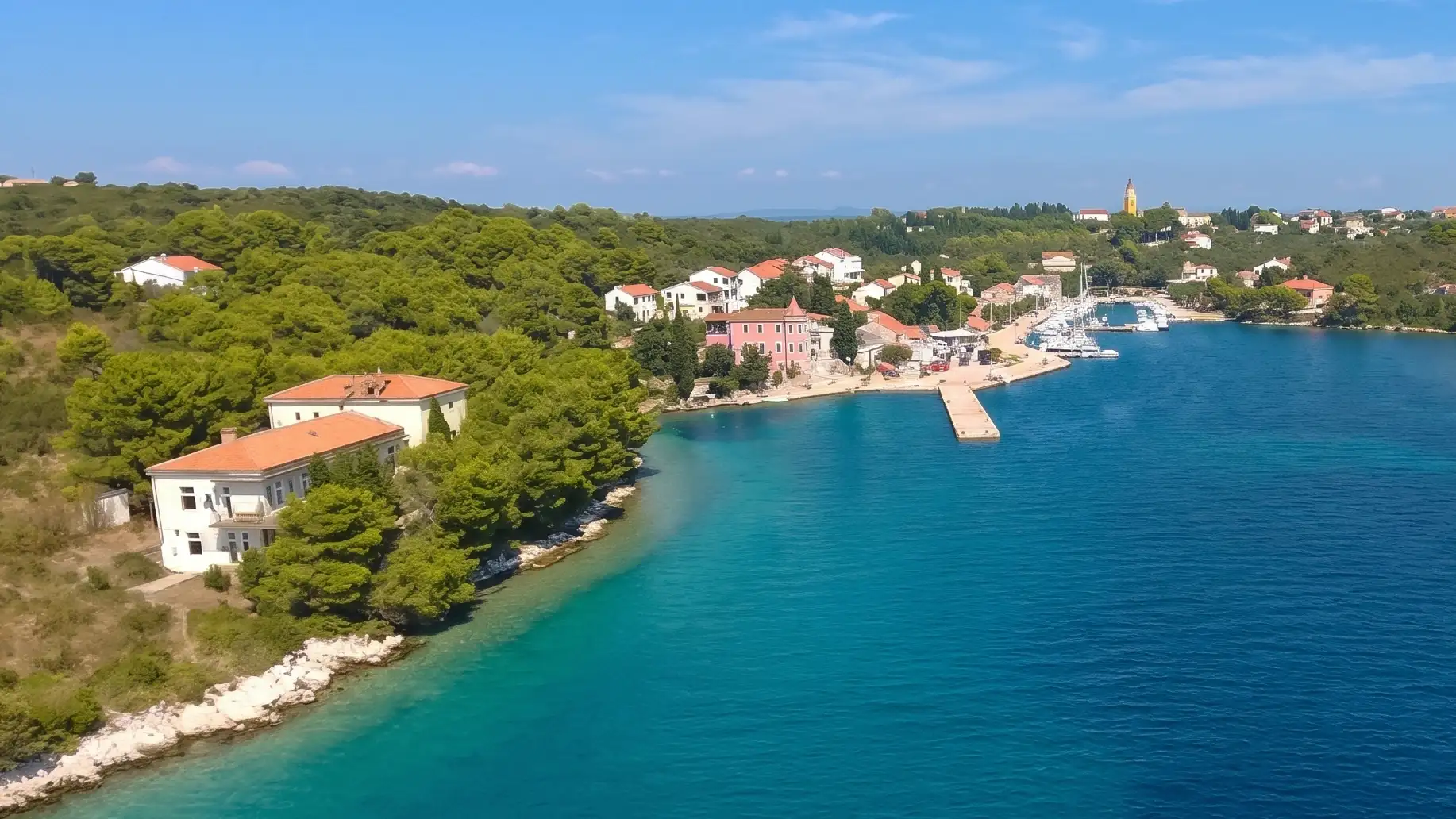
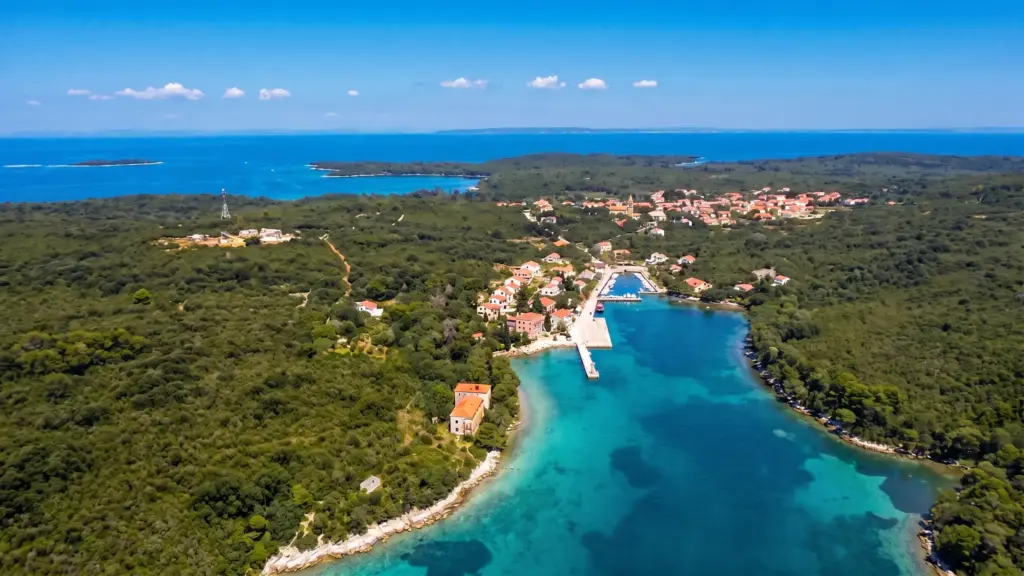
Anyone familiar with the tranquil island of Molat in the Zadar archipelago knows that traces of its military past still lie hidden amid the dense scrub, sheltered anchorages, and the island’s peaceful tranquility. One such site is in a prime location, west of Molat’s coast and just a few meters from the water. Right there, a former barracks has been falling into disrepair for years—windows and doors are missing or broken, walls are cracked, and parts of the roof trusses and ceilings have already collapsed.
But instead of continuing to fall into disrepair, the site is now set to be completely reinvented . In early November 2026 , the University of Zadar launched a public call for bids for the renovation and modernization of the “Campus Molat” university center. The estimated contract value is approximately 4.65 million euros (net) and will be financed by the European Regional Development Fund (ERDF).
Architecture with Direct Access to the Sea
The plans are not simply a matter of emergency renovation, but rather a well-thought-out overall concept by the renowned Croatian architect Helena Paver Njirić ( hpnj+ architectural firm). Since the building’s structure had continued to deteriorate in recent years, the plans were revised once again in December 2025.
The new complex on the approximately 2,222-square-meter lot combines the old with the new:
- Existing Building & Three-Story New Construction: The former barracks building is being completely reconstructed and will eventually offer space for 18 rooms. A new, three-story addition is being built on the northeast side, with ten additional rooms on the first and second floors. This brings the total number of rooms planned to 28 —including one accessible unit. (Earlier plans estimated the capacity at 53 to 54 people; the final number will depend on the actual implementation.)
- Connecting Bridges & Courtyards: Both sections of the building are linked into a single unit by open arcades, landscaped courtyards, and connecting bridges on the upper floors. A practical detail for the island’s logistics: The passageway beneath parts of these bridges remains clear for service vehicles.
- Learning, meeting, cooking: The campus’s ground floor houses the common areas—including two classrooms, a dining hall that can also be used flexibly as a lecture hall, a kitchen, the campus administration office, and storage rooms.

Diving Center, Sports Field, and Stairs Leading into the Sea
The design of the outdoor area is particularly exciting given the site’s maritime focus. In the northwest corner of the property, a sports field with bleachers on either side is being built. Directly beneath it, the architects are planning storage spaces for diving gear, bicycles, and building services —ideal conditions for field research focused on the sea, the coast, and the environment.
On the southwest edge of the property, outdoor staircases will lead directly down to the sea, complemented by terraces and shaded porches. Since the infrastructure must be located on a small island, the project package also includes a dedicated rainwater collection system, a wastewater treatment plant, and access and parking areas.
Key facts at a glance
| Key Figure | Details |
| Project | University Center – Molat Campus (ARHIPELOGOS Program) |
| Client | University of Zadar |
| Estimated Cost | 4,650,486 euros (excluding VAT) – Tender value |
| Funding | European Regional Development Fund (ERDF) |
| Bid Deadline | December 1, 2026, 12:00 p.m. |
| Planned construction period | 17 months from the date the contract is signed |
| Site & Scope | Approx. 2,222 m², 28 rooms, 2 classrooms, sports field, ocean access |
| Architecture | Helena Paver Njirić (hpnj+), design status as of December 2025 |
A Long Road Since 2009—When Will the Excavators Roll In?
The vision of building an academic bridge to the islands off Zadar is not a spur-of-the-moment decision. As early as 2009, the University of Zadar presented the ARHIPELOGOS program on Molat. A decisive milestone followed in April 2021, when the Croatian government officially transferred part of the former military site to the university.
With the current call for bids, things are now becoming concrete for the first time: The search is not for another concept paper, but for the contractor to handle construction, building services, interior finishing, and furnishings. Nevertheless, Molat is asking for patience for the time being. The call for bids does not yet mark the start of construction—the 17-month construction timeline will only begin after the bids have been reviewed (deadline December 1, 2026), the contract has been awarded, and the contract has been signed. The final total price will also not be determined until the process is complete.
A Chance to Combat Island Depopulation—If Year-Round Operation Succeeds
Like many smaller Dalmatian islands, Molat struggles with depopulation, extreme seasonality, and a fragile economic base outside the summer months. A vibrant university campus could address these issues: students, faculty, and visiting researchers would bring foot traffic during the off-season, revitalize local services, and forge closer ties between the island and Zadar.
Whether this multimillion-euro project will truly mark a turning point for the local community, however, will not be decided on the construction site, but afterward. If the new building houses a clear operational model featuring regular research programs, seminars, and day-to-day academic life for much of the year, Molat will gain far more than just a renovated building. If, on the other hand, the complex remains merely a backdrop for occasional summer workshops, much of its impact will be lost. It is to be hoped for Molat’s sake that the former military site will become a place where the lights stay on all year round.