Stay up to date – you can subscribe to our newsletter here

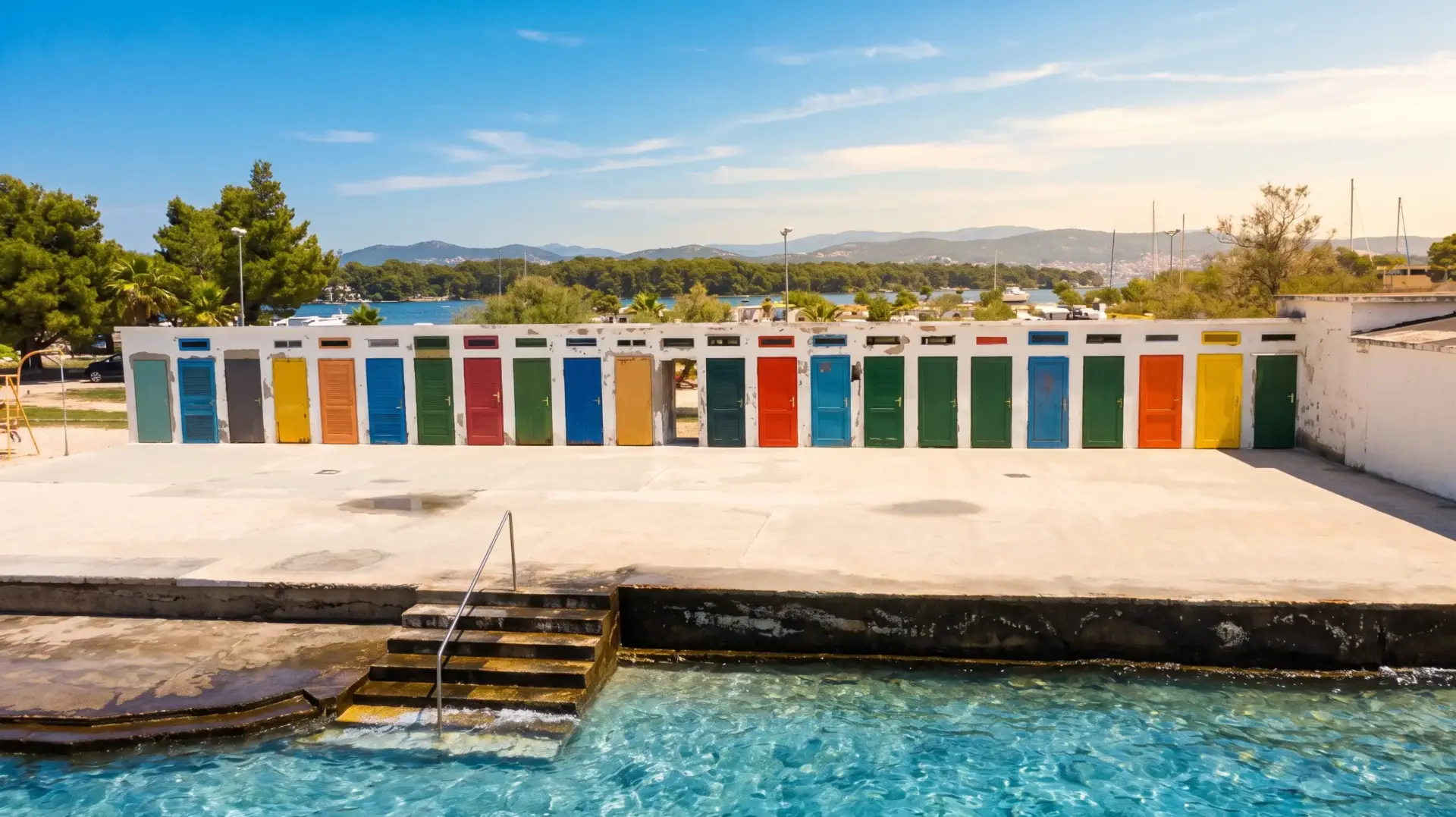
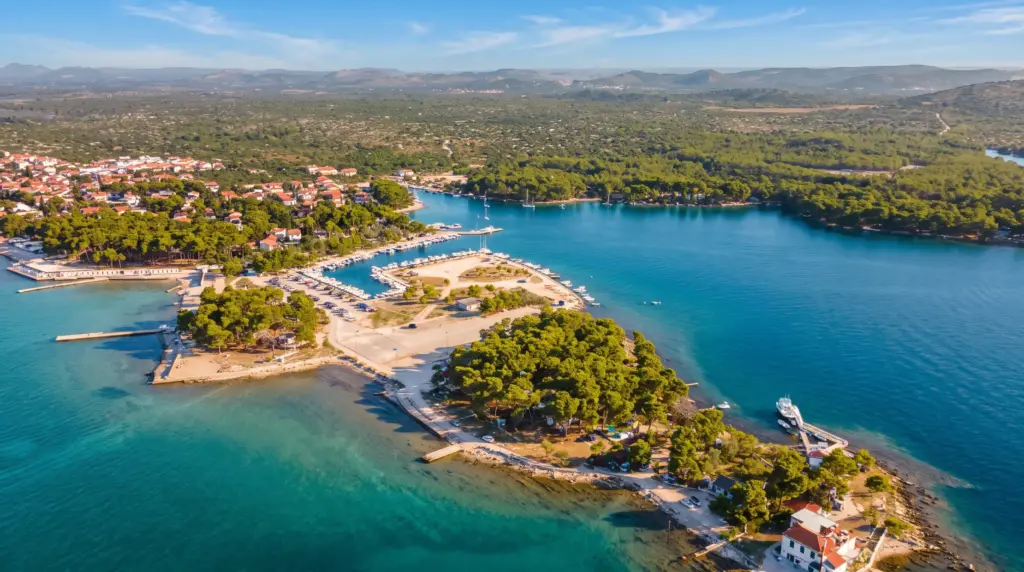
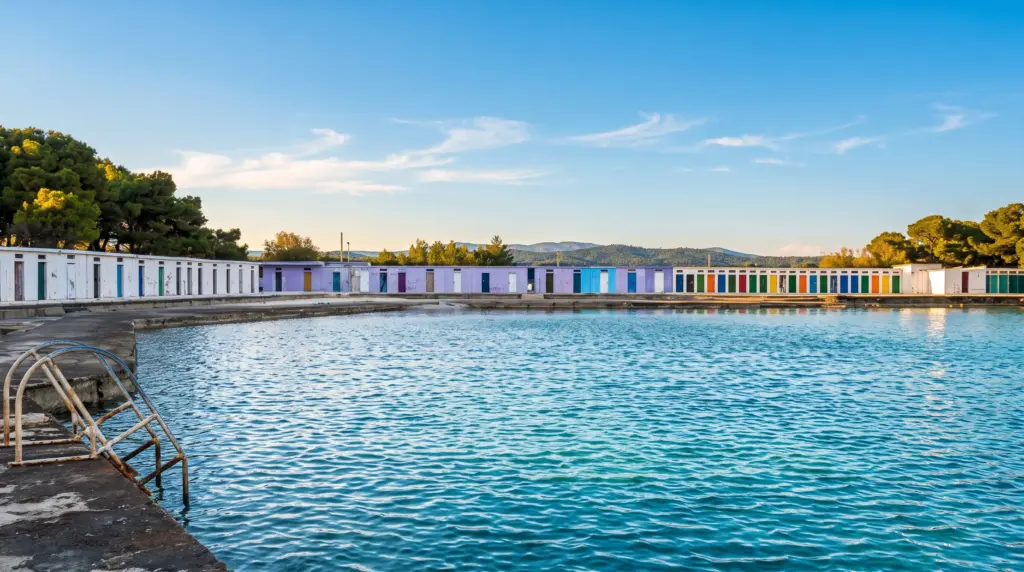
There are places along the Adriatic that are so picturesque you’ll want to grab a paintbrush right away. And then there’s the legendary Jadrija beach near Šibenik—where the locals have long since taken up their own paintbrushes and transformed their beach cabanas into a sea of vibrant colors. Green, yellow, orange, red, blue: a whole row of colorful doors set against gleaming white concrete, a scene that now graces nearly every postcard from Dalmatia. But behind this picture-perfect Mediterranean facade, a wonderfully human skirmish is currently raging—enough material for at least three seasons of an Adriatic soap opera.
To understand the drama, it’s worth taking a brief look back at history. On August 6, 1922, the beach resort was officially opened on the initiative of Šime Grubišić-Rovilo, Šibenik’s first tour guide—right next to the Sveti Andrija lighthouse, which had been in operation since 1871. Back then, the world was still neatly organized: 25 changing rooms for the ladies, 25 for the gentlemen, and a snack bar with a terrace right in the middle. The purpose was as down-to-earth as it was charming: to provide Šibenik residents who didn’t own a house by the water with a dry place to store their swimsuits and towels—and perhaps take a little afternoon nap—the famous Dalmatian “pižolet.”
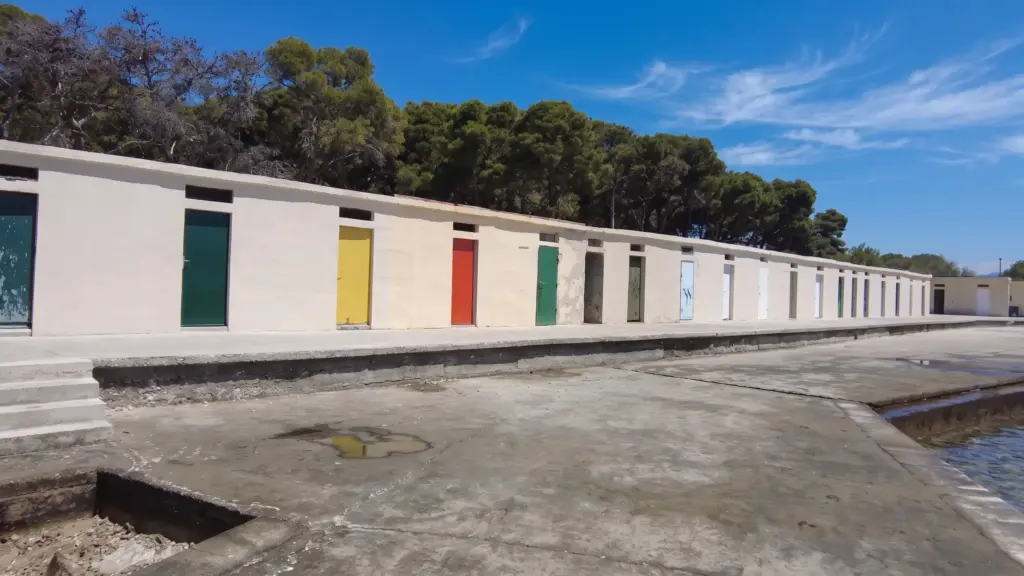
Since July 2017, the iconic cabins and lighthouse have been officially designated as historic landmarks. And because the ravages of time—exacerbated by the salty sea breeze and over a hundred summers—have taken a heavy toll on the plaster, the city of Šibenik now plans to restore the complex true to its original design. Sounds like a reason to celebrate? Only if you don’t factor in the so-called kabinaši —the loyal regulars of these two-square-meter summer paradises.
The “Spirit of Jadrija”—and Who Holds the Key to It
As soon as the renovation drew nearer, the current cabin users sent a passionate appeal to City Hall: Please renovate Jadrija, but don’t erase its spirit and way of life in the process! Between the lines, a familiar refrain resonated: A fresh coat of paint, yes; new tenants, preferably not.
But just one day later, a reader of ŠibenikIN —born in Jadrija, where she grew up every summer, but without her own cabin key. And she asked the most uncomfortable question of all in real estate and customary law: Where does this decades-long “tradition” actually come from?
According to her account, the postwar history of some cabins is less reminiscent of romantic bathing culture than of a very creative interpretation of “first come, first served.” Especially after the civil war in the 1990s, quite a few cabins were simply occupied without any clear legal basis. Afterward, they were passed down within families like noble heirlooms—and in some cases even resold for substantial sums. A remarkable business model, considering that the sellers weren’t even the owners. It’s a bit like placing a classified ad for your favorite park bench in the city park because you’ve been reading the newspaper there since 1996.

Vacation home plus cabin: Better safe than sorry
The best punchline in the letter, however, concerns the social imbalance on the beach. After all, some of today’s defenders of the beach cabanas—of all people—already own their own vacation homes in Jadrija. So while entire families from Šibenik—for whom the beach huts were actually invented in 1922—drag their beach mats all the way to the water’s edge with the sweat of their brow, some homeowners apparently use their historic, iconic beach cabanas as particularly picturesque beach outposts—essentially a walk-in closet right by the sea.
Of course, no one is against tradition, architecture, or that incomparable summer magic of Jadrija. But the critic hits a sore spot that’s known far beyond Šibenik: “cultural heritage” simply sounds so much more noble than “preserving the status quo.” If you paint a privilege lovingly enough—sometimes blue, sometimes sunny yellow—it eventually starts to look almost like a fundamental right.
A Fresh Start with Transparency Instead of Connections?
The demands on the city are accordingly clear: First, determine who actually obtained their cabin legally in the first place. Then, the newly renovated treasures should be allocated through a public bidding process based on transparent criteria—giving preference to Šibenik residents who do not own a vacation home in Jadrija. Illegal resales must be prevented, and rents must be set at socially acceptable levels.
It will be interesting to see how the city of Šibenik untangles this Gordian knot of nostalgia, the law, and Dalmatian temperament. After all, the heated debate has already proven one thing: the true spirit of Jadrija is a wonderful topic for debate—preferably, of course, in the shade of the pine trees, with a view of the colorful doors and the quiet hope that, in the next lottery, you might finally hold the key in your own hands.