Stay up to date – you can subscribe to our newsletter here

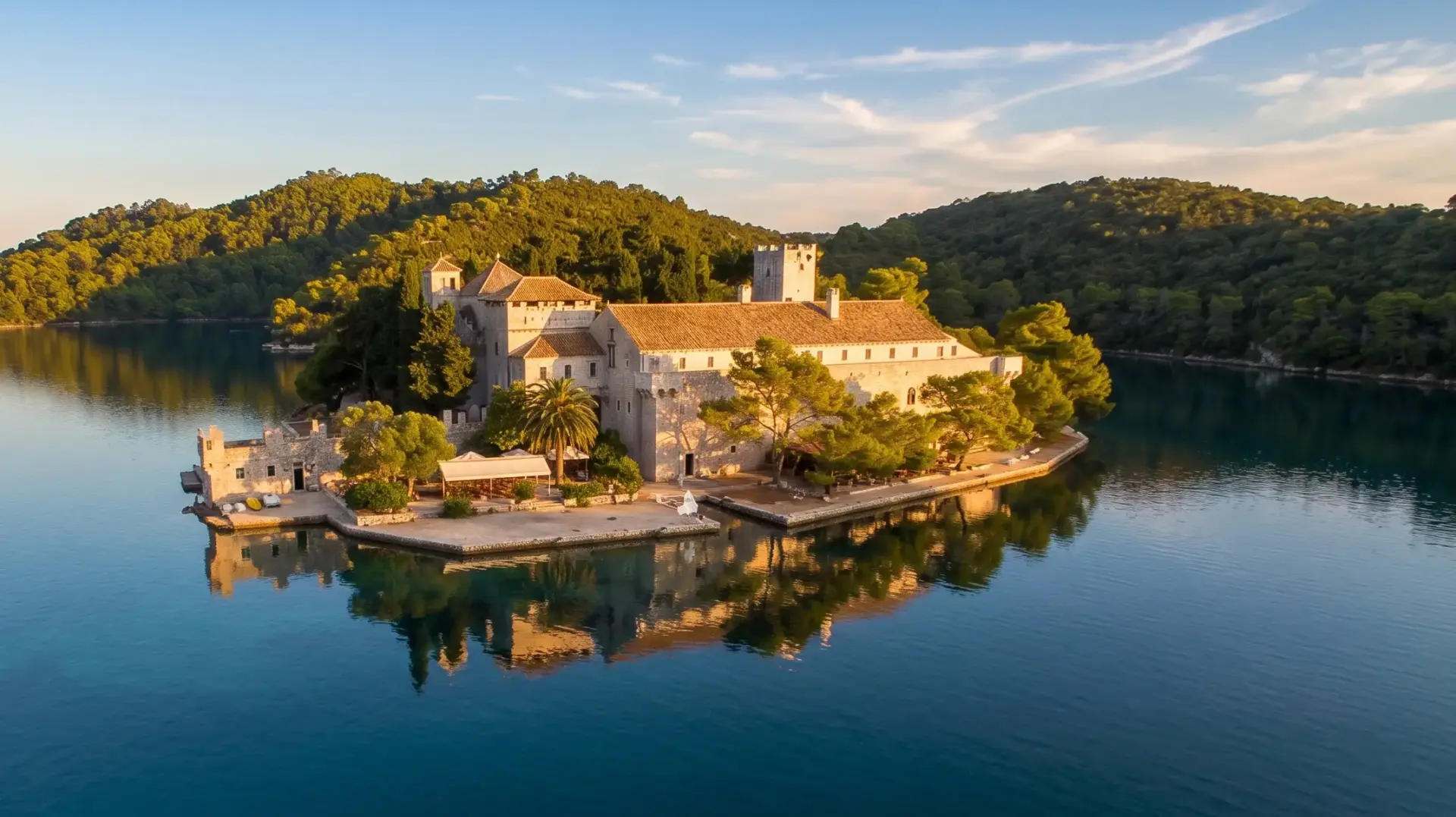
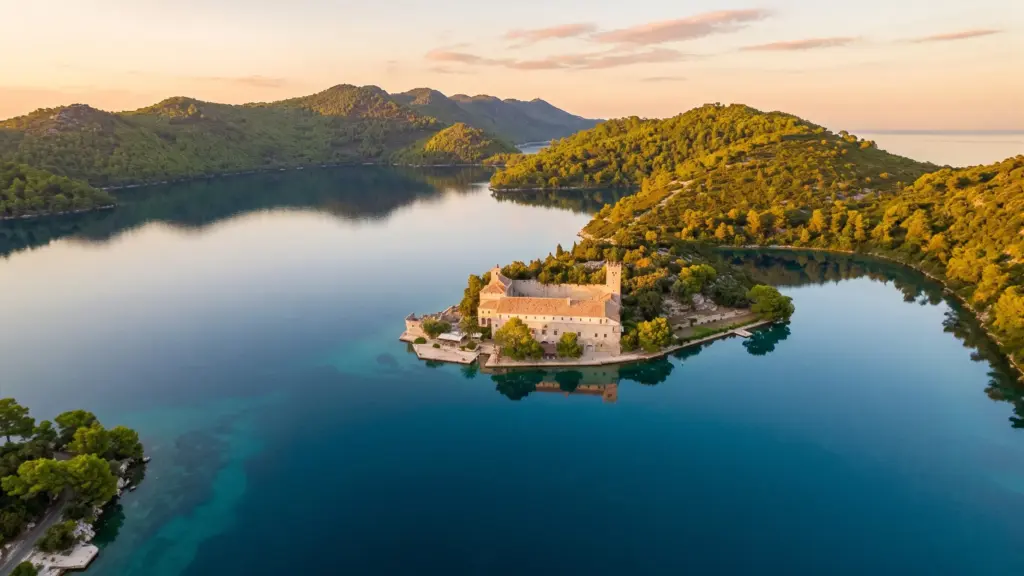
Anyone standing on the shore of Veliko Jezero for the first time and gazing out over the emerald-green water will have to look twice: in the middle of a lake that itself lies on an Adriatic island, another small islet rises up. This patch of land is dominated by a massive stone complex framed by pine trees—the former Benedictine monastery of Sveta Marija.
This tiny island west of Mljet is one of the most impressive places in Southern Dalmatia. It combines centuries-old history with a tranquility that one often has to search for along the Croatian coast during peak season.
A Natural Wonder as a Backdrop: The Great Lake
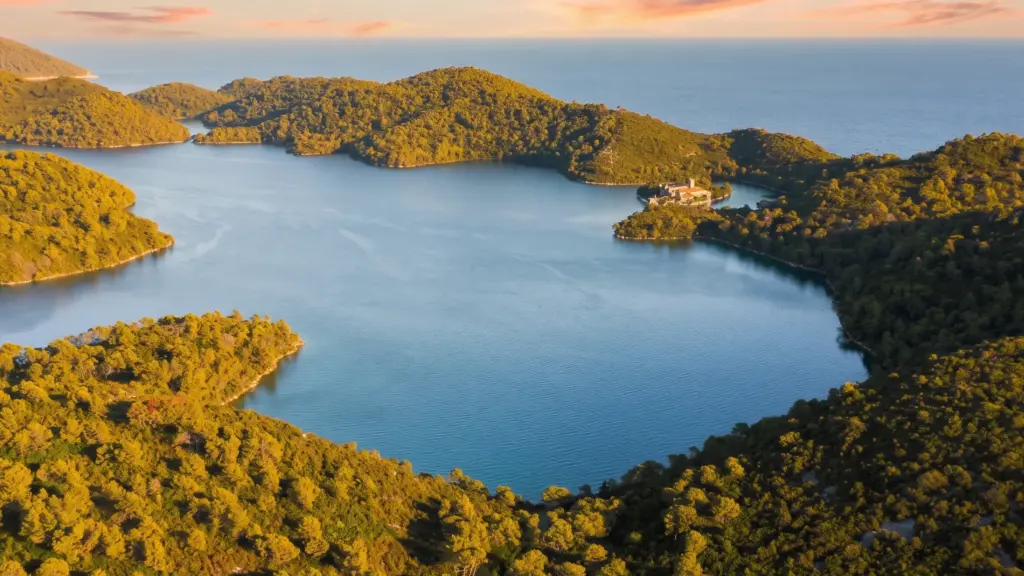
Sveta Marija’s geographical location is unique in the Mediterranean. The island lies in Veliko Jezero (“Great Lake”), the larger of the two saltwater lakes in Mljet national park, the oldest marine protected area in the Adriatic (established in 1960).
Although these bodies of water are referred to as lakes, strictly speaking they are deeply incised sea bays connected to the open sea. Fresh seawater flows into the basin through the narrow Soline Channel at both high and low tide. Because the water in the sheltered lake is significantly warmer than in the open Adriatic Sea and there is virtually no swell, an almost meditative microclimate develops around the small monastery island, which measures approximately 120 by 200 meters.

800 Years of History: Monks, Pirates, and a Hotel
The monastery’s history dates back to the 12th century. As early as 1151, the ruler Desa of Zahumlje gifted the island of Mljet to Benedictine monks from Pulsano (Apulia) in southern Italy. Between 1177 and 1198, they built their abbey and the accompanying Church of St. Mary on the small island in the lake.
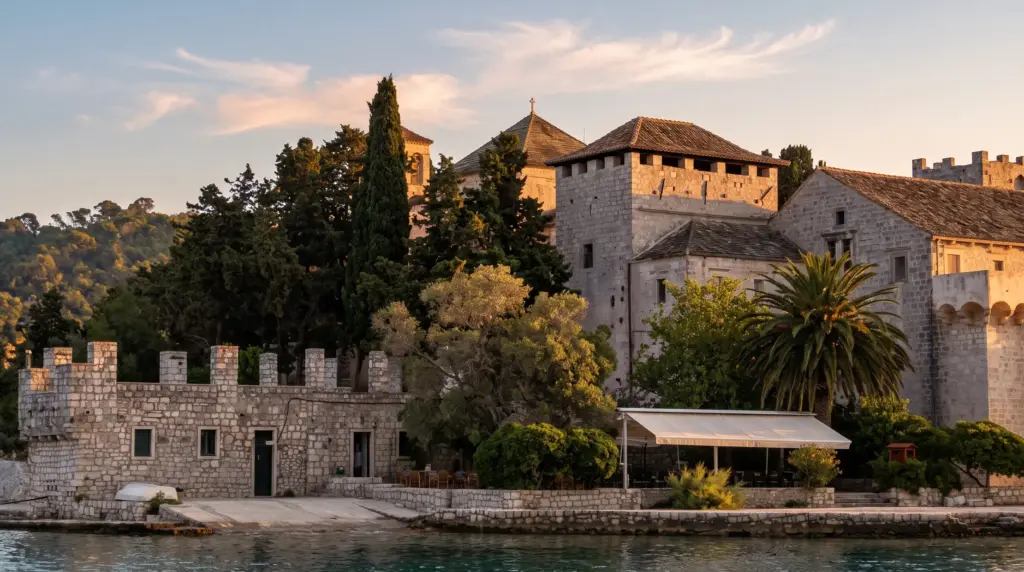
- Architecture in Transition: The core of the church is Romanesque in style, but the complex has been steadily expanded over the centuries. In the 16th century, Renaissance elements were added, along with a massive fortification wall and a defensive tower—a necessary measure to protect against pirate raids.
- Cultural Hub: For centuries, the monastery served not only as a religious center but also as an intellectual hub of the Republic of Dubrovnik. Prominent Dalmatian poets and scholars such as Mavro Vetranović and Ignjat Đurđević shared parts of their lives here and produced important works of Croatian literature.
- From monastery to hotel and back again: With Napoleon’s invasion in 1809, the order was dissolved. The building then went through a series of changes—it served at times as a forestry office and, beginning in 1960, was used for decades as the “Hotel Melita.” The hotel closed in the late 1990s; today, the complex belongs once again to the Diocese of Dubrovnik and is open to visitors as a cultural monument.
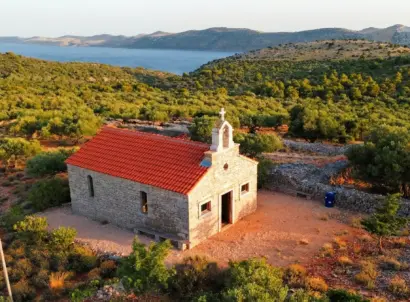
A short loop trail leads all the way around the island. In addition to the well-maintained church, visitors will discover the old boat dock, lush Mediterranean vegetation featuring agaves and palm trees, and the historic defensive tower. Right on the shore, the small café-restaurant Melita invites you to take a break in the shade of the trees.
Getting There: How to Reach the Monastery Island
Private motorboats are strictly prohibited on the lakes within the national park—this protects the sensitive underwater ecosystem and ensures the area’s unique tranquility. Travel to the island is therefore both eco-friendly and relaxing:
- By national park boat: Quiet, solar-powered electric boats run regularly from the small port of Pristanište (and, depending on the season, also from Mali Most) to the monastery island. The crossing takes only a few minutes and is already included in the regular admission price for Mljet national park.
- By kayak or canoe: You can rent kayaks around the lake—for example, in Mali Most or Soline. If you paddle on your own, you can explore the shore of Sveta Marija up close and enjoy the view from the water.
- For skippers and boaters: If you’re heading to Mljet under your own steam, it’s best to moor in the sheltered bays of Pomena or Polače. From Pomena, a shaded walking path leads directly to the shores of the Small and Large Lakes in about 15 to 20 minutes. From Polače, shuttle buses operated by the national park run regularly, or you can rent a bike on site.
Practical Tips for Your Visit
- Best time to visit: Between 11:00 a.m. and 3:00 p.m., tour catamarans from Dubrovnik and Korčula arrive regularly, making the small island noticeably more crowded. If you take the ferry early in the morning or after 4:00 p.m., you’ll experience the island in the softest light and often have it almost all to yourself.
- Combine it with a bike ride: An excellently maintained, mostly flat path (about 9 kilometers) circles Veliko Jezero. A combination of a bike ride, a swim in the canal, and the boat ride to Sveta Marija makes for a relaxing half-day outing.
- Pack your swimwear: Around the Great Lake and near the monastery, there are numerous flat rock slabs where you can swim. Water shoes are recommended due to the occasional sea urchins and the karstic rocks.
- Visiting the church respectfully: Since St. Mary’s Church is still a consecrated place of worship, be sure to pack appropriate clothing (covered shoulders) in your backpack for when you go inside.
Sveta Marija isn’t the kind of place you can just check off your list in ten minutes. Its true magic only reveals itself once the last excursion boat of the afternoon sets sail, the water in Veliko Jezero becomes as smooth as glass, and only the chirping of cicadas drifts over from the densely forested slopes—Dalmatia at its most unspoiled.