Stay up to date – you can subscribe to our newsletter here

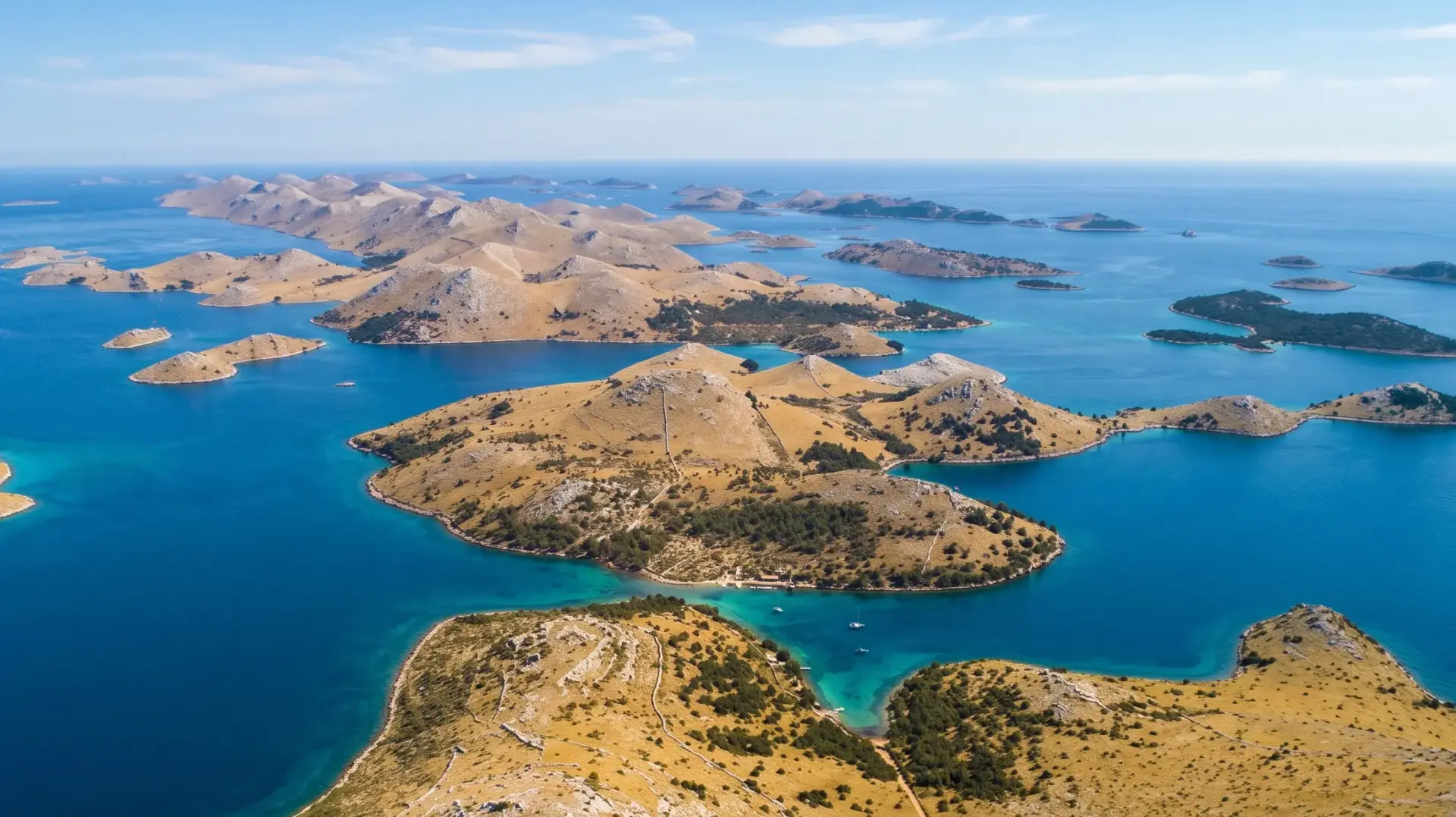
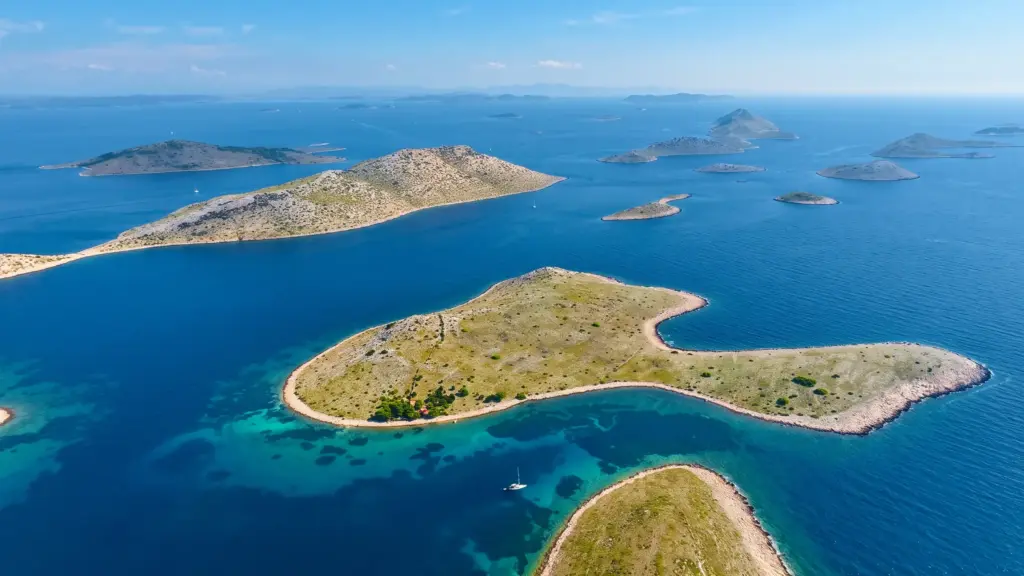
Anyone gliding by boat through the Mala or Vela Proversa passage enters a different world. While the Dalmatian mainland and many neighboring islands are characterized by dense pine forests and lush green macchia, the approximately 140 islands, islets, and reefs of the Kornati Archipelago rise like bleached bones from the deep-blue sea. Dazzling white limestone, barren grassy slopes, not a single stream—and hardly a tree to provide shade.
For decades, persistent legends have swirled around this fascinating barrenness in the konobas and ports along the Adriatic. Sometimes the Venetians are blamed; other times, devastating forest fires. The true story behind the Adriatic’s “lunar landscape,” however, is far older, more complex—and a lesson in how humans and nature irrevocably shape a landscape over millennia.
Myth 1: “The Venetians cut down everything”
It is by far the most popular explanation among sailors and travel guides: The Republic of Venice completely cleared the once densely forested Kornati Islands to obtain millions of wooden piles for the foundations of the lagoon city and planks for its mighty war fleet.
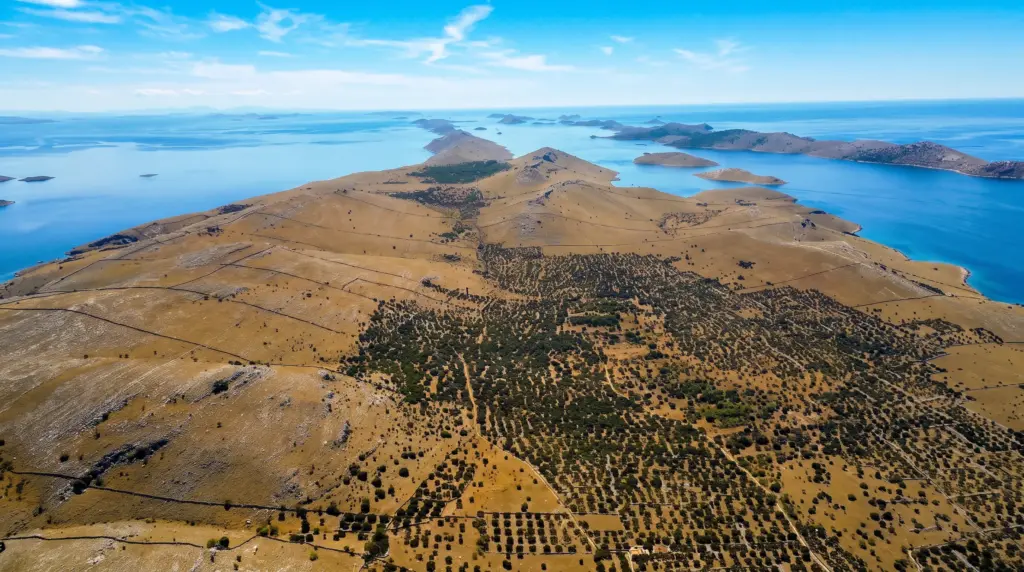
What is actually true: Venice did indeed have an enormous demand for wood and, for centuries, plundered the forests of Istria (such as the famous Motovun Forest) and large parts of the Dalmatian coast. For the Kornati Islands, however, this explanation falls far short of the mark. Historical sources and soil analyses show that the islands had already been largely deforested long before Venetian rule (beginning in the 15th century). The Venetians did not find primeval forests there, but rather, for the most part, already degraded pastureland and low scrub. The fact that the remaining vegetation was occasionally used for lime kilns (vapnenice) or firewood merely dealt the final blow to the vegetation—Venice was not the main culprit.

Myth 2: “Major forest fires destroyed the islands”
Devastating wildfires are also often cited as a cause—an impression reinforced not least by the tragic fire disaster on Kornat in 2007.
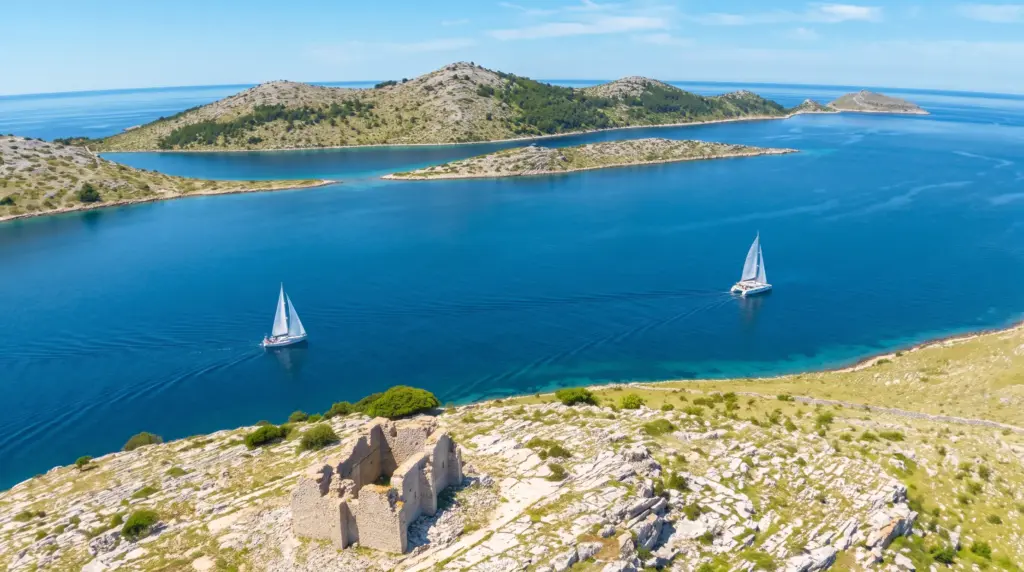
What’s really true: Fire did indeed play a key role in shaping today’s landscape—though not in the form of random natural disasters, but rather as deliberate, centuries-long slash-and-burn practices. Shepherds repeatedly set fires on purpose to keep thorny scrub and underbrush in check. Where the ashes lay, fresh, tender grass grew for the sheep after the next rain.
The True Story: 6,000 Years of Overgrazing, Sheep, and Karst
Originally, the Kornati Islands looked completely different. About 6,000 years ago, the islands were covered by dense Mediterranean holm oak forests (Quercus ilex) and a species-rich shrub layer. The fact that almost nothing remains of this today is due to a fatal chain reaction involving four factors.
1. The Beginnings in the Neolithic Era and Antiquity
Deforestation did not begin in the Middle Ages, but rather with the first settlers during the Neolithic period. The Illyrians (particularly the Liburni tribe) and, later, the Romans cleared the first large areas of forest to obtain wood for ships, houses, and tools, and to make room for agriculture and livestock farming. Even in ancient times, forest cover had already shrunk drastically.
2. The Decisive Factor: Intensive Sheep Farming
The real death blow to the forest was dealt by extensive grazing, which had been practiced for centuries. When, in the 16th and 17th centuries, many people fled from the mainland to the safe islands to escape the Ottomans—and later, especially the farmers from Murter—the so-called Kurnatari —first leased the islands and then purchased them from noble families in Zadar at the end of the 19th century, sheep farming became the economic backbone of the region.
Thousands of sheep and goats grazed on the islands. While slash-and-burn farming cleared away the older shrubs, the hungry animals immediately ate every single young shoot and sapling. The forest simply had no chance left to regenerate.
3. The Curse of the Karst: Irreversible Erosion
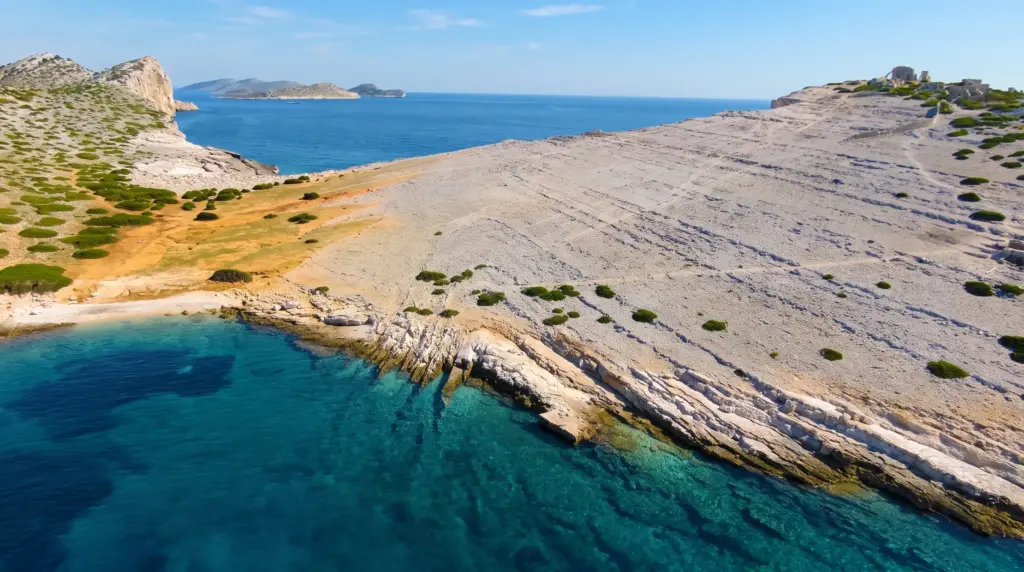
The Kornati Islands consist almost entirely of porous limestone and dolomite. This rock was once covered by only a relatively thin layer of fertile red soil (terra rossa). As long as the trees stood, their roots held this precious soil in place.
As soon as the forest and the protective vegetation cover had disappeared, relentless erosion set in: Heavy fall and winter rains washed the unprotected soil from the slopes—directly into the sea or deep into the underground crevices of the karst. What remained was bare, white rock. Where there is no longer any humus, no tree can take root. An ecological tipping point had been reached.
4. Bora, Salt Spray, and Water Scarcity
The extreme microclimate does its part to keep the islands barren. In winter, the merciless Bora wind lashes down from the Velebit Mountains across the open sea, carrying fine salt spray—known as “Posolica” —far across the islands. This salty spray acts like a herbicide on young plants, allowing only extremely hardy species to survive. Added to this is the extreme water scarcity: because rainwater seeps away immediately in the porous limestone, there are practically no natural freshwater sources on the surface of the Kornati Islands.
An Overview: Myth vs. Reality
| Cause | Actual impact | Background |
| Venetian Deforestation | Minor | By the time the Venetians arrived, the islands were already largely deforested. |
| Accidental Forest Fires | Minor | Fires were mostly intentional slash-and-burn practices carried out by shepherds to clear land for grazing. |
| Sheep and goat grazing | Very high | Overgrazing over the course of centuries prevented any natural reforestation. |
| Karst erosion & Bora | Crucial | Without a root system, the soil was washed away; salt spray inhibits new vegetation growth. |
Silent Witnesses to History: 330 Kilometers of Dry-Stone Walls
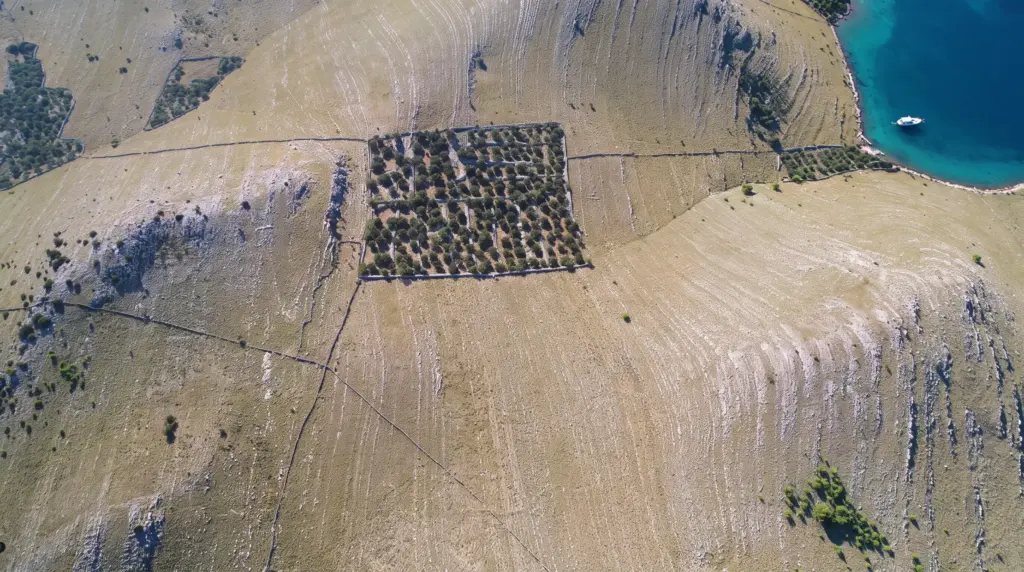
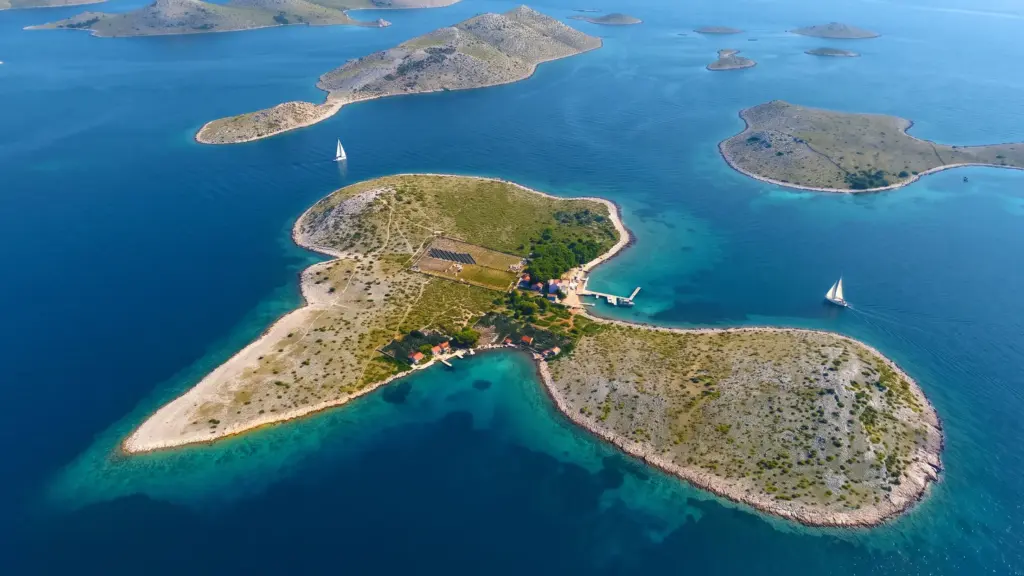
Anyone sailing through the Kornati Islands today will discover a distinctive pattern on the white slopes: kilometers-long, perfectly straight dry-stone walls (suhozidi), which often stretch from one coast across the mountain ridge to the other. In total, about 330 kilometers of these walls crisscross the archipelago—about 260 kilometers of which are on the main island of Kornat alone.
They are a tangible, stone monument to deforestation and sheep farming. The Kurnatari stacked the stones without mortar to mark the boundaries of their land and, above all, to prevent the sheep from straying onto their neighbors’ barren pastures or into their few protected olive groves. At the same time, by gathering the stones, they cleared the small, fertile valley basins (polja)—such as those around Vrulje, Strižnja, or Tarac—of debris. Where the washed-away soil has accumulated, centuries-old olive trees and fig trees still thrive today.
Will the Kornati Islands ever turn green again?
What at first glance appears to be a lifeless stone desert is, upon closer inspection, a surprisingly rich ecosystem. Over 500 plant species defy the extreme conditions—including fragrant Dalmatian sage, immortelle (strawflower), heather, and tough steppe grasses. It is these plants that give the famous Kornati lamb its distinctive, slightly salty, herbaceous flavor.
And in fact, the landscape is currently changing very slowly once again: Since intensive sheep farming declined sharply in the second half of the 20th century and strict conservation regulations have been in place since the national park was established in 1980, nature is reclaiming wind-sheltered bays and valleys centimeter by centimeter. The first patches of maquis and a few young holm oaks are sprouting up there again.
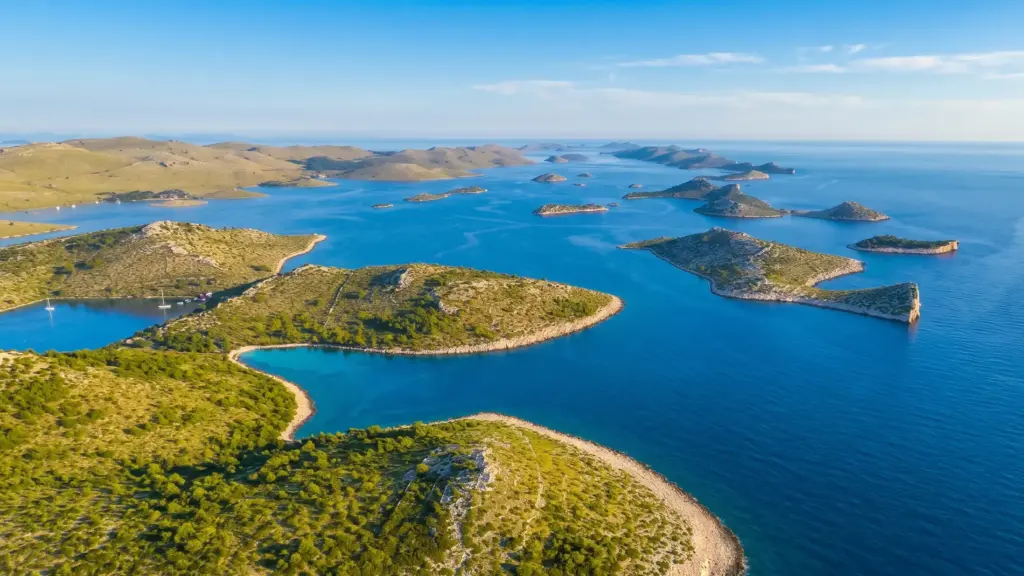
However, it would take millennia for a real forest to grow again on the exposed, bare limestone ridges—first, new soil would have to slowly form on the bare rock. For sailors and nature lovers, this is precisely the special irony of the Kornati Islands: what was once the result of human overexploitation created that breathtaking contrast between dazzling white karst and deep-blue sea that makes the archipelago unique in the world today. Or as the Irish writer George Bernard Shaw once poetically put it: “On the last day of creation, God wanted to crown his work and created the Kornati from tears, stars, and breath.”