Stay up to date – you can subscribe to our newsletter here

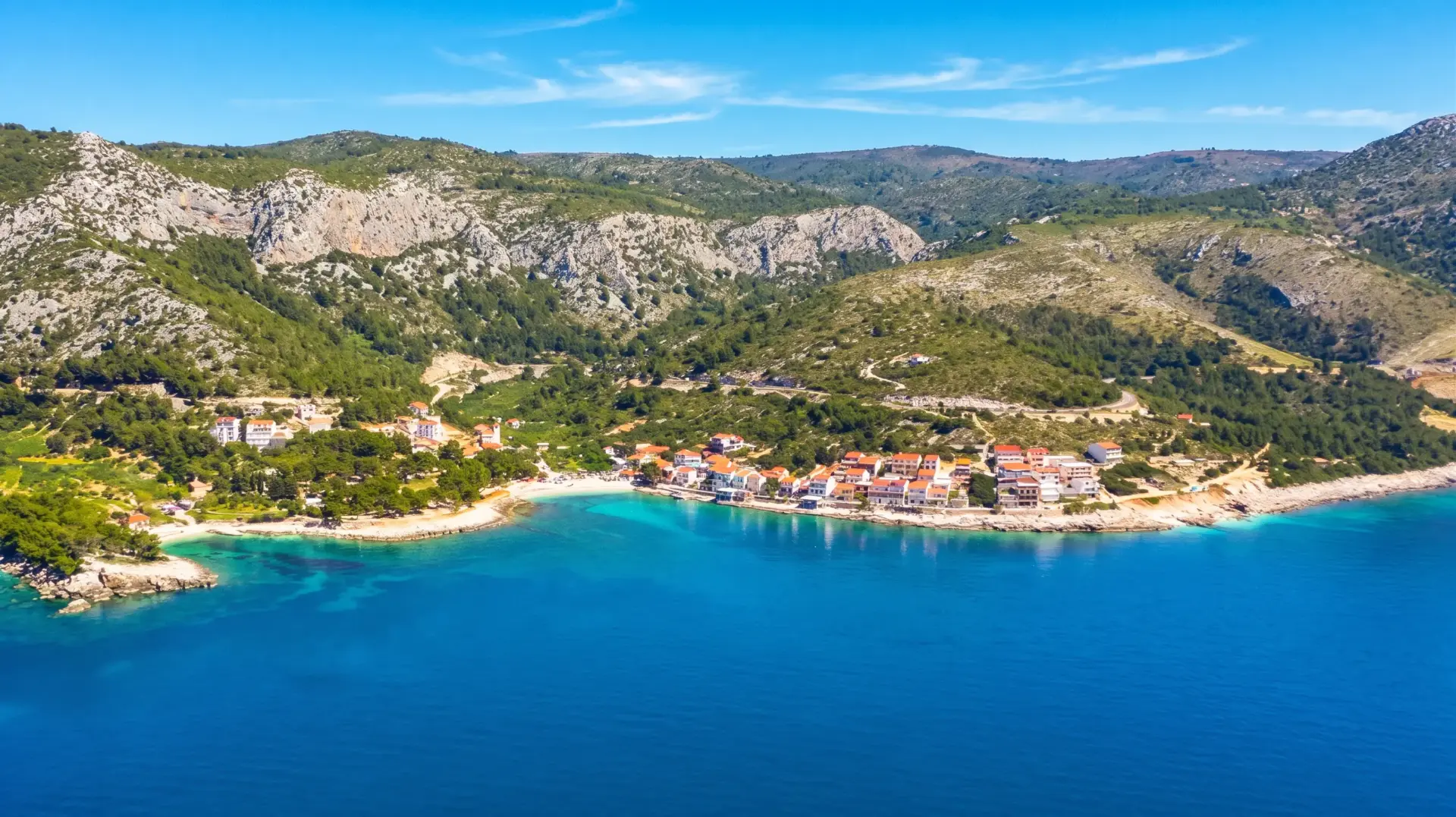
Just four kilometers east of the town of Hvar lies Milna—one of those South Dalmatian bays that look like an unspoiled Adriatic idyll on postcards. This makes the information in the official tender documents from the municipal utility Vodovod i odvodnja Brača i Hvara, dated late November 2026, all the more sobering: To this day, the popular vacation destination has no public sewer system. Most of the wastewater ends up in septic tanks, many of which are leaking—and in the coastal part of the settlement, it even flows directly into the sea.
Now, an investment of 2.5 million euros (excluding VAT—of which 2.375 million is for construction and 125,000 euros is for construction supervision) is intended to solve the problem. Plans include canals, pressure pipes, pumping stations, a wastewater treatment plant, an underwater outfall, and the simultaneous renovation of the drinking water network. Once the contract is signed, construction is expected to take 20 months.
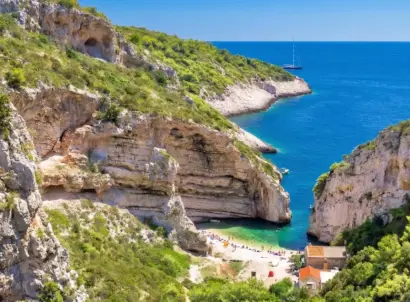
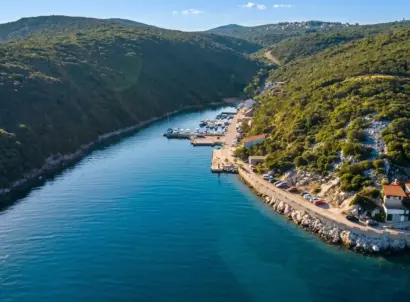
Milna Bay on the southern coast of Hvar exemplifies the typical Dalmatian tension: vacation homes situated right on the water’s edge meet a shallow, particularly sensitive coastal sea.
The Milna case is not an isolated incident on a single island. It serves as a magnifying glass for an infrastructure crisis stretching from Zadar County all the way down to Dubrovnik—and one that is currently at the very top of the European agenda.
Why Brussels is sounding the alarm right now
Just a few days before the call for bids for Milna, on November 19, 2026, the European Commission launched infringement proceedings against Croatia over inadequate municipal wastewater treatment. (as we reported)
The figures from Brussels are clear: In 60 metropolitan areas, each with more than 10,000 residents, wastewater treatment did not meet EU standards in the relevant reporting year of 2024—in 23 cases, the problem lies with collection, and in 37 with the required treatment level. In 40 of these cases, inadequately treated water is discharged into ecologically sensitive areas.
A look at the nationwide statistics explains the lag: According to the Croatian Court of Auditors and the state-owned water management company Hrvatske vode, only about 55 percent of the population is connected to a public sewer system and only about 43 percent to a wastewater treatment plant—the lowest figures in the entire European Union. The rest rely on private soakaways and septic tanks, which are particularly problematic in the porous Dalmatian karst rock.

The Adriatic Paradox: “Excellent” Beaches Despite a Lack of Piping
Anyone looking at the official bathing water reports will rub their eyes in disbelief at first. How do leaky septic tanks, direct discharges, and an EU investigation fit with the reputation of the Croatian Adriatic as one of Europe’s cleanest seas? A look at the 2026 annual assessment for the four Dalmatian counties reveals top scores—but also subtle differences:
| County | Verified Metering Points | Percentage rated “excellent” (2026) |
| Zadar | 190 | 98.96% |
| Šibenik-Knin | 109 | 98.20% |
| Dubrovnik-Neretva | 123 | 96.85% |
| Split-Dalmatia | 161 | 93,06 % |
Source: 2026 Annual Assessment of Bathing Water Quality in accordance with the EU Directive.
It is no coincidence that the Split-Dalmatia County—which, of all places, is the most densely populated in terms of tourism and urban development—shows the sharpest decline, at around 93 percent. At the same time, marine microbiologists warn against misinterpreting the official ratings as a green light for the entire ecosystem.
The reasons for this paradox lie in the measurement methodology and marine physics:
- Snapshots Instead of Continuous Monitoring: The EU Bathing Water Directive, which has remained unchanged since 2006, regularly tests for only two fecal indicators (Escherichia coli and intestinal enterococci) at fixed intervals —short-term spikes in contamination following heavy rainfall or illegal discharges often slip through the cracks.
- Summer Stratification in the Ocean: According to researchers, during the height of summer, the temperature stratification of the water acts like a “curtain” that causes discharged wastewater to drift sideways along the seafloor rather than rising immediately to the surface.
- Memory in Sediment: Fecal bacteria survive significantly longer in sediments on the seafloor than in open water and can be resuspended during storms.
As is also emphasized in the documents on Milna, the absence of a sewer system does not automatically mean that swimming at a beach currently poses a health risk. In the long term, however, every untreated discharge erodes the region’s most important asset.
Between the steep coastal mountains and the narrow strips of shoreline along the Adriatic Sea—here on the Makarska Riviera—roads, vacation homes, and infrastructure are crammed into a very small space.
From Zadar to Dubrovnik: Dalmatia’s Construction Dilemma
A fair assessment of Dalmatia, however, reveals not mere inaction, but a massive race against time to catch up. Along the entire coast, EU-funded “Aglomeracija” projects worth hundreds of millions of euros are currently underway:
- Urban centers on the mainland: In the Split–Solin and Kaštela–Trogir metropolitan areas—where outdated wastewater treatment plants, saltwater intrusion into dilapidated pipes, and untreated discharges have been documented for years—the network is being gradually rebuilt. Similar large-scale projects are underway in the Nin–Privlaka–Vrsi area, in Imotski, in Ploče, and in Dubrovnik.
- Progress on the major islands: On Hvar, the Jelsa–Vrboska agglomeration was officially completed in May 2026; in addition, the City of Hvar, Hrvatske vode, and the water utility had already signed a framework agreement in late 2025 worth 10 million euros for water and wastewater projects through 2030. On Korčula, meanwhile, the groundwork for the sewer system phases in Račišće and Žrnovo was laid in the fall of 2026.
- The Forgotten Outer Islands: Away from the major population centers, the situation is becoming increasingly dire in some cases. On seven islands off the coast of Zadar, for example, the lack of a sewer system has made emptying private septic tanks so expensive and logistically difficult that authorities have recently had to repeatedly document improper and illegal disposal practices. The city of Zadar is now searching for interim solutions for 2027—ranging from private disposal contractors to drop-off points, such as the one in Ždrelac on Pašman, to subsidies for small private wastewater treatment systems in areas that will not receive sewer connections in the next four years.
Four Obstacles That Are Holding Dalmatia Back Everywhere
Why do even fully funded projects on the Dalmatian coast move so slowly? The same obstacles crop up in almost every municipality:
- Seasonal construction halts: Between June and September, excavators in the resort towns are put on hold so that construction noise and torn-up coastal roads do not jeopardize the peak season. In practice, this often leaves only a few months of work per year.
- Extreme summer loads: Places like Milna have only a handful of residents in the winter, but their population skyrockets many times over in July and August. Designing wastewater treatment plants so that they do not overflow in the height of summer and operate economically in the winter is technically challenging.
- Double construction sites due to dilapidated water pipes: Since about 50 percent of the water in Croatia’s drinking water network is lost nationwide on its way to consumers, drinking water and sewer lines must be replaced simultaneously almost everywhere when roads are torn up.
- The unresolved “last mile”: Even if the main collection point and wastewater treatment plant are in place, the consistent connection of all existing homes, vacation rentals, and restaurants to the new network remains a political and financial bottleneck—just as it has already been identified as an unresolved issue in Milna.
More Than Just a Construction Project on Hvar
The 2.5 million euros for Milna ultimately represent far more than a local civil engineering project. They mark the arduous transition from a decades-long tourism model—in which beds were built first and pipes were laid decades later—to a sustainable coastal infrastructure. The time for convenient excuses is over—not only because of pressure from Brussels, but because Dalmatia’s most important promise to its guests and residents lies in the water right on its doorstep.