Stay up to date – you can subscribe to our newsletter here

If you look up along the rugged southeastern coast of the Croatian island of Krk, with a little luck you’ll spot an impressive silhouette against the blue sky: griffon vultures (Gyps fulvus) circling majestically. As Croatia’s last remaining vulture species, these imposing scavengers have found their final refuge on the Kvarner Islands—today, around 110 to 130 breeding pairs still live there. At the end of November 2026, an important milestone for their conservation was reached: a new, purpose-built “vulture restaurant” was completed in the municipality of Baška on Krk.
With their wings spread wide, the birds search the barren karst landscapes of the Kvarner Islands for food. But it is precisely this food that has become increasingly scarce in recent decades. The newly created feeding station is now intended to remedy this situation and provide the birds with a reliable, secure source of food.
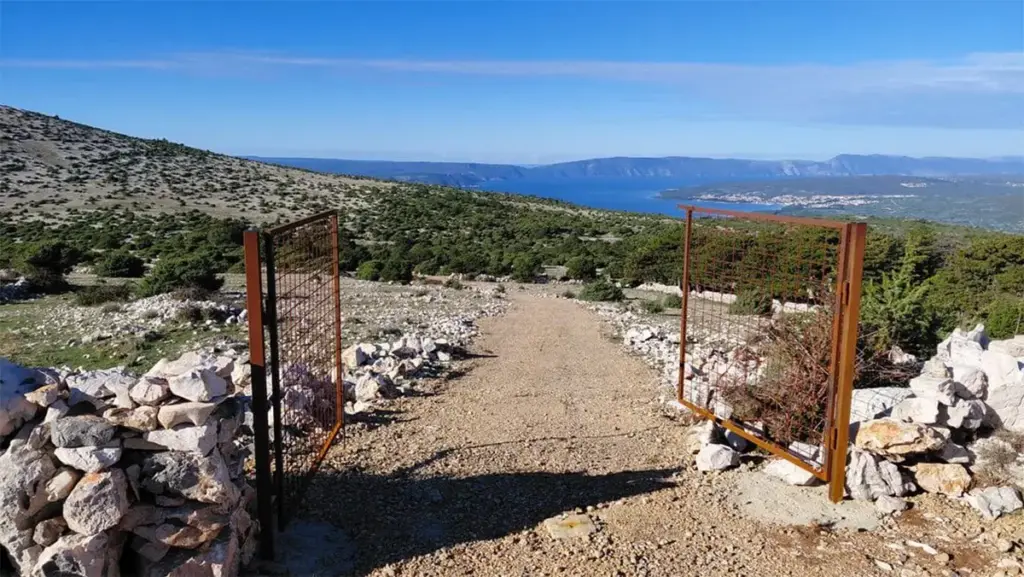
A 1,800-square-meter buffet near Batomalj
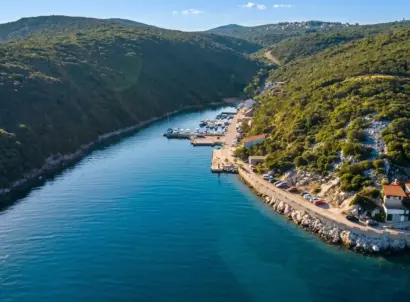
The new “restaurant”—technically a managed feeding site—is located in the Batomalj area in the south of the island of Krk. It was created as part of the EU-co-funded nature conservation project LIFE SUPport, but the actual implementation was in the hands of the local community: The municipality of Baška and its municipal enterprise, TD Baška d.o.o., joined the project in June 2025 and took over construction as well as future maintenance.
Key facts at a glance:
- Area & Infrastructure: 1,800 square meters of fenced-in property, including a newly constructed access road.
- Investment: Just over 25,000 euros (net), according to Marin Valković, director of TD Baška d.o.o.
- Opening: As soon as formal registration with the relevant veterinary authority is complete, the first feathered guests are expected to arrive in early 2027.
- Menu: TD Baška will organize regular deliveries from slaughterhouses as well as from local family-run farms on Krk—guaranteeing food that meets veterinary safety standards.
For vultures, such a feeding site is much more than just a convenient meal. Controlled feeding sites not only reduce the risk of food shortages during the critical breeding season, but also protect the birds from poisoned bait in the wild.

Baška: The Historic Heart of Vulture Conservation
There are deep-rooted reasons why the municipality of Baška is leading the way in this effort. The Kuntrep Ornithological Reserve—the only breeding ground for griffon vultures on the island of Krk—is located within its municipal boundaries. Kuntrep stretches along the steep coastal cliffs from Cape Glavina to Mala Luka Bay and was designated as early as 1969 as the world’s first bird sanctuary specifically for the protection of the griffon vulture. The neighboring uninhabited island of Prvić, another important breeding ground for these birds, also belongs administratively to the municipality of Baška.
Why the future of the vultures depends on the sheep
On the Kvarner Islands, nature conservation does not work in opposition to humans, but only in harmony with traditional agriculture. For centuries, extensive sheep grazing has shaped the open pastures and grasslands of Krk, Cres, and Rab—and in doing so, has also ensured the livelihood of scavengers.
That is precisely why, during their meeting on Krk, the LIFE SUPport project partners and advisory board visited not only the new vulture restaurant but also a local shepherd. New protective measures are currently being tested there to better protect sheep herds from attacks by golden jackals and wild boars.
“Preserving sheep farming is crucial not only for the local economy and traditions, but also for biodiversity as a whole, which depends on open grasslands. Protecting herds, supporting local livestock farmers, and ensuring safe food sources for vultures are all directly intertwined.”
— Ivana Ribić, LIFE-SUPport project coordinator at the nature conservation organization Udruga Biom
A Large Network for a Large Bird
The construction project on Krk is part of a much broader strategy. The LIFE SUPport project will run from January 2023 to December 2027 with a total budget of approximately 2.16 million euros, of which just under 1.3 million euros comes from the European Union’s LIFE program. The goal is to permanently stabilize the Kvarner population so that, in the long term, the birds can even repopulate the Croatian mainland and connect with populations in the Alps and the Balkans.
An unusually large number of stakeholders are working together toward this goal: In addition to the Udruga Biom association, the Vulture Conservation Foundation, the municipality of Baška, and the regional nature conservation authority Priroda, the Croatian Ministries of the Environment and Agriculture, the State Forests (Hrvatske šume), and the power grid operator HEP-ODS are also participating. Together, they are tackling all major dangers—from nest disturbances caused by tour boats to illegal poisoning and fatal electric shocks from unsecured power poles. Injured young birds that fall into the sea during their first attempts at flight are also rescued and nursed back to health at the rescue center in the Beli Visitor Center on the neighboring island of Cres.
During the discussions on Krk, attention was already focused on the next step: Proven livestock protection measures are to be specifically incorporated into the new strategic plan for the Common Agricultural Policy (CAP) in the future. The new “restaurant” in Batomalj already demonstrates how modern species conservation can succeed—down-to-earth, rooted in the local community, and with an open-minded approach to the interplay between people and nature.