Stay up to date – you can subscribe to our newsletter here

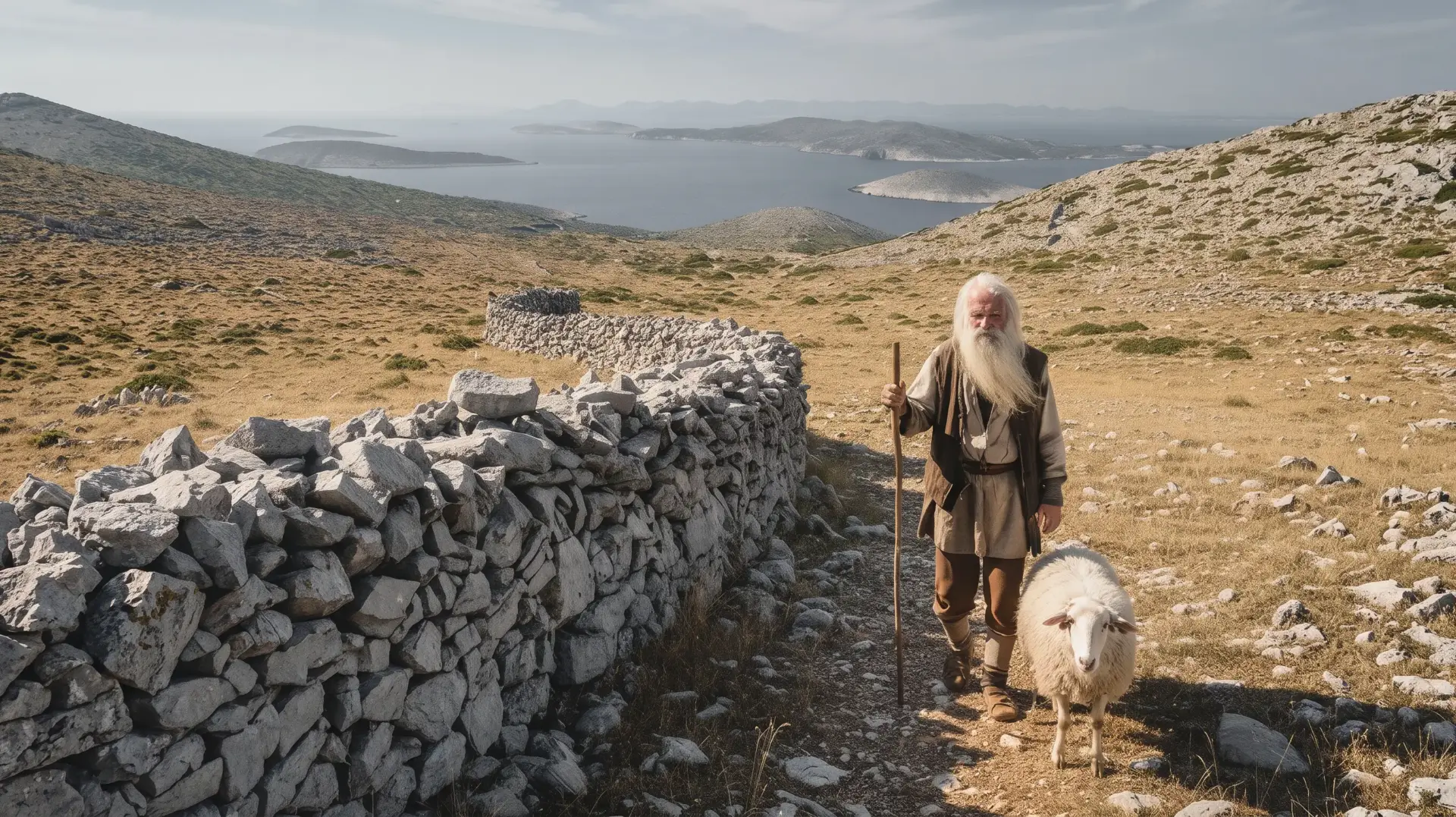
At the very latest when you’ve broken through the rough outer shell of a true Kurnatar and spend the evening with him in a quiet bay over a good glass of wine, one story is sure to come to light: the life of Mate Didov. He was a shepherd who—according to legend—spent his entire life on the island of Kornat and lived to the incredible age of 150.
His simple, nature-centered life on the barren islands of the Kornati archipelago is said to have made him so tough and resilient that, for a long time, Death was simply unable to claim the old shepherd. Exactly how the encounter between Mate and the Grim Reaper unfolded, however, varies noticeably—depending on the storyteller, the amount of wine, and how late it is. But behind this charming sailor’s tall tale lies far more than just a funny anecdote for balmy summer nights.
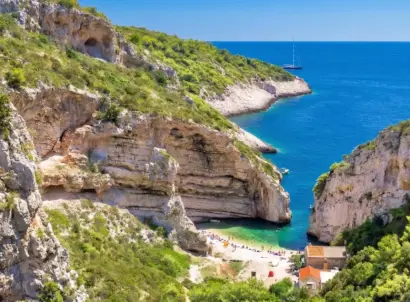
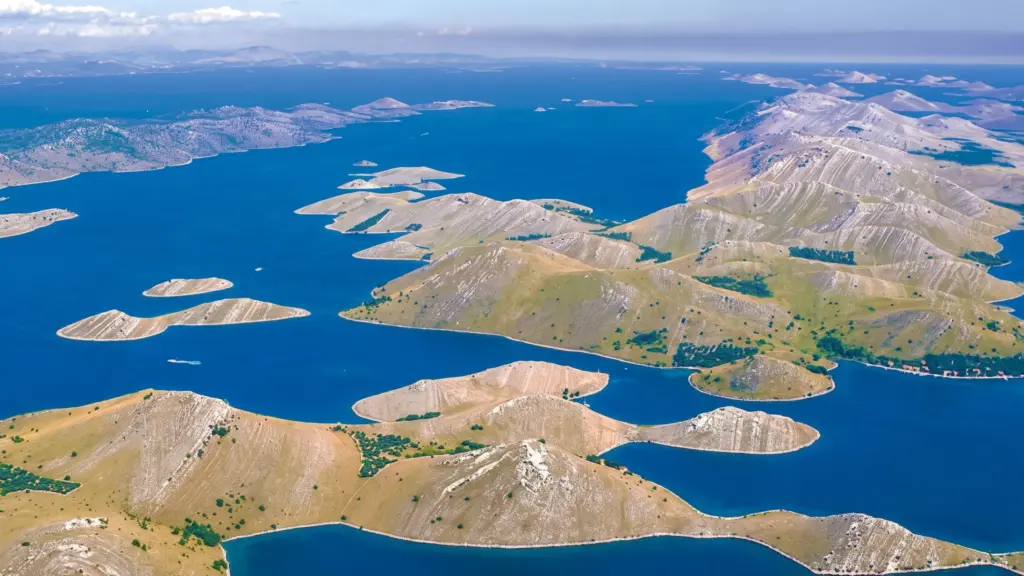
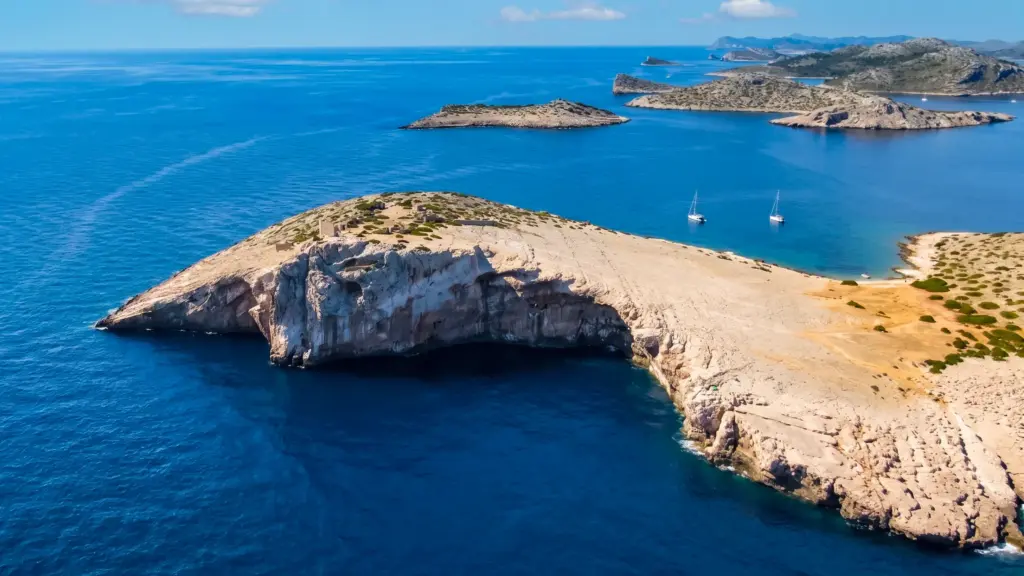
The aerial view shows precisely the landscape that has shaped the character of the people here for centuries: a labyrinth of light-colored limestone, salty air, and seemingly endless blue—beautiful to visitors, but unforgiving to anyone who had to eke out a living from this land.
Who are the Kurnatari? Farmers who became sailors
To truly understand the legend of Mate Didov, it’s worth taking a look at the people who keep it alive to this day. When we talk about the Kurnatari, one is referring primarily to the residents of Murter—the oldest and largest settlement on the island of the same name—as well as, to a lesser extent, families from Betina and Zaglav on Dugi Otok. They are the rightful owners of nearly all the land on the Kornati Islands.
Her connection to the archipelago, however, was not a romantic dream, but a matter of sheer survival:
- Flight and a New Beginning: As early as the 17th century, residents of Murter fled to the islands when they could no longer safely reach their fields on the mainland due to Ottoman advances.
- From Serfs to Landowners: For centuries, the people worked the barren land as tenants and serfs for noble families from Zadar. It was not until the mid-19th century that the people of Murter began to buy back the islands bit by bit, until they became the sole owners of the Kornati Islands in 1896.
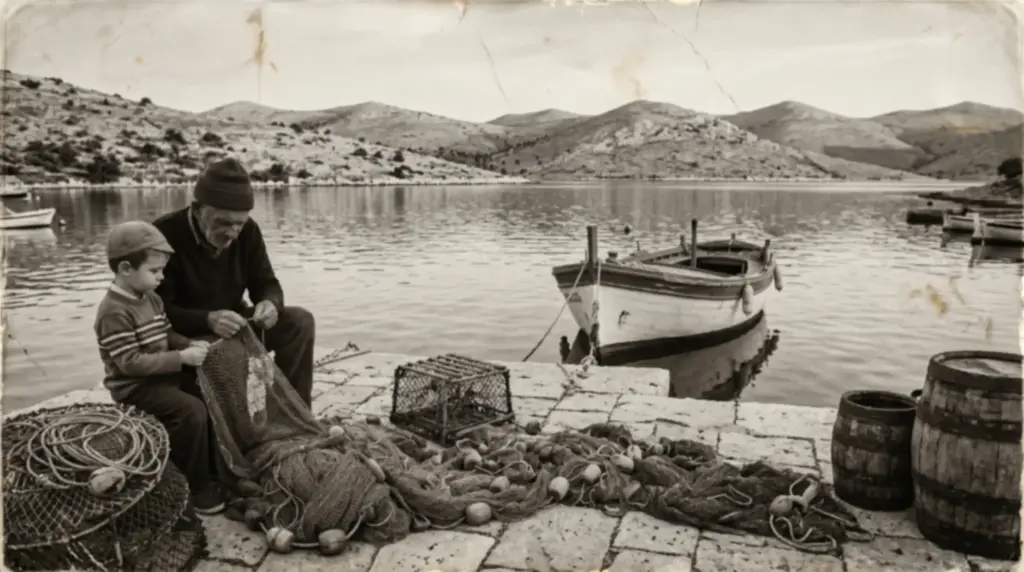
- A Life Between Land and Sea: Because their pastures and olive groves were suddenly seven nautical miles away across the open sea, the farmers were forced to become experienced sailors, fishermen, and shipbuilders.

Why Death Despaired of Mate Didov
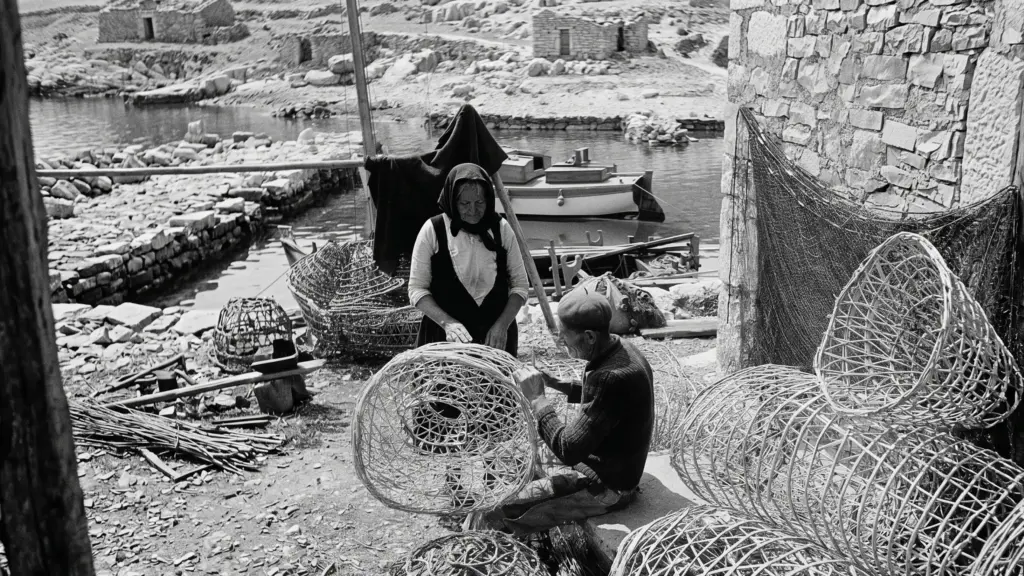
A fascinating contrast stands out in the historical accounts from Murter and the Kornati Islands. Before engines powered the wooden boats, every crossing between Murter and the Kornati Islands was a test of strength. Hours of rowing against the wind, sudden changes in the weather, and grueling physical labor took a toll on the health of the commuters—their lives were hard and often short.
The situation was quite different for those shepherds who stayed out with their sheep permanently and rarely returned to Murter. Far removed from the hustle and bustle and sea voyages, they led a leisurely life in harmony with nature, following the rhythm of the sun, wind, and tides—and were considered remarkably long-lived. It is precisely from this experience that the tradition of the Kornati shepherd Mate Didov arose, to whom folk legend attributes a remarkable 150 years of life.
Whether it was the salty air, the simple fare of sheep’s milk cheese, olive oil, and wild herbs, or the island’s utter tranquility: In the Kurnatari’s imagination, Mate Didov became one with the limestone of his island—weathered, unyielding, and timeless.
Looking at the endless lines of stone that stretch like veins across the barren hills and enclose even the smallest olive groves, one immediately grasps the perseverance that life here demanded.
330 kilometers of stone against the wind and time
Nothing makes the tenacity of the Kurnatari people more tangible than their dry stone walls (suhozidi). Across the 89 islands, islets, and reefs that have made up Kornati National Park since 1980, a total of approximately 330 kilometers of these mortar-free walls stretch across the landscape.
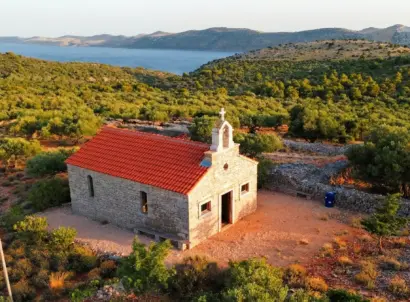
Every single stone was picked up by hand and carefully layered. Because the large islands of the archipelago are narrow and elongated, the walls run across from one coast to the other. They were built so solidly that they withstood the lashing Bora wind, and just high enough to prevent the sheep from jumping onto a neighbor’s land or into the precious olive groves. Between these stone boundaries, old shepherds’ huts, and small island chapels—such as the Gospa od Tarca pilgrimage church below the 6th-century Byzantine fortress of Tureta—life unfolded in its entirety for generations.
The true essence of a timeless legend
Of course, every Kurnatar gives a sly wink when, at the end of the evening, Mate Didov’s 150 years come up in conversation. No one asks for a birth certificate from the church register. For the true essence of this folk legend lies not in the exact number, but in the Kurnatari’s deep pride in their unique island archipelago.
Mate Didov is far more than just an old shepherd from a bygone era. He is the symbol of the tenacity, the unshakable connection to nature, and the quiet resilience of all those people who, over the centuries, have managed not only to eke out a living from this barren, wild archipelago, but also to transform it into an enduring monument to human perseverance. So the next time you sail through the Kornati Islands and raise a glass of wine in a konoba in the evening, be sure to ask about Mate Didov—the best stories begin right where facts give way to emotion.