Stay up to date – you can subscribe to our newsletter here
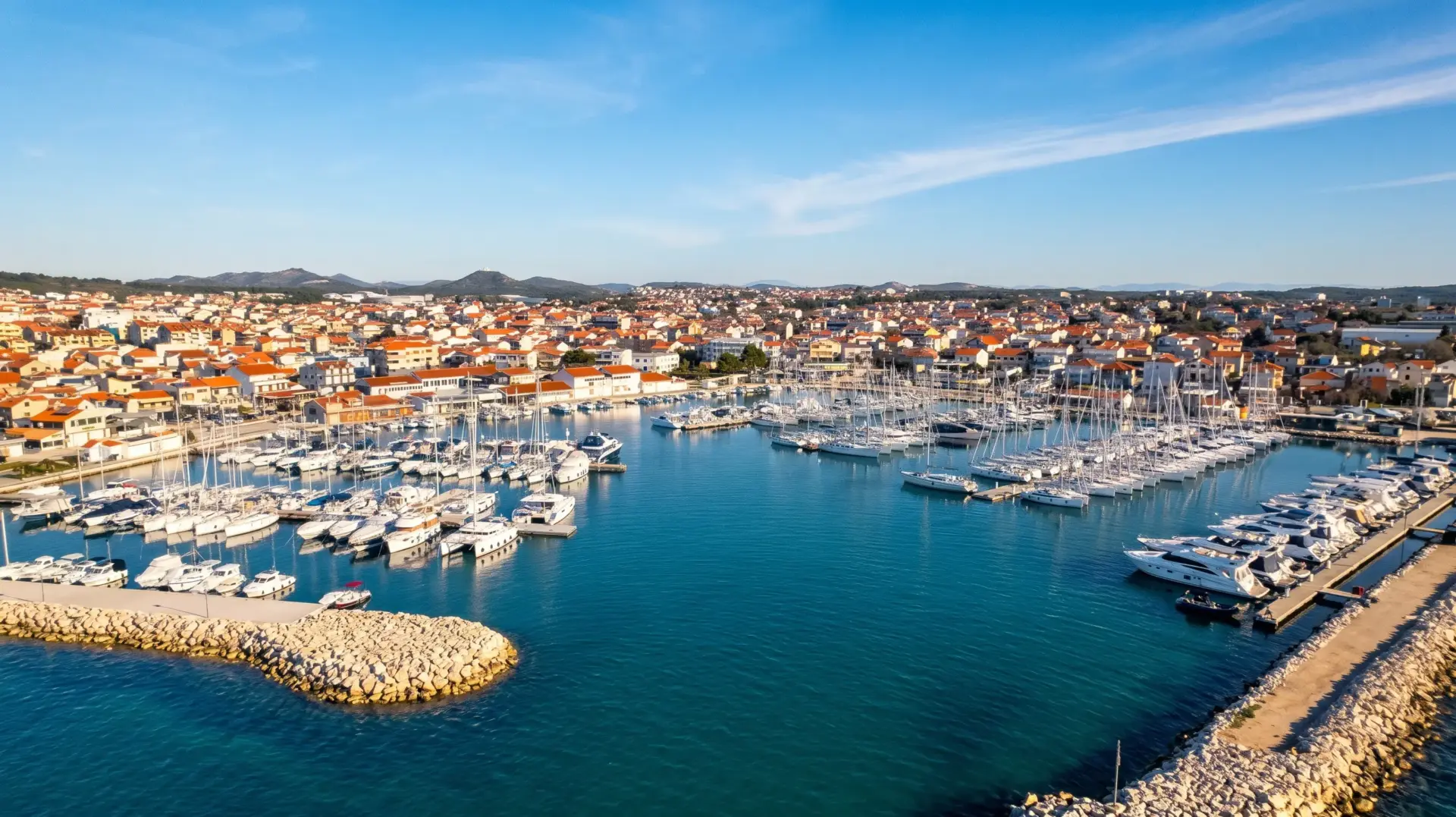
The Adriatic Croatia International Club (ACI) recently celebrated its own anniversary during the Croatian Tourism Days at the “Pical” Hotel in Poreč:
With a roughly 500-page anniversary monograph covering 43 years of company history and references to its in-house luxury magazine, ACI No. 1, which has featured interviews with global stars such as Lewis Hamilton, Nicole Kidman, and Luka Dončić since 2018.
But beyond the glossy pages and grand gestures, a recent interview with ACI board member Ivan Herak in the daily newspaper Novi listshows just how great the actual pressure to act is at the largest marina chain in the Mediterranean. For while the prestigious Porto Baroš project in Rijeka is coming under increasing time and cost pressure, the recently announced multi-million investments in the existing marinas are anything but a voluntary luxury program—they are simply urgently needed.
Concessions Through 2058: The Long-Standing Excuse No Longer Holds Water
For years, the expiring concession terms were considered the main obstacle to significant investments in the ACI system. That came to an end on October 1, 2026: The Croatian government extended the concessions for all ACI marinas by another 28 years, through 2058. The total value of the concessions exceeds half a billion euros; in return, ACI has committed to investments of at least 139 million euros.
Any skipper who regularly sails along the Croatian coast knows this: In many locations, this money should have been paid much earlier.
It’s no coincidence that ACI has repeatedly faced criticism in the past—prominent examples include ACI Marina Žut in the Kornati Islands, or the ACI Marina Milna with its collapsed docks.
While mooring fees have been at an all-time high for years, the condition of the infrastructure in many places left much to be desired.
A look at the investment priorities Herak has now listed reads less like a futuristic vision and more like the long-overdue completion of basic tasks:
- Core Work: Renovation of aging pontoons, docks, and mooring and anchoring systems.
- Utilities: Modernization of electricity and water connections, as well as improved systems for waste and wastewater disposal.
- Buildings & Technology: Energy-efficiency retrofits of existing buildings, digitization, and expansion of the service infrastructure.
However, boaters will still need to be patient. As Herak acknowledged, the focus until the end of 2026 and throughout 2027 will initially remain on bureaucratic matters—that is, on resolving property rights and environmental issues, project planning, and obtaining building permits. It will be at least one more season before the excavators and contractors actually arrive at the docks.

Boutique hotels and a dedicated charter fleet: Are the priorities right?
Herak refers to the 139 million euros merely as a “basic package” and points out that ACI has already invested three and a half times as much as contractually required during the current concession period. The strategic plans extend far beyond the renovation of the existing ports: According to the current development strategy, ACI is considering boutique hotels outside the concession areas, potential acquisitions of additional marinas, hydrogen technologies as part of the North Adriatic Hydrogen Valley consortium, and even a return to operating its own charter fleet —similar to the late 1980s, when ACI operated around 100 of its own yachts.
Especially at a time when many existing marinas first need to be brought up to a level of quality that matches their price point, such expansion fantasies seem quite risky. For skippers at the docks, functioning restroom facilities, reliable electricity and water supplies, and intact mooring lines are likely to be far more important than government-subsidized competition in the charter business or in-house boutique hotels.
Porto Baroš in Rijeka: Cost Overruns and Unresolved Financing
The situation is even more critical for the flagship Porto Baroš project in Rijeka—the largest single investment in the history of Croatian nautical tourism. Behind the optimistic statements that the project will continue “under any ownership structure,” construction sites are piling up:
- Withdrawal of the Partner: The former project partner, GITONE Kvarner d.o.o., has officially offered ACI the right of first refusal on its shares in the joint venture ACI-GITONE d.o.o. ACI is currently reviewing the offer as part of a comprehensive analysis; the Executive Board and Supervisory Board must make a decision before the Zagreb Stock Exchange is notified via the financial regulator HANFA. A 100 percent acquisition by ACI is therefore a real possibility.
- Delays due to historic preservation: Because the site is under preventive historic preservation protection, the planning process was significantly prolonged by changing preservation requirements. The government had to extend the deadline for construction and the occupancy permit by three years, bringing the total to six years.
- Declining returns, rising costs: Due to the extended construction phase, the effective operating period within the 30-year concession is shortened from 27 to just 24 years. At the same time, both general construction cost trends and the difficult-to-calculate historic preservation requirements are driving up investment costs. Herak himself speaks openly of a looming economic imbalance —and does not rule out the possibility of a future legal amendment to the concession agreement.
Due to the significant increase in construction costs, ACI must now completely recalculate the feasibility study for Porto Baroš. To make the project more financially viable, Herak is proposing an expansion to the neighboring Riva Boduli: As soon as the operating permit for Porto Baroš is granted, ACI will also be allowed to apply for this site.
Particularly revealing at the end of the interview was the crucial question about money: Does ACI even have the financial strength to handle 139 million euros in mandatory investments, additional upgrades, possible acquisitions, and the potential to finance Porto Baroš on its own all at the same time? Herak did not provide a clear commitment. He said this question could only be answered once all additional investments had been quantified, the acquisition of the GITONE shares had been clarified, and the new figures for Porto Baroš—including Riva Boduli—were on the table.
Pride in 43 years of history and high-profile interviewees in its own glossy magazine aren’t enough on their own to retain discerning boaters in the long term. With concessions extending through 2058, ACI now has planning certainty—and is under more pressure than ever to finally ensure that the promised millions actually reach the docks, rather than overextending itself with large-scale projects.