Stay up to date – you can subscribe to our newsletter here

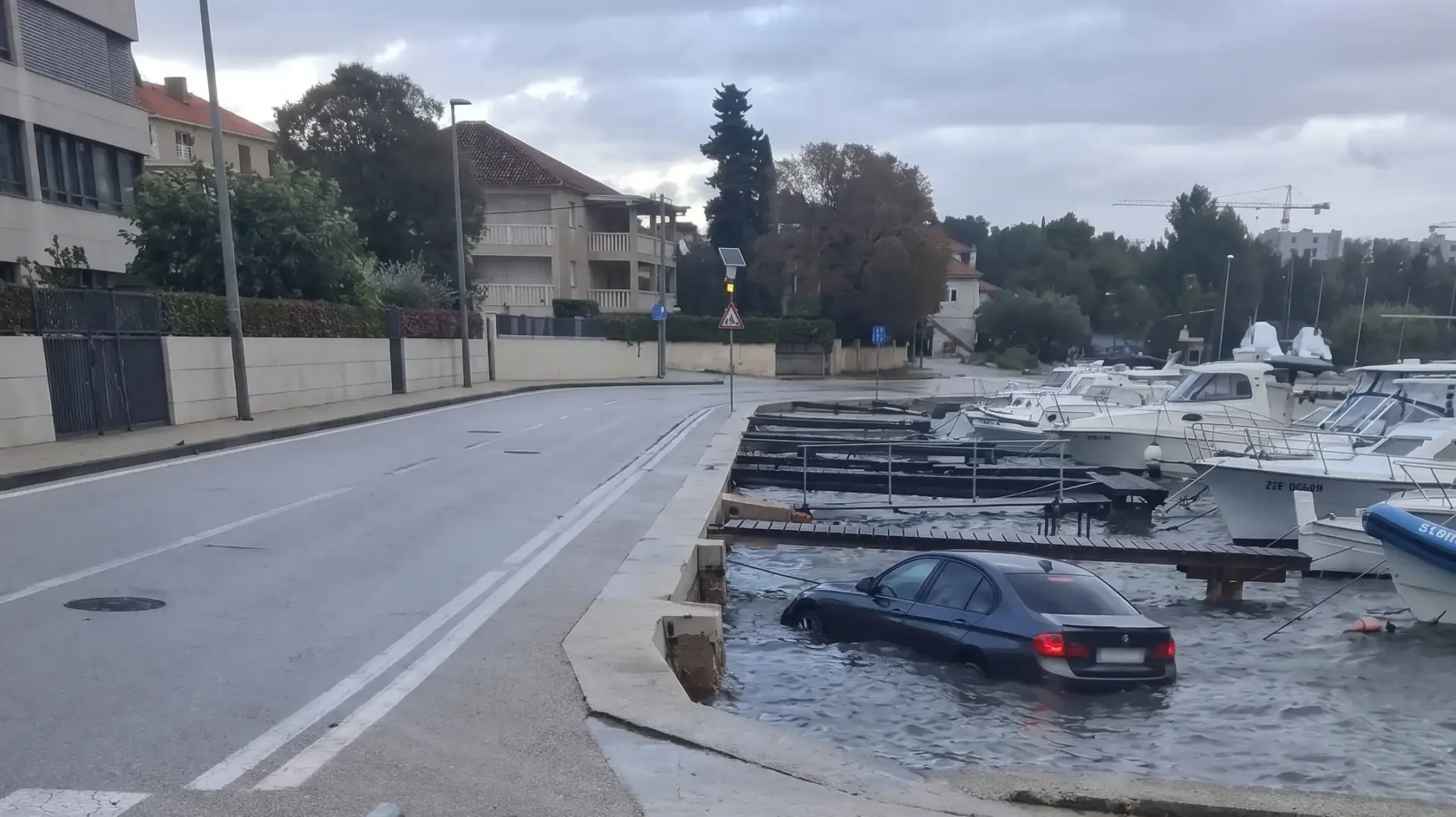
It’s one of those stormy November days on the Dalmatian coast: the Jugo is whipping across the Adriatic, rain showers alternate with thunderstorms, and the roads are treacherously wet and shiny. And that’s exactly when it happens again. On the afternoon of November 19, 2026, in Dražanica Bay—affectionately called Drošanjica by the locals—a driver once again loses control of his BMW, veers off Obala kneza Trpimira, and ends up right in the sea.
Miraculously, the driver was unharmed. On Zadar’s social media platforms—most notably in the well-known Facebook group Policija zaustavlja – Zadarska županija —the photo of the half-submerged car hardly comes as a real surprise anymore. The comments are dripping with Dalmatian gallows humor: “Uvik isto” —always the same. “A ridiculous situation—people have been falling into the sea there for 20 years, ” writes one user. Another quips dryly: “Drives a BMW but doesn’t have the money to change the tires.”
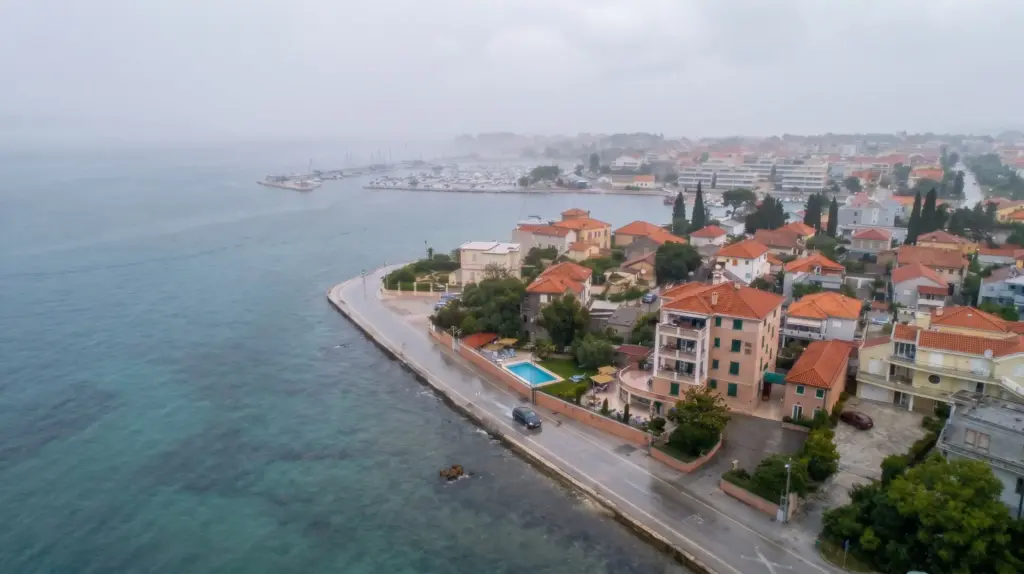
But behind the mocking comments lies a real phenomenon. A bird’s-eye view of the famous coastal road immediately reveals why driving errors end so disastrously here: For long stretches, the roadway hugs the very edge of the shore—often separated from the open water by nothing more than a narrow sidewalk and with absolutely no solid barrier to protect against impact.
Ten Years of Tragedy: A Never-Ending Pattern
The incident in Dražanica Bay is not a bizarre isolated case, but rather the latest chapter in a series that the local press in Zadar has long referred to as “déjà vu.” What’s striking is this: In most cases, the occupants escape with nothing more than a scare, but the property damage is enormous—and, surprisingly often, it’s the very same car brand that plays a leading role.
Early Morning Takeoff in a BMW
February 2016
In the early morning hours, a 19-year-old driver from Zadar lost control of his BMW on Obala kneza Trpimira and drove straight into the sea.
A Stormy Jugo Becomes a Trap
November 2019
With a strong southerly wind, a wet road, and excessive speed, a 37-year-old man from Split—also driving a BMW—lost control and veered off the curve.
A Double Blow to Start the Year
January 2020
On New Year’s Day itself, a drunk driver ended up in the water. Just three weeks later, in the neighboring Uvala Maestral, another car literally came to a stop on the boat dock—a hair’s breadth away from plunging into the depths.
Rescue swim near the Sphinx
March 2024
A young driver veers off the road not far from Zadar’s famous Sphinx (Zadarska sfinga), plunges into the sea, and manages to swim ashore unharmed.
Rollover onto the roof
November 2024
An 18-year-old, driving under the influence of alcohol, veers off the coastal road. His car rolls over and comes to rest upside down in the water—once again, the accident results in no injuries.
The Next Chapter in Dražanica Bay
November 19, 2026
Amid heavy rain and a stormy Jugo wind, another BMW skids off the road and ends up where only boats are supposed to be. The driver is unharmed.

The Dangerous Dalmatian Cocktail: Why Right Here?
When a road has been making the same headlines over and over again for more than a decade, the explanation “bad luck” simply doesn’t cut it. On Obala Kneza Trpimira, four risk factors converge:
- Salt spray (Posolica) plus rain: In Dalmatia, locals know that the first heavy rain or a stormy Jugo can turn the asphalt into a slippery mess. Fine salt deposits from the spray combine with tire grit and rainwater to form an extremely slippery film.
- No safety zone: Where elsewhere green belts, ditches, or guardrails cushion the impact of mistakes, on Obala Kneza Trpimira the Adriatic Sea begins immediately beyond the curb. A brief moment of losing control is all it takes.
- Rear-wheel drive and summer tires: Especially along the mild coast, tires often stay on the car for too long—combined with wet pavement, powerful engines, and a bit too much gas, the rear end loses traction in the blink of an eye.
- The human factor: Police reports from the last ten years clearly show that speeding and drunk driving remain the main causes.
Is the end of the series finally in sight?
Ironically, the latest accident occurred just as the largest renovation project in decades is getting underway along this stretch of the coast. The city of Zadar is currently preparing a comprehensive reconstruction of a 1,100-meter-long section of the Obala kneza Trpimira; the building permit process is already underway, after Mayor Šime Erlić had announced the project back in the spring.
At the same time, the Croatian government did not give the green light for 20 million euros in funding until late October 2026; these funds are intended to be used for the comprehensive renovation and redesign of the Maestral and Dražanica ports and bays. The necessary detailed development plans for the revitalization of the northern waterfront are also already in the works.
Until the first excavators roll in and the notorious coastal road is made safer, however, drivers on Obala kneza Trpimira have only one old Dalmatian remedy for accidental dips in the water: Ease off the gas, put on good tires—and when the Jugo is blowing and it’s raining, enjoy the sea from a café instead of driving right into it.