Stay up to date – you can subscribe to our newsletter here

Anyone who drives south on the highway toward Southern Dalmatia in the summer knows that special moment just past the Sveti Rok Tunnel: Suddenly, the Mediterranean sun breaks through, Radio Dalmacija is playing in the car, and the longing for the Adriatic Sea is within reach. Most of the time, you drive carelessly past the small villages at the foot of the mighty Velebit Mountains. That’s a mistake—because just 33 kilometers northeast of Zadar lies Novigrad Dalmatinski —a place that combines dramatic royal history with one of Croatia’s most spectacular panoramas.
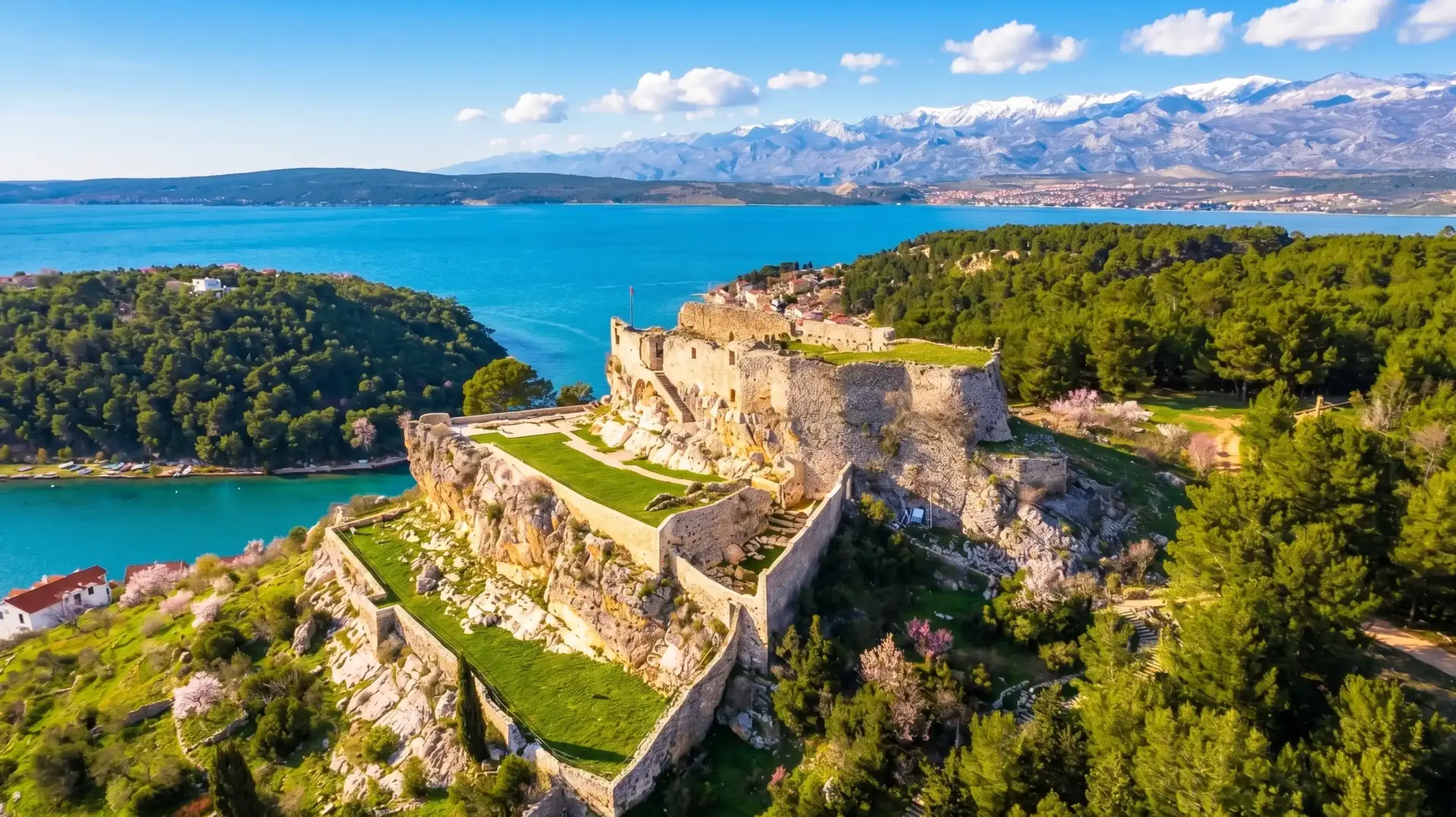
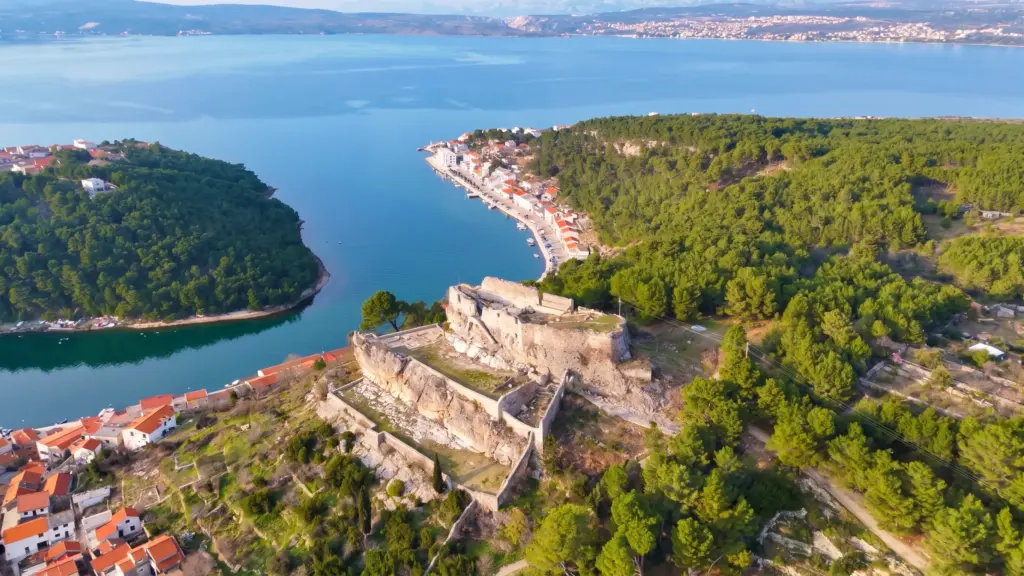
To avoid confusing it with the three other Croatian cities of the same name, this coastal town is often referred to as “Dalmatinski” or “Zadar.” But even at first glance, it’s clear that Novigrad is anything but ordinary: instead of facing the open Adriatic Sea, the tightly packed stone houses look out onto a deeply indented, steep bay of the Novigrad Sea, which almost resembles a tranquil mountain lake. Only from above can one appreciate nature’s geographical masterpiece: here, the emerald-green Zrmanja River flows into the sea, while the narrow Novsko Ždrilo gorge connects the bay to the Velebit Channel and the open Adriatic Sea.
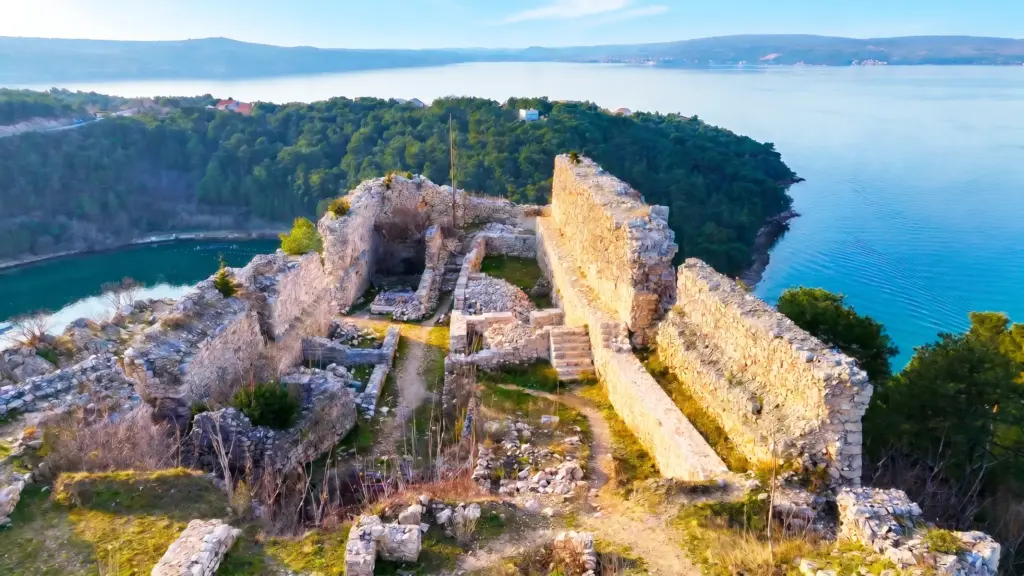
From the port along the waterfront promenade, narrow, cobblestone alleys lead directly to the stone steps carved into the rock, which ascend to Fortica, perched high above the terracotta rooftops. With every step, the view opens up further over the deep-blue water and the rugged limestone giants of the Velebit Mountains in the background.
From a Roman Watchtower to a Venetian Bulwark
What looks from a distance like a single long stone wall on the ridge turns out, upon closer inspection, to be a sophisticated defensive structure. The hill drops steeply on three sides; at the heart of the ruins, an elongated inner courtyard is still visible today, flanked by former cannon platforms. To the south, the complex was protected by two tiered, fortified terraces that any attacker would have had to laboriously overcome.
The origins of this strategic vantage point date back a long way:
- Ancient Origins: The Illyrian Liburnians used the summit as a hilltop settlement, and later the Romans presumably built a watchtower here.
- Medieval Origin of the Name: In the 13th century, the castle was mentioned in documents as Castrum Novum (“New Town”)—the origin of the present-day place name Novigrad.
- Venetians and Ottomans: In 1409, the Republic of Venice took control of the complex and extensively expanded it in the 16th century. During the Kandian War, the fortress briefly fell into Ottoman hands from the summer of 1646 to the spring of 1647, before losing its military significance following the fall of Venice and being sold at a public auction to the municipality of Novigrad.

The Drama of the Two Queens
Fortica wrote its most famous—and at the same time darkest—chapter in the 14th century. After the death of the Croatian-Hungarian King Louis I of Anjou, his underage daughter Maria inherited the crown, while her mother, Elizabeth Kotromanić, served as regent. In the bitter struggle for the throne, mother and daughter were captured in 1386 near Gorjani in Slavonia and taken behind the thick walls of Novigrad.
Only one of the two queens would leave the fortress alive: While Elizabeth died in captivity in early 1387, Mary managed to be freed later that same year with the help of her husband, Sigismund of Luxembourg.
To this day, a touching legend from those days persists in the town: Queen Elizabeth is said to have embroidered a velvet cloak with gold thread while imprisoned, from which a precious chasuble—the so-called Jelisavetina planita —was later made. Even though art historian Silvija Banić dated the velvet to a later period, the vestment remained a cherished heirloom of the parish church in Novigrad for centuries. As late as Christmas 1990, local priests still traditionally wore this chasuble at Midnight Mass and on Epiphany.
Practical Tips for Your Trip to Novigrad
- Getting There: Novigrad is located about 33 kilometers northeast of Zadar and is well signposted directly from the highway exit.
- The climb: Start right in the town center on the Riva and follow the narrow streets through the historic center to the start of the stone staircase. With a few short photo breaks, the climb to the fortress takes about 20 minutes.
- Admission and Hours: The ruins are freely accessible, and admission is free. Since there is neither a snack bar nor any shade at the top, be sure to pack sturdy sneakers and plenty of drinking water.
- Best time of day: In the summer, we recommend making the climb early in the morning or in the late afternoon—not only is the temperature more pleasant then, but the light over the Novigrad Sea and the Velebit Mountains is also at its most beautiful.