Stay up to date – you can subscribe to our newsletter here

Imagine stepping from the sunny shore on the island of Dugi Otok into the cool shade of a rock face—and suddenly hearing the very same silence that people in this place heard 20,000 years ago.

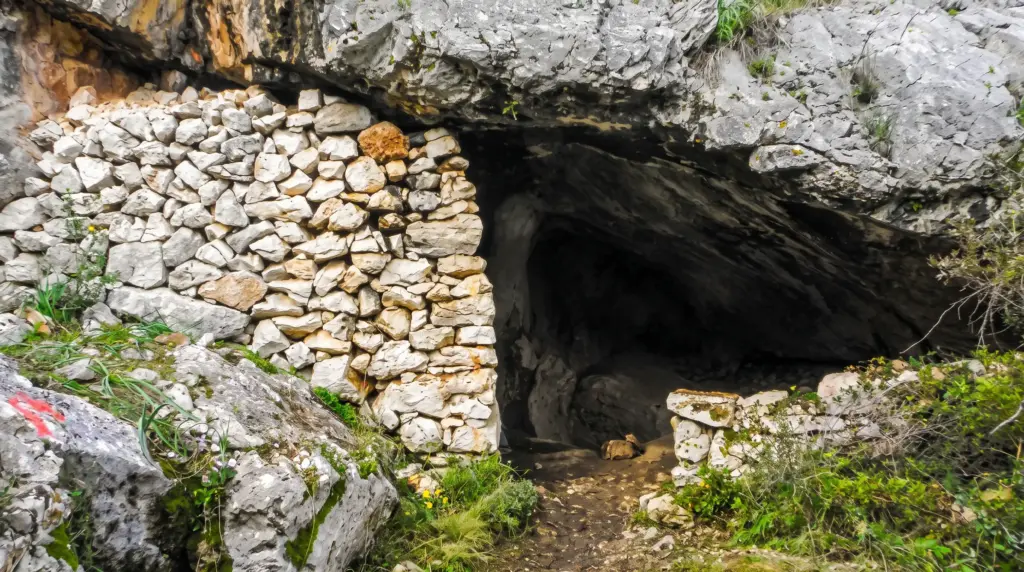
With this in mind, Prof. Dr. Dario Vujević from the University of Zadar takes us on a tour of the Vlakno Cave (Pećina Vlakno). The cave, which is only about 40 square meters in size, lies between Luka and Savar appears unremarkable from the outside, but beneath its floor lies one of the most significant prehistoric archives in the entire Mediterranean region.
High-Tech Detective Work Instead of a Pickaxe
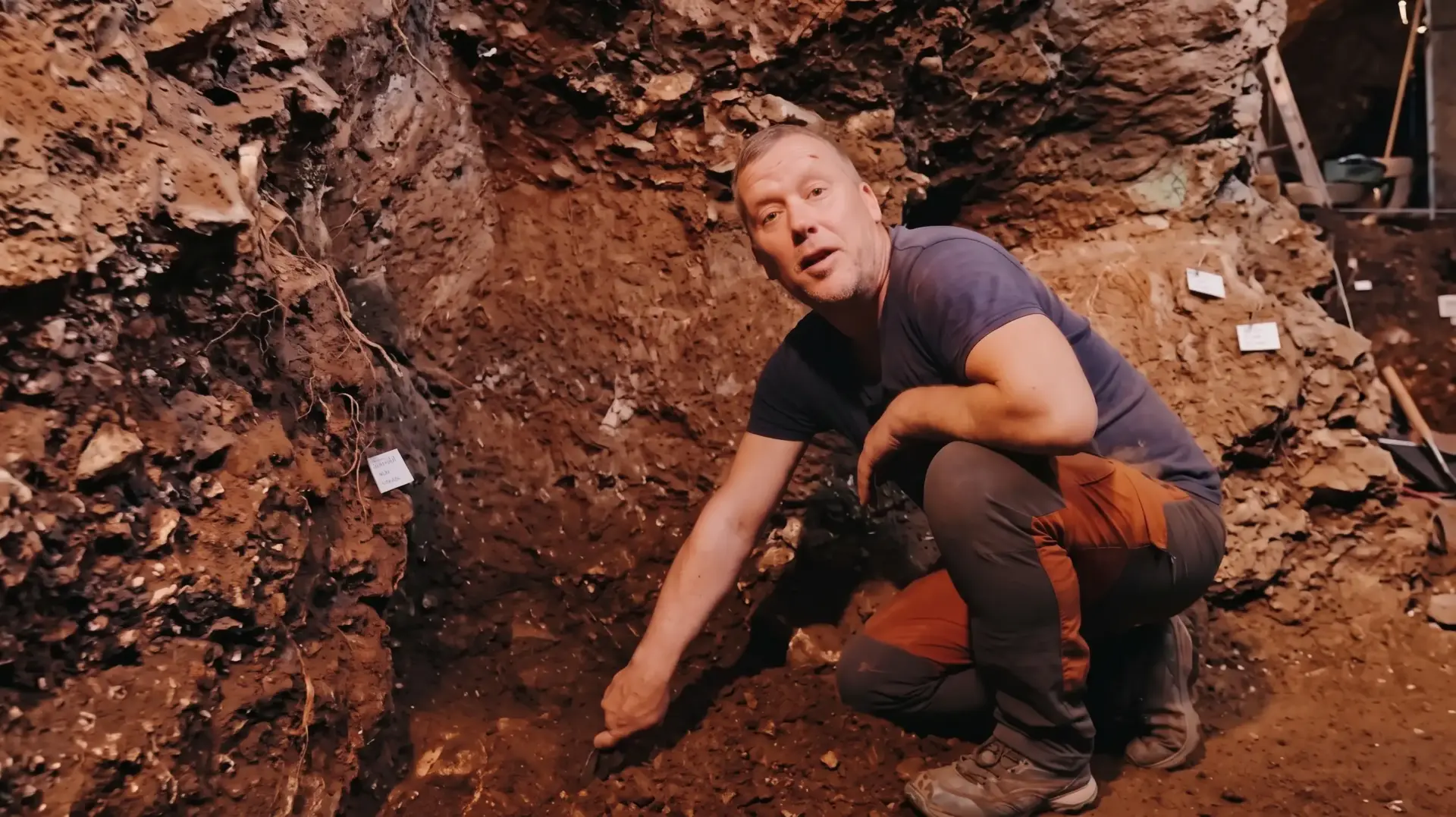
Anyone who still thinks of archaeology as solitary adventurers with pickaxes (mašklin) is in for a surprise in Vlakno. Five meters deep, the researchers have dug their way through the millennia, layer by layer. Where boats now cruise between Dugi Otok and the Kornati Islands, the sea level was over 100 meters lower during the last Ice Age—the island we see today was a high mountain ridge rising above a vast steppe.
To reconstruct this sunken world, an entire team of specialists is working together: soil is washed through fine sieves, and tiny bone fragments, teeth, charcoal, and sediments are analyzed in the lab. These findings reveal not only the exact age of the layers but also the diet of the Ice Age hunters and their struggle for survival as the glaciers melted and the Adriatic Sea rose.
“Šime” and “Lili”: The Stars of the Stone Age
In addition to thousands of animal bones, flint blades, and the oldest harpoons found in this part of the Adriatic, one duo in particular made the cave famous:
- “Šime” (9,500 years old): The remarkably well-preserved skeleton of the “oldest Dalmatian.” This sturdy man, who stood about 1.65 meters tall, lived to be between 30 and 40 years old and already had a diet rich in marine fish such as mackerel as well as wild grains.
- “Lili” (15,000 years old): In the video, she remains a great mystery—in fact, she is Dalmatia’s first Paleolithic “Venus.” The finely carved, geometrically decorated bone pendant in the shape of a woman proves that people along the Adriatic were already creating art and jewelry in the middle of the Ice Age.

On display in Split starting in December
The question “Šta vi tamo kopate?” (“What are you actually digging up there?”), which research teams at excavation sites constantly hear from curious passersby, is now the title of a major special exhibition at the Archaeological Museum in Split. There, the researchers themselves will discuss their work and showcase 327 artifacts from 20 Dalmatian sites —over 200 of which are being displayed for the very first time. Even the 15,000-year-old “Lili” is making the trip from Dugi Otok to Split for the occasion.
Exhibition details:
- What: Special exhibition “Šta vi tamo kopate?”
- Where: Split Archaeological Museum (Arheološki muzej u Splitu), Zrinsko-Frankopanska 25
- Opening: Friday, December 11, 2026, 7:00 p.m. (Free admission)